BIODEGRADATION OF PYRAZINE-2-CARBOXYLIC ACID BY A NEWLY ISOLATED CHEMOTROPHIC BACTERIUM Pseudomonas aeruginosa STRAIN "Cd"
By
K. R. GIRIJA
Ch. SASIKALA(Assistant professor, IPGS&R, Center for Environment, JNTU, Masab tank, Hyderabad.
Ch. V. RAMANA.(Reader, Department of Plant Sciences, University of Hyderabad, Gachibowli, Hyderabad.)
Pyrazine and its derivatives form an important group of nitrogen containing heterocyclic aromatic compounds, which occur both naturally and are also xenobiotic. They are used in the synthesis of various pesticides, insecticides, drugs, dyes, flavoring agents etc. These compounds enter the environment as runoffs from agricultural fields and through various industrial and pharmaceutical effluents. In addition to being a toxic environmental pollutant, and recalcitrant, they are also antibacterial in nature, making biodegradation a restricted metabolic potential.
An attempt had been made to isolate bacteria capable of degrading these compounds taking pyrazine-2-carboxylic acid as test compound. For this purpose enrichments were carried out under aerobic dark and anaerobic light conditions, in mineral salt medium with pyrazine-2-carboxylic acid as sole source of carbon and nitrogen and supplemented with yeast extract as a source of growth factors. Various environmental samples like cow dung, domestic sewage sample, effluents being treated at common effluent treatment plant, and industrial effluents were inoculated. Around fourteen different strains of bacteria were isolated and purified. Biodegradation capabilities of these isolates were determined and it was found that one isolate strain "Cd" was able to degrade pyrazine-2-carboxylic acid.
Cultural, microbiological and biochemical characterization of the strain "Cd" along with its pigment content established the organism to be Pseudomonas aeruginosa. Studies on the effect of pyrazine-2-carboxylic acid on the growth of this organism revealed that this organism was not inhibited by pyrazine-2-carboxylic acid even up to a concentration of 100mM which was the highest concentration tested, though the lower concentrations were found to be stimulatory. Biodegradation capability of P. aeruginosa was checked under both fermentative and respiratory modes. It was found that P. aeruginosa was able to degrade pyrazine-2-carboxylic acid under respiratory mode only. Aerobic biodegradation was carried out in an aerated bioreactor, resulting in its degradation up to 90% with in five days after which no further degradation was observed.
INTRODUCTION
An enormous number of aromatic compounds are known and their number is increasing day by day. The ever-increasing demand and depletion of natural resources have resulted in the production and use of xenobiotic compounds for various human needs, the majority of which are aromatic in nature (Cork & Kruger, 1991). Industrial revolution and Green revolution have also contributed to the increase in the use of xenobiotic compounds. These compounds being xenobiotic get accumulated in the environment and lead to environmental pollution.
N-Containing Heterocyclic Aromatic Compounds: -These are aromatic compounds in which the carbon atom is replaced with nitrogen atom. These compounds occur in nature and are also xenobiotic. For example pyridine derivatives are natural constituents of plant alkaloids, pyridoxyl derivatives and as coenzymes such as nicotinamides and nicotine. Xenobiotic derivatives of pyridine include paraquat, diquat and picloram. Purines and pyramidines are the major components of nucleic acid. Quinolines, acridines, carbazole, benzimidazole, indole, pyrazine, etc are the other examples of N-containing heterocyclic aromatic compounds. Most of these compounds are used in the synthesis of dyes, antiseptics, fungicides, drugs, and pesticides and are also used as raw materials in industries.
Pyrazine: - Pyrazine belongs to diazine group of heterocyclic compounds, which include pyridazine (1,2 diazine) and pyrimidine (1,3 diazine). Pyrazine or 1,4-diazine is a symmetrical molecule as the nitrogen occupies the 1,4-positions. Several polyclic derivatives of pyrazine ring system such as pteridine and phenazine occur in nature. Pyrazine and its derivatives form an important group of N-containing heterocyclic aromatic compounds, which occur both naturally and are also xenobioic. The most common example of naturally occurring pyrazine compound is aspergillic acid, which is an antimicrobial agent, produced by Aspergillus species (Boiken et.al, 1986). It is also found in folic acid. Pyrazine and its derivatives are present in certain foods such as barley, coffee, peas, potatoes, etc. Occurrence of pyrazine and its importance is shown in ( Table1).
Besides chemical oxidation, enzymatic method of oxidation of methyl groups or aromatic heterocycles is a versatile technique for preparation of hetero aromatic carboxylic acids. For this purpose Pseudomonas putida ATCC 33015 has been found to be useful biocatalyst (Bansal, 1999). 2,5-Dimethyl pyrazine is oxidized to 5-methyl pyrazine –2-carboxylic acid (90%) by this organism.
While much of work is being carried out on biodegradation of purines, pyramidines, quinolines, acridines, carbazole, indole, etc., there are only few reports about biodegradation of pyrazine and its derivatives (Kaiser et.al.1996). Regioselective hydroxylation of pyrazine-2-carboxylic acid at C3 position by Ralstonia/ Burkholderia sp. strain DSM 6920 has been reported (Tinsclert et.al,). Photo biodegradation of pyrazine-2-carboxylic acid by Rhodopseudomonas palustris OU11 has been reported (Sasikala et.al, 1994). P. fluorescence UK1(Soini & Bakman, 1975) could degrade pterine and pterine-6-carboxylic acid. Pseudomonas and Bacillus are the two genera where aerobic biodegradation/ biotransformation of pyrazines is reported. Pseudomonas species have been shown to biodegrade pyrazine (Mattey & Harley) Pseudomonas putida was capable of degrading pyrazine-2carboxylic acid when used as sole carbon source (B. Archana, 1998). Pyrazines are antimicrobial in nature (Browning et.al, 1920) Antimicrobial activity of 2-Cyanopyrazine, 2-Aminopyrazine and pyrazine-2-carboxylic acid on Escherichia coli, Bacillus subtilis and Staphylococcus aureus has been reported (Archana, 1998). In addition to being antimicrobial, pyrazines are xenobiotic and hence recalcitrant, thus their degradation is a restricted metabolic potential. In addition , degration of other compounds will also be affected due to antimicrobial activity of pyrazines.
Table 1: Occurrence and importance of pyrazine and its derivatives.
| Pyrazine derivatives | Occurence | Uses | Reference |
| Natural Aspergillic acid | Aspergillus species | antimicrobial in nature | Boikess et.al. 1986 | Folic acid | Leaves, liver, yeast | source of Vit B10 | Lucas 1999 |
| Un-substituted pyrazine 2,5-Dimethyl pyrazine | Foods a.Barley, casein, coffee, soyabean | flavouring agent | Mega and Sizes, 1993 |
| 3-Ethyl,2-Methoxy pyrazine | b. Beef, cocoa | " | " |
| 3-Isopropyl-2-methoxy pyrazine | c. potato | " | " |
| 2-Vinyl pyrazine | d. peas | " | " |
| . | e. peanuts | " | " | phenazine | Pyocyanin | antimicrobial in nature | Stokes et al, 1942 |
| Xenobiotics | |||
| Pyrazinamide | Drugs | anti tuberculosis | Scoy & Wilkowske, 1992 |
| 2-Allylthio pyrazine | drugs | cancer chemoprotective agent | Kang, 2001 |
| Benzopyrazine | quinoxaline | antibacterial in nature | Bansal 1999 |
| Thioazine | pesticide | used to kill pests | John et al 1995 |
Hence an attempt was made to identify pyrazine degraders in the natural environments with the following Objectives.
Materials and methods: - Enrichments were carried out in mineral salt medium with pyrazine-2-carboxylic acid (0.3%) as sole source of carbon and nitrogen and supplemented with yeast extract as a source of growth factors, taking various environmental samples like cow dung, domestic sewage sample, industrial effluents, effluents from common effluent treatment plant etc. Then 5ml of sample was inoculated into 50ml of the above medium taken in a 100ml conical flask and the same sample was taken in screw cap test tubes. They were incubated under aerobic dark and anaerobic light conditions (Table 2). For biodegradation purpose pyrazine-2-carboxylic acid (1mM) was taken as sole nitrogen source with glucose(3%) as sole carbon source.
Determination of O.D: - Optical density of the culture grown in media was directly measured in Systronics make colorimeter at 540nm taking medium as blank.
Determination of dry weight: - An aliquote of the culture was centrifuged at 10,000 rpm for 10 min and the pellet was washed twice with deionised water and then suspended in deionised water. Known volume of concentrated cell suspension were then transferred to previously weighed aluminium cup and dried to constant weigh at 60.C. All weights were determined on a metler single pan balance (Afcoset make). The optical densities of these dilutions of the cell suspension were determined on Systronics make colorimeter at 540nm taking deionised water as blank. OD vs. dry weight graph was then plotted (data not shown), and further determination of dry weight was done by taking OD of cell suspension at 540nm and calculating the dry weight from the empirical formula derived,
0.1 OD (540nm) =0. 30 mg dry weight/ml.
Results and discussion: -
1.Enrichment and isolation of various bacteria in mineral medium with pyrazine-2-carboxylic acid as sole source of carbon and nitrogen: - Various enrichments were obtained with pyrazine-2-carboxylic acid as sole carbon and nitrogen source and supplemented with yeast extracts as source of growth factors (Table 2). All the samples gave enrichments under aerobic dark condition. But under anaerobic light condition enrichments was obtained from cow dung sample alone (data not shown). Indicating that pyrazine-2-carboxylic acid metabolism is wide spread under aerobic dark condition. The time taken for enrichments to develop varied with each sample indicating that those sample which gave enrichment with in 24hrs might have already been exposed to xenobiotic compounds in their original environment others might not have been exposed and thus take longer time to adjust. Effluent from common effluent treatment plant gave large number of isolates compared to cow dung and the rest of the samples. About 14 different isolates were obtained, which were further purified by streaking on pyrazine-2-carboxylic acid agar plates.
TABLE 4: ENRICHMENT OF BACTERIA UNDER ANEROBIC DARK CONDITIONS
| Source of the sample | pH of the inoculum | Time taken for turbidity development | Culture isolated |
| Domestic sewage sample | 7.5 | 24 hrs | s1,s2 |
| Cow dung | 7.5 | 1 week | Cd |
| Pharmaceutical effluent | 9 | 24 hrs | P1,P2 |
| Effluent from common effluent treatment plant-1 | 7 | 24 | C1,C2 |
| Effluent from common effluent treatment plant-2 | 7 | 1 week | Pold, Pold a, Pold b, Pold c, Pold d. |
| Inlet effluent | 7 | 24hrs | In |
| Industrial effluent | 8.5 | 24 | Id |
|
Note: various samples were taken their pH was checked using a pH paper and then around 5ml each of these samples were inoculated into 50ml of pyrazine-2-carboxylic acid medium (0.3%)(as sole source of carbon and nitrogen) taken in 100ml flasks and were incubated under aerobic dark condition. The above samples were also taken in screw cap test tubes and were incubated under anaerobic light condition until enrichments were obtained (1 month). | |||
2.Growth of various isolates on pyrazine-2-carboxylic acid medium and its biodegradation: - The isolates were able to grow in mineral salt medium containing pyrazine-2-carboxylic acid (3mM) as sole carbon (NH4Cl (0.04%) as sole nitrogen source) and sole nitrogen source (glucose (3%) as sole source of carbon) but could not grow when it was used as sole source of carbon and nitrogen (Table 3 & 4 ).
It was observed that there was significant growth when pyrazine-2-carboxylic acid was used as sole nitrogen source (glucose as sole source of carbon) as seen from the OD values. OD values of two strains namely "Cd’ and "Pold" was much significant than the rest of the isolates. Thus biodegradation studies were carried out using pyrazine-2-carboxylic acid (1mM) as sole nitrogen source (glucose (3%) as sole source of carbon). Even though the various isolates were able to grow under aerobic condition growth was less under anaerobic condition. Out of the various isolates obtained, only one bacterial isolate strain "Cd" was able to degrade pyrazine-2-carboxylic acid when used as sole source of nitrogen (glucose as sole carbon source) aerobically. Though the various other isolates obtained were able to tolerate pyrazine-2-carboxylic acid, they were unable to degrade pyrazine-2-carboxylic acid. Biodegradation of pyrazine-2-carboxylic acid was determined by taking the culture supernatant and observing its U.V absorption maxima at 268nm.
|
Table 3: Optical density of various isolates at 540nm
|
|||
|
Organisms |
PCA as sole carbon source |
PCA as sole nitrogen source |
PCA as sole source of carbon & nitrogen |
|
S1 S2 P1 P2 C1 C2 In Id Cd Pold Pold a Pold b Pold c Pold d
|
0.05 0.05 0.03 0.03 0.03 0.03 0.06 0.04 0.05 0.05 0.04 0.03 0.05 0.06 |
0.10 0.10 0.05 0.05 0.03
0.03 0.09 0.06 0.13 0.14 0.12 0.11 0.10 0.09 |
0.02
0.02 0.01 0.01 0.01 0.01 0.01 0.01 0.01 0.02 0.01 0.01 0.02 0.02 |
|
Note: - Around 0.5ml of various cultures were inoculated into 5ml of pyrazine-2-carboxylic acid as sole nitrogen source and glucose as sole source of carbon) both medium taken in test tubes and the same isolates were inoculated in above medium taken in screw cap test tubes and the above samples were incubated under aerobic and anaerobic conditions respectively for 24 hours. A control without the culture was also kept. Biodegradation of pyrazine-2-carboxylic acid by various isolates was determined by taking the culture supernatant and scanning it under UV region and observing for absorption maxima (268 nm) and decrease in OD at that lambda. .C for 24hrs. Their ODs were then checked at 540nm. |
|||
|
Table 4: Biodegradation of pyrazine-2-carboxylic acid by various isolates when used as sole nitrogen source. |
||||||
|
Organism |
Aerobic condition |
Anaerobic condition |
||||
|
OD(540nm) |
OD(268nm) |
Biodegradation |
OD(540nm) |
OD(268nm) |
Biodegradation |
|
|
Blank S1 S2 P1 P2 C1 C2 In Id Cd Pold Pold a Pold b Pold c Pold d |
0.00 0.10 0.10 0.05 0.05 0.03 0.03 0.09 0.06 0.13 0.14 0.11 0.09 0.10 0.08 |
3.648 3.681 3.663 3.785 3.874 3.690 3.770 3.687 3.742 1.571 3.890 3.786 3.674 3.794 3.661 |
_ _ _ _ _ _ _ _ _ + _ _ _ _ _ |
0.00 0.05 0.04 0.11 0.07 0.05 0.07 0.08 0.06 0.04 0.06 0.04 0.05 0.06 0.05 |
3.583 3.673 3.774 3.764 3.642 3.674 3.651 3.763 3.660 3.783 3.653 3.641 3.776 3.650 3.595 |
_ _ _ _ _ _ _ _ _ _ _ _ _ _ _ |
|
Note: - 0.5ml 0f various cultures were inoculated into 5ml pyrazine-2-carboxylic acid (as sole nitrogen source and glucose as sole source of carbon) broth medium taken in test tubes and the same isolates were inoculated in above medium taken in screw cap test tubes and the above samples were incubated under aerobic anaerobic dark condition for 24hrs. A control without the culture was also kept. Biodegradation of pyrazine-2-carboxylic acid by various isolates was determined by taking the culture supernatant and scanning it under UV region and observing for its absorption maxima (268nm) and decrease in OD at that lambda. "+": Pyrazine-2-carboxylic acid was degraded. "_": Pyrazine-2-carboxylic acid was not degraded. |
||||||
Microscopic, cultural, and biochemical characterization of the isolate strain "Cd" revealed that it is a gram-negative, motile, non-spore forming rods, which produced fluorescent pigment. Identification of this organism was done following Bergy’s manual of determinative bacteriology 9th edition, which revealed that it belongs to Pseudomonas species. Since this organism produced fluorescent dye, its characteristics were compared with fluorescent Pseudomonads, which revealed that it is a Pseudomonas aeruginosa species. Since only this species produces both bluish green pigment (pyocyanin) and fluorescent pigment (pyoveridin) (Table5 & 6)
|
Table 5: Biochemical tests of strain "Cd". |
|
|
Biochemical tests |
Results |
|
Catalase Gelatin Hydrolysis Citrate Utilization Indole Production H2S Production Methyl Red test Vogesproskauer test Urease Nitrate reduction Ammonification |
+ + + _ _ + _ + + _ |
|
Note: - "+": - Present "_": - Absent |
|
| Table6: Characteristics Of Fluorescent Pseudomonas | |||||
| Characteristics | P.aeuroginosa strain "Cd" | P.aeruginosa | P.fluroscens | P. putida | |
| Pyoverdin production | + | + | + | + | |
| Pyocyanin production | + | + | - | - | |
| nitrate reduction | + | + | - | - | |
| growth at 4 deg.C | + | + | - | - | |
| acetamide hydrolysis | dna | + | - | - | |
| lecithinase | dna | + | - | + | |
| gelatinase | + | - | + | - | |
|
Note: - "+": - present. "_": - absent. "dna": - data not available. |
|||||
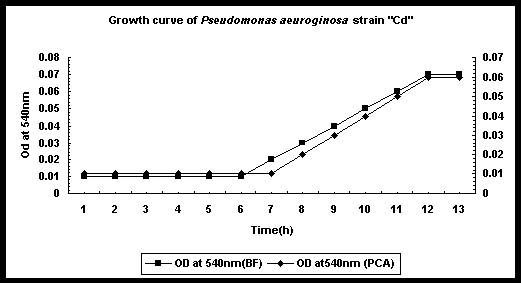
4. Growth and biodegradation of Pseudomonas aeruginosa strain "Cd": - Growth of the bacterial isolate in mineral medium in presence and absence of pyrazine-2-carboxylic acid revealed that pyrazine-2-carboxylic acid was not acting as growth inhibiton (Fig .1). The lag period of the organism was found to 14hrs in the presence of pyrazine-2-carboxylic acid (PCA) and in absence of pyrazine-2-carboxylic acid and in the presence of ammonium chloride was found to be 12hrs. This indicates that there is no effect of pyrazine-2-carboxylic acid on the growth of the organism. The doubling time in the presence of ammonium chloride and in absence of pyrazine-2-carboxylic acid was found to be 5.49hrs and in the presence of pyrazine-2-carboxylic acid, it was found be 4hrs, indicating that pyrazine-2-carboxylic acid is a better nitrogen source than ammonium chloride.
Fig. 1 Growth curve of Pseudomonas aeruginosa strain "Cd"
|
Note: - The above graph is the growth curve of Pseudomonas aeruginosa strain "Cd" in presence and in the absence of pyrazine-2-carboxylic acid. The lag period in the presence of ammonium chloride (control) was found to be 12hrs and in presence of pyrazine-2-carboxylic acid was found to be 14hrs. The doubling time of the isolate in the presence of ammonium chloride was found to be 5.49hrs and in the presence of pyrazine-2-carboxylic acid was found to be 4hrs. The inoculum was developed in the presence of ammonium chloride and in the absence of pyrazine –2-carboxylic acid. Note 1hr in the fig = 2hrs. |
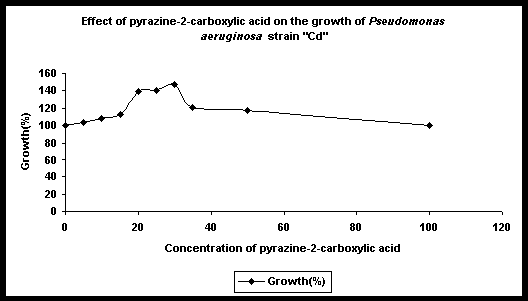
5.Effect of pyrazine-2-carboxylic acid on the growth of Pseudomonas aeruginosa strain "Cd" revealed that it was able to tolerate pyrazine-2- carboxylic acid concentration up to 100mM, which was the highest concentration checked (Fig.2). There was an increase in growth (%) from 15mM-30mM concentration than the control, indicating that at lower conentration pyrazine-2-carboxylic acid is acting as a growth stimulator. This kind of stimulatory effect of pyrazine-2-carboxylic acid on the pigment content and on nitrogenase activity of Rhodopseudomonas palustris JA1 has been reported (Sunitha, 2000). More over there was no inhibition of growth even at 100mM which is the highest concentration tested, where as in P.putida IC50 and MIC was reported to be 2.5mM and 4mM respectively (Archana,1998).
Figure: - 2 Effect of pyrazine-2-carboxylic acid on growth of Pseudomona aeruginosa strain "Cd"
|
Note: -". 0.5ml each of log phase culture of Pseudomonas aeruginosa strain "Cd" was inoculated into 5ml of nutrient broth (taken in triplicates) containing varying amounts of pyrazine-2-carboxylic acid (0-100mM) taken in test tubes and optical densities were recorded after 48hrs of growth at 37.C |
6.Biodegradation of pyrazine-2-carboxylic acid by bacterial isolate Pseudomonas aeruginosa strain " Cd " under aerobic condition in a bioreactor: - This organism was found to degrade pyrazine-2-carboxylic acid (PCA 1mM) when used as sole nitrogen source (glucose (3%) as sole carbon source). There was no degradation observed when PCA was used as sole carbon source (Ammonium chloride (0.04%) as sole nitrogen source). Aerobic degradation of pyrazine-2-carboxylic acid (PCA) by Pseudomonas aeruginosa strain "Cd" was carried out in a bioreactor kept under constant aeration with PCA as sole nitrogen source (glucose (3%) as sole carbon source). It was found that Pseudomonas aeruginosa strain "Cd" able to degrade PCA up to 90% within 5 days after which there was no further degradation.. Since this organism is known to be pathogenic its use for biodegradation purposes is questionable thus in order to make use of the biodegradative potential of this organism, the pathogenic character of this organism should be removed or the biodegradative gene should be transferred into a non pathogenic organism. And thus the biodegradative potential of this organism can be made use of in various bioremediation studies.
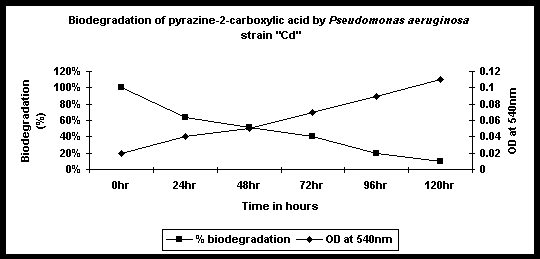
Fig.5: Biodegradation of pyrazine-2-carboxylic acid by Pseudomonas aeruginosa
strain "Cd"
Note: - The above figure shows biodegradation of pyrazine-2-carboxylic acid by Pseudomonas aeruginosa strain "Cd". Log phase culture (15ml) of the above bacterium was inoculated into 150ml of pyrazine-2-carboxylic acid (as sole nitrogen source) broth taken in a 250ml gas wash bottle and connected to an aerator through another gas wash bottle with sterile deionised water. 3ml of the sample was harvested from both the samples at regular intervals and analyzed for biodegradation of pyrazine-2-carboxylic acid.
References
1.Archana .B, Antibacterial activity and biodegradation of pyrazine-2-carboxylic acid by Pseudomonas putida, M.Sc Dissertation, 1998.
2. Bansal, R.K. A textbook of heterocyclic chemistry, 1996 edition.
3. Baker, K.H, and Diane. S. Herson, Bioremediation, 1994 edition.
4. Berry, D.F, Francis, A. J and Bollag, J. M (1987a), Microbial metabolism of homocyclic and heterocyclic aromatic compounds under anaerobic conditions. Microbiol. Rev. 51,43-59
5.Besson. I, Crealy. C, Gros. J .B., Larroche. C, Pyrazine production by Bacillus subtilis in solid-state fermentation on soyabean. J. Appl. Microbiol and Biotech.
6.Boikess, Breslauer, Edelson (1986) Elements of chemistry. 2: 310-14.
7. Browning, C.H. Cohen.J.B, and Gulbrasen, R. The antiseptic properities of compounds of the acridine and phenazine groups, J. Path. Bac, 23, 124-5 (1920).
8.Bergman, K.E, Cynamon, M. and Welch, H. (1996) Quantitative structure-activity relationships for the invitro antimycobacterial activity of pyrazinoic acid esters.I.Med.Chem. 39:3394-34100.
9.Cork, D.J and Kruger, J.P (1991) Microbial transformation of herbicides and pesticides. Adv. Appl. Microbiol. 36, 1-66.
10.Campbell,L.L.(1957) Reductivedegradation of pyrimidine J.Bacteriol.73:220-224.
11.Grbic-Galic,D (1989) Microbial degradation of homocyclic and heterocyclic aromatic hydrocarbon under anaerobic condition. Dev-Ind. Microbiol.30:237- 253.
12. John, H.G. Willam, M.G and Richard. K, Heterocyclic aromatic compounds in life and society 2,200-420.
13. Harwood, C.S. And Gibson, J. (1998) Anaerobic and aerobic metabolism of diverse aromatic compounds by the photosynthetic bacterium, Rhodopseudomoas palustris. Appl.Environ.Microbiol. 54,712-717
14. John. G. Holt, Noel R. Krieg, Peter. H.A.Sneath, James, T.Staley Berbey’s manual of . determinative bacteriology (9th edition).
15. Kuhn, E.P and Suflita, J.M, Microbial degradation of nitrogen, oxygen andsulphur heterocyclic compounds under anaerobic codition, studies with aquifer samples. Environ. Toxicol. Chem. 8, 1149-58.
16. Kaiser, J.P, Feng.Y. and Bollag J. M, Microbial metabolism of pyridine, quinoline, acridine and their derivatives under aerobic, anaerobic condition, Microbiol. Rev. 60, 483-98.
17. Kiener, Andrea,(Lonza-A-G.), Microbial oxidation of methyl groups in heterocyclic compounds.Eur.Pat. Applied EP, 422-30(1991).
18. Howard. J.Lucas. Organic chemistry Eurasia publishing house (1996).
19. Mega. J.A and Sizes.C.E, Pyrazines in foods, J. Agri. Food. Chem, 21-22-30.
20. Mattey. M, Harley. E.M, aerobic metabolism of pyrazine compounds by Pseudomonas species, Biochem.Soc.Trans, 1976, 4(3) 492-4.
21. Rajashekhar, N., Sasikala, Ch. And Ramana Ch. V. (2000) Toxicity of N-containing heterocyclic aromatic compounds and their utilization for growth by a few purple non-sulphur bacteria.Bull.Environ.Cont.Toxicol. 65(at press).
22. Van.Scoy.R.E, Wilkowske C.J, Anti-tuberculosis agents. Mayo. Clin. Proc. 67:179-187.
23. Sasikala, Ramana.C,Roa. C.V, Raghuveer.P, Photometabolism of heterocyclic aromatic compounds by Rhodopseudomonas palustris OU11, J. Applied. Environ. Microbiol, 1994 60(6), 2187-90.
24. Soini. J, Backman. A, Studies on degradation of pterine and pterine-6-carboxylic acid by Pseudomonas fluorescence UK-1,Acta. Chemscand. B, 1975 29(6) 710-14.
25. Susanne. Fertzner. Enzymes involved in aerobic bacterial degradation of N- hetero aromatic compound, molybdenum hydroxylases and ring opening 2,4-dioxygenases, Natur wissensclaften(2000), 87(e): 59-69
26. Vogel, G.D. and Vander Driff.C, 1976.Degradation of purines and pyramidines by microorganisms. Bacteriol.Rev. 40:403-468.
27. Van der Meer,Willem,J.R.,Harayama,M.,Alexander,J.B.(1992) Mechanism of genetic adaptation to xenobiotic compounds. Microbiol. Rev. 56: 677-694.
28. Wieser, M., Heinzmann, K, Kiener, A (1997). Bioconversion of 2-cyanopyrazine to 5-hydroxy pyrazine-2-carboxylic acid with Agrobacterium sp DSM 6336. Appl.Microbiol.Biotechnol.48:174- 176.
date : Feb 2002
back to index