| Welcome new members !
SEAPAVAA warmly welcomes four new members into its family. During the 5th General Assembly in Singapore in 3-7 July 2001, two archive institutions from the Philippines -- the GMA Network, Incorporated was ratified as full institutional member and the Records Management and Records Office as associate institutional member. The George Eastman House in New York and Friends of the National Film and Sound Archive in Australia were also ratified as associate members.
The GMA Network, Incorporated represented by Remedios Reyes, head of its Program Libraries and Media Archives, is one of the largest broadcasting network based in Manila. It endeavors to preserve and upgrade its audio-visual collection in support of the station’s programming and production. The Records Management and Archives Office, on the other hand, headed by Rosalina Concepcion, is a government archive which evolved from different reorganizations since its creation in 1901. The latter archive holds Philippine documents mostly on the pre-Spanish colonial period of the Philippines in the 16th century, and post-colonial materials up to present.
The George Eastman House with Paolo Cherchi-Usai as its curator, is one of the leading institutional film archives based in Rochester, New York. Meanwhile, in Australia, Friends of the National Film and Sound Archive which is a non-profit organization and has a paid membership base aims to bridge the Archive with the film and sound communities of the world.
At present, SEAPAVAA boasts of 30 full institutional members, nine associate institutional members, and 26 associate individual members.
|
Tran Luan Kim retires from the VFI
|
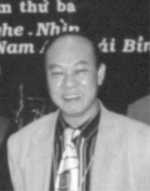 Prof. Tran Luan Kim, former director of the Vietnam Film Institute (VFI), retires from the VFI to serve as the general-secretary elect of the Vietnam Motion Picture Association.
Professor Kim retires leaving behind a legacy of achievements. He was VFI director from 1994 to 2000 during which he gave VFI the
|
|
status of full membership to the FIAF and founding institutional membership in SEAPAVAA.
He is noted for his technological contributions particularly in the “vinegar syndrome” prevention on films, and in promoting AV archiving and accession of audio-visual data through transmission of moving images to CD. He has been a major contributor of published articles, film and art lectures, and in translations into Vietnamese of more than 30 Chinese and Russian books.
Professor Kim had held various posts in different offices which include the Vietnam Film Distribution Company, the Cinematography College in Ho Chi Minh City, and the Vietnam Motion Picture Department where his expertise as a filmmaker was developed.
|
|
 |
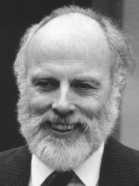
Ray Edmondson retires from the Archive
After some 33 rewarding years, Ray Edmondson, SEAPAVAA president retires from the archive effective 30 April 2001. Ray has retired as deputy-director of the Australian NSSA (National Screen and Sound Archive or ScreenSound) and also from the Australian public service in order to concentrate his energies and experience on his widening involvement in AV archiving.
“What I will miss most will be the daily ambience and the people -- the privilege of working with friends and colleagues whom I respect for their integrity and professionalism, and their passion for our audiovisual heritage”, says Ray on his retirement. He adds, “I have been a fortunate person to be surrounded with so many rewarding relationships, and to have been part of founding and building one of the world’s great audiovisual archives”.
Ray, nonetheless, will have a continuing relationship with the archive. He has been bestowed the title, “Curator Emeritus”, and will maintain an active interest in the institution’s affairs. With NSSA’s support, Ray will continue his activities as SEAPAVAA president and his teaching role in the internet-delivered course on audiovisual archiving offered through Charles Sturt University. Says Ray, “I cannot imagine that I will ever truly leave the place -- it has been my life and I am sure the connection will continue one way or another for as far ahead as I can see”.
On a personal level, Ray will pursue his work on the philosophy of audiovisual archiving and in supporting archiving in developing countries.
|