 Features |
The Cinemedia Access Collection |
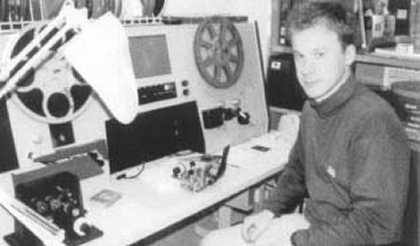 Michael Fairlie, a film technician at the Cinemedia Access Collection, checks on the physical check-up of every film lent to the public. |
 |
A recent government grant has enabled Cinemedia to purchase a Lipsner Smith film cleaning machine which maintains the films in even better condition and prolongs their screening life. Because priority is to lend collections, it is expected that reasonable amount of wear and tear will bear on the films. Cinemedia is keen in ensuring that conservation and storage standards for films are as high as possible for a lending collection, the reason why the expertise passed on both at conference and informally by members of SEAPAVAA |
|
Cinemedia’s collection is stored in a temperature- and humidity-controlled environment, and every film lent is physically checked by the technical staff before despatch to ensure that borrowers receive it in mint condition. |
passed on both at conferences and informally by members of SEAPAVAA is important for this reason. Further information can be found at the website http://www.cinemedia.net. |
| Victorian state government documentary collection established in 1946 and had grown to encompass international feature films, shorts, animated works, and children’s films. In more recent years, film collections from other major organizations such as the National Library of Australia and foreign embassies had been placed with Cinemedia to be managed.
Today, although the collection is predominantly on 16mm, the emphasis is on collecting video, CD ROM, and DVD, as well as works on digital format to be used for future on-line transmission. Because the prime function of the Cinemedia is in providing public access to all of these works, issues are somewhat different to those of a traditional archive where items can be protected in deep storage. Most borrowers of Cinemedia need to screen films from the collection off-site, and items are both lent across the front desk and sent to film societies in the most remote parts of Australia for screening. Staff at Cinemedia have to continually juggle the competing demands of preservation and access, and education of the public in correct film handling and projection techniques. |
|
| AV Archives Bulletin 5 |