THE ARDENNES
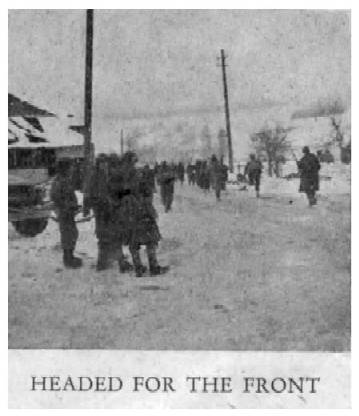 The day after Christmas found us moving out of the Hurtgen forest. The story was that we were going into Army Reserve. We needed rest, time to lick our wounds, to reorganize. A good many Christmas dinners were left uneaten, however, then we learned that we were going back in the lines. We were needed again. This time, in the Ardennes. The day after Christmas found us moving out of the Hurtgen forest. The story was that we were going into Army Reserve. We needed rest, time to lick our wounds, to reorganize. A good many Christmas dinners were left uneaten, however, then we learned that we were going back in the lines. We were needed again. This time, in the Ardennes.
We moved on the 26th of December. That night found us on the road to Liege, with the skies constantly illuminated with ack-ack fire and the comet-like trails of buzz bombs.
On the 3rd of January, the Regiment, attached to the Third Armored Division, was given the mission of driving south into the "Bulge" to cut the Houffalize - St. Vith highway and to affect a junction with allied troops diving north.
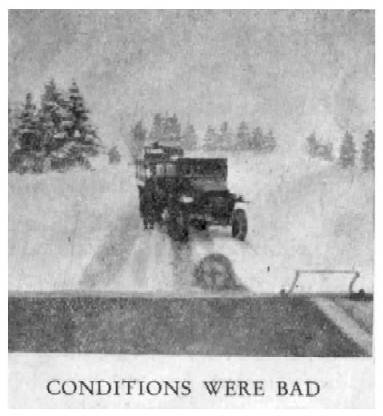
The newspapers called it the "Ardennes", the "Breakthrough", or the "Bulge". But we in the line didn't describe it with such polite terms. We called it all the foul, vile things that it really was. It wasn't fighting only an enemy flushed with sudden victory; it was fighting the weather as well. It was Valley Forge, edition of 1945. Clothing froze on bodies, weapons failed to function. Feet turned black and purplish from trench foot. Any wound was serious. If you fell, you froze. The only covering for the dead was a blanket of snow. But we kept going forward, as usual.
Once again it was a job for the infantry. Clear the roads, the woods, so the tanks can operate more efficiently. Hold the towns so the armor can move to the flank. It was the infantry-tank combination in action again, each secretly respecting the ability and help of the other. The Third Battalion took Malempre, the Second seized Lansival and the dashed on to take Jeveigne; the First drove through to Bihain, secured this town after eighteen hours of fighting and then repulsed a heavy infantry-tank counter-attack the next morning. It was fight all the time; fight the fanatical enemy, fight the devastating cold, fight the tiredness, the fatigue that comes after days and days of continuous combat.
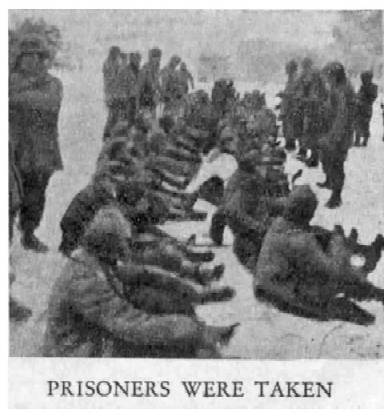
We complained, we swore, we cried; but we took our objective. |
FROM THE ROER TO THE RHINE
 We had shattered von Rundstedt's counter-offensive in the "Bulge" and now we drew up along the Roer river to begin a drive aimed at exploding for all time the myth of the "super race". The Roer was not new to us. We had seen it before when we drove out of the Hurtgen forest to its banks in the vicinity of Duren. Now we were ready to cross that river. The Regiment was attached to the 29th Infantry Division to establish the bridgehead. It looked bad. We had shattered von Rundstedt's counter-offensive in the "Bulge" and now we drew up along the Roer river to begin a drive aimed at exploding for all time the myth of the "super race". The Roer was not new to us. We had seen it before when we drove out of the Hurtgen forest to its banks in the vicinity of Duren. Now we were ready to cross that river. The Regiment was attached to the 29th Infantry Division to establish the bridgehead. It looked bad.
All night long on February 23rd our artillery pounded Juelich and the east bank of the Roer. We wondered how the Germans could stand such a pounding but we knew from bitter experience that Jerry would be there waiting for us.
That we crossed the river and raced on to be the first division to get to the lower Rhine river is history. The folks back home have seen the pictures of Juelich and the Cologne Plains. But they didn't look at that flat, open ground in the same light as the rifleman who, as usual, had to make the initial crossing. The German 88's were all over the place. There muzzles were depressed. They looked straight down our throats.
Pattern, Mersch, Hasselsweiler, Gevelsdorf, are some of the places we remember. Small stuff as far as the big picture goes but to the man with the rifle who had to take them ---- well ---- to him the whole war is seen over the sights of his rifle.
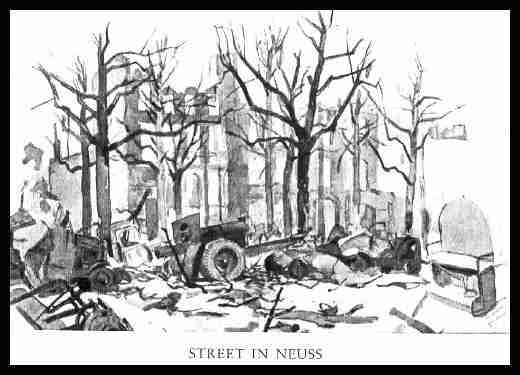
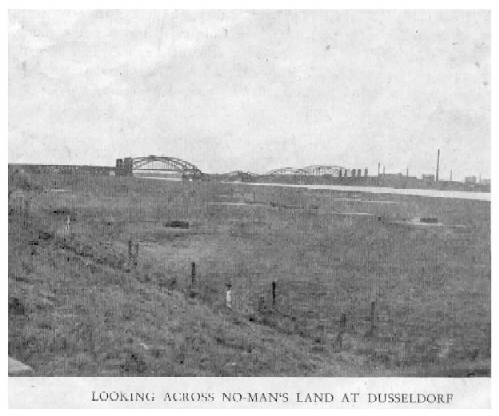
We moved fast after that. Jerry didn't have another chance to get set for us west of the Rhine river. By March 1st we were fighting in the streets of Neuss and we could see the city of Dusseldorf just across the Rhine. On March 2nd we had cleared Neuss and were sitting on the west bank of the Rhine waiting for the rest of the Ninth Army to come up.
 |
ACROSS THE RHINE RIVER INTO THE HARZ MOUNTAINS
 We crossed the Rhine river on March 29, 1945. Once across the river we moved fast. All our fighting before had been the slow, bitter kind. The kind where each yard of advance was paid for with the lives and blood of our buddies. Teamed with the Second Armored Division we advanced rapidly. When the First and Ninth Armies joined at Lippstadt on April 1st, we relieved elements of the Second Armored Division and prevented the enemy, encircled in the Ruhr picket, from breaking out in that sector. During this defensive phase the Regiment was under direct command of the XIX Corps, Ninth Army. We crossed the Rhine river on March 29, 1945. Once across the river we moved fast. All our fighting before had been the slow, bitter kind. The kind where each yard of advance was paid for with the lives and blood of our buddies. Teamed with the Second Armored Division we advanced rapidly. When the First and Ninth Armies joined at Lippstadt on April 1st, we relieved elements of the Second Armored Division and prevented the enemy, encircled in the Ruhr picket, from breaking out in that sector. During this defensive phase the Regiment was under direct command of the XIX Corps, Ninth Army.
On April 7, we crossed the Weser river and advanced eastward taking Negenborn, Stadtolendorf, and Greene and seized a bridge across the Leine river. Resistance became stronger; the enemy was trying desperately to halt our rapid advance. We fought day and night but it was worth it. We had the enemy retreating and we didn't let him stop.
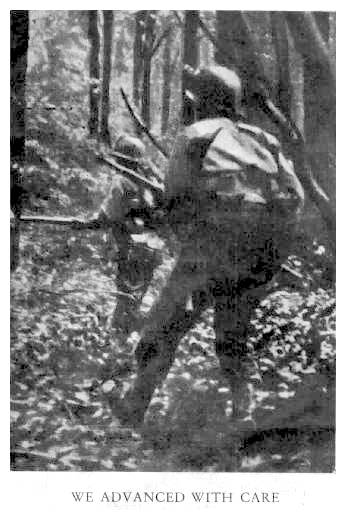
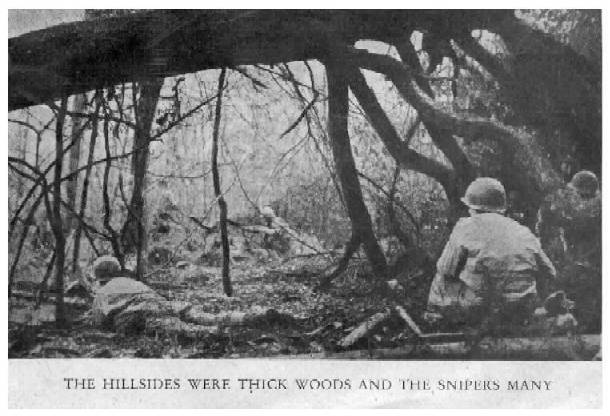
While the rest of the Divisions swept eastward toward the Elbe river, the Regiment was given the mission of clearing the northern part of the Harz mountains. Our job was to protect the right flank of the XIX Corps and prevent the enemy, known to be attempting a reorganization in the Harz mountains, from attacking our flank and cutting the supply and communication lines. Thus far we had fought in the hedgerows, on the plains, in the woods and crossed rivers. Now it was to be mountain fighting.
The resistance encountered was spotty; from crack Panzer troops and fanatical Hitler Youth to old men in the uniform of the Volkssturm. The woods and underbrush were thick, we couldn't see. It was a sniper's paradise. We moved forward from the valleys to the top of the ridges and along them. We hunted the snipers down ----- after they had taken their toll. We fought for and cleared road blocks only to advance a few hundred feet to find more.
During our operations in the Harz mountains we cleared an area extending forty-seven kilometers in length, fifteen kilometers wide, through two-thirds of the way, then narrowing to five kilometers at the western end. In the ten-day period we took 2,516 prisoners of war.
 |
THE ELBE RIVER BRIDGEHEAD
After clearing our sector in the Harz mountains, we took up positions along the east bank of the Elbe river near Zerbst, Germany, where our Division held the only permanent bridgehead across that river.
By this time the fight had been taken out of the enemy and our sector remained generally quiet. We improved our defenses. Our patrols went east and met the Russians, and we celebrated the junction of the two armies.
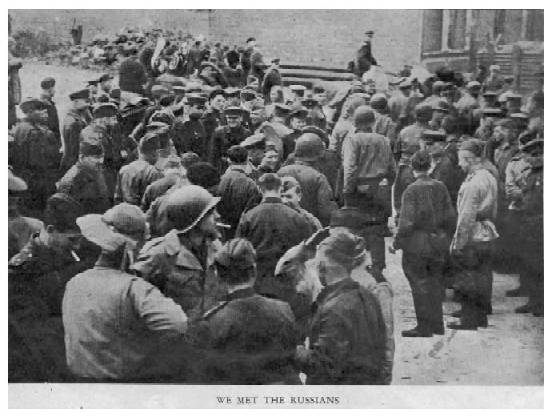
During this time we captured a German regiment, consisting of forty-one officers and eight hundred fifty-six enlisted men, thus adding to the thousands of prisoners we had previously taken in our advance across Europe.
On May 7th we received the news. Germany had surrendered unconditionally. It was over. That for which we had all fought so hard had been accomplished.
We are proud of the part we played in combat. We are proud of our victories, proud of those men who gave their lives for us all. We are proud that we are members of this Regiment. We feel that we have truly lived up to our regimental motto ---- "Verus ad Finem" ---- "True to the End." |
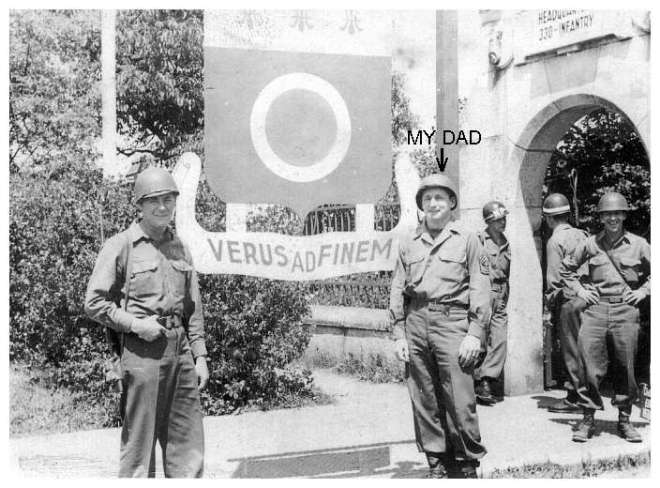
Don Sharpe Stahl (and buddies) outside the 330th Headquarters in France 1945 |





 Feedback: Your comments are welcome!

