Pollution definition:
The introduction into the environment, by people, of substances or energy liable to cause harm to living creatures or ecological systems.
How did pollution begin?
More sophisticated lifestyles. Growing needs of people. Accelerated rates of human and economic activities.

Hence, vehicle and factories emissions often increase the amount of air pollution in the country. Air pollution in Singapore is mainly caused by the burning of fuel, industrial processes and engine combustion. The pollutants given out are sulphur dioxide, nitrogen oxides, carbon monoxide and hydrogen chloride.
However, Singapore has always taken a very serious view towards global environmental issues like air and water pollution, global warming, ozone depletion and the protection of flora. Singaporeans on the whole enjoy good quality air and water. Before 1997, the annual levels of sulphur dioxide, nitrogen dioxide and respirable suspended particles (PM10) were 22 g/m3, 26 g/m3 and 32 g/m3 respectively, which are within the world Health Organization and US Environmental protection Agency standards.
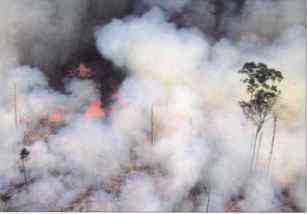
Based on the Pollution Standards Index, there were 61 percent "Good" days and 39 percent "Moderate" days in 1996. However with coming of the haze due to the Indonesian forest fires in the recent years, the air quality had been deteriorating with more "Moderate" days than "Good" days. Asean governments are currently looking for long-term solutions to control forest fires in order to reduce the haze problem.
The Ministry of Environment’s vision for this decade is to develop Singapore into a model Green City with high standards of public health and a quality environment. It will be a regional centre for environmental technology. The Singapore Green plan had been specially formulated for this purpose. The Pollution Control Department (PCD) was set up for environmental planning and development control, air and water pollution, hazardous substances and toxic waste management.
Air pollution in Singapore is legislated and controlled under the Clean Air Act. Industries are required to install, operate and maintain air pollution control equipment to comply with emission standards stipulated in the Clean Air (standards) Regulations. These industries are routinely checked for compliance. PCD also works closely with Registry of Vehicles and the Traffic Police to control emissions of air pollutants from motor vehicles. Burning of unwanted waste has been banned since 1973. Unleaded petrol, introduced since 1991, is sold at a cheaper price than leaded petrol to encourage its use. Stricter emission standards enforced in 1992 require new cars to be installed with catalytic converters in their exhaust systems to convert pollutants in the exhaust into harmless substances. Diesel piling that emits a lot of smoke is prohibited in certain built up areas and within 200 m of hospitals, schools and housing estates. Hydraulic and bored piling are employed instead.
Singapore does not have plentiful water resources because there are no snow-clad mountains, big long rivers and large lakes from which water is readily available. Therefore Singapore is very concern about water pollution at home. The Water Control and Drainage Act checks pollution of inland water bodies and coastal waters. All household and industrial wastewater must be disposed of into the public sewerage system. Industrial wastewater must be treated before it is discharged into the sewerage system. There is regular inspection of the factories to ensure that the owners do not flout the law. Those found guilty are fined.
Before 1977, the Singapore River and the rivers in the Kallang Basin were badly polluted. There were some 21000 houses and squatter huts that had no sewerage facilities. Human waste was just discharged into the rivers. Some buildings served as factories and workshops. Their waste material was conveniently thrown into the rivers too. There were many farmers rearing pigs and ducks. The waste from the pig farms and duck farms was easily washed by the rain into the Kallang River and Pelton Canal. The street hawkers along the rivers discharged their unwanted food into the drains that emptied into the rivers. The Lighters that plied along the Singapore River and Kallang Basin polluted the water with oil and other liquid and solid waste. Oil and other waste from the boat yards around the Kallang Basin made the water dirty and smelly. The vegetable wholesalers such as those in Upper Circular Road threw rotten vegetables into the drains that emptied into the rivers.
The cleaning that began in 1977 took ten years. Residents in the unsewered areas were resettled in Housing and Development Board (HDB) flats. Factories and workshops were resited at industrial estates. The pig and duck farms were persuaded to seek other forms of occupation. By 1982, all the pig and duck farms were cleared. The street hawkers moved into food centres built by HDB. The Lighters were shifted to Pasir Panjang Wharves where loading and unloading facilities were made available. The boat yards either ceased operation or were resited at Tuas and Jurong. The vegetable wholesalers moved to Pasir Panjang Wholesale Market.After the causes of the water pollution were removed, tonnes of refuse and other waste had to be excavated before the rivers were made clean.
Today, the clean rivers are once again home for fish, crabs and prawns. Parks have been constructed beside the rivers. The leisure activities that can now take place on or along the rivers include boating, canoeing, swimming etc. The Singapore river is being revitalised with different activities at different sections of its course.
Waste Minimization In Singapore With economic development, industrialization and growing affluence, the generation of refuse in Singapore increased tremendously by more than 6-fold in the last 25 years. As a result, it places severe demand on the country's limited resources to collect and dispose of the waste. The increasing waste output is a great concern to the Ministry of the Environment as land is scarce here. There is a limit to the number of incineration plants that can be built and the availability of dumping sites. Furthermore, these are very costly. Hence a Waste Minimisation Unit was formed in the Ministry to look into measures to reduce waste generation and waste recycling.
Production of unwanted sounds that are annoying, distracting or damaging to one’s hearing. Note: pollution can also be caused naturally.