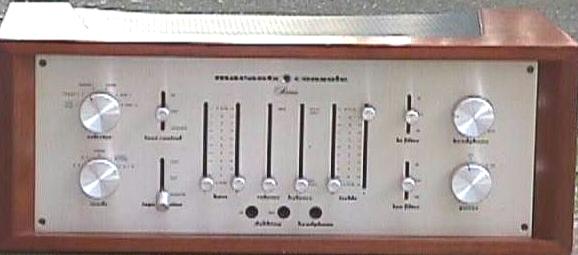
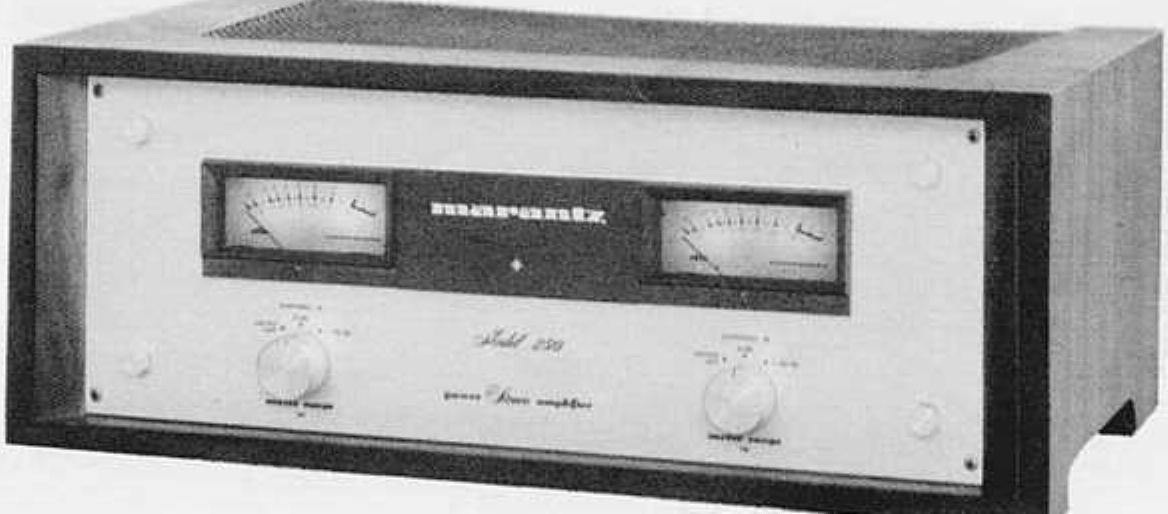
The Marantz 33 pre-amp - a natural match for the 250, and the earlier models, the 15 and 16. Extremely versatile - separate tone controls for ea. channel and paralell in/out connections at the front panel. Two-way tape dubbing. Above: The 250 was good-looking with its impressive blue-coloured power meters and shiny looks. 2x125 watts cont. in 80 ohms. However, it was insufficiently protected. 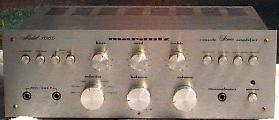
For an integrated amplifier in its price range, the 1060 was also very flexible with much the same controls as the more expensive units. It also had a midrange tone control and mic. inputs at the front panel, in addition to headphone outlet.. The output power was rather conservatively rated 2x30 watts. I have one. 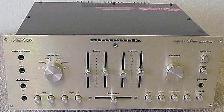
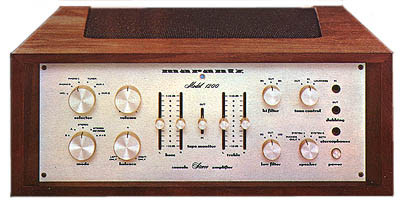
Above: The modell 1120, at 2x60 watts was a very well-balanced unit. Enough power for most applications, as it was rather conservatively rated, and very versatile. In addition to parallel tape in/out at the front, it also had microphone inputs! Two-way tape dubbing, filtering and loudness buttons. Above: The modell 1200 was a real powerhouse with a well-built power supply. Much the same facilities as the 33 preamp, except the volume control was a circular knob rather than slide pots. 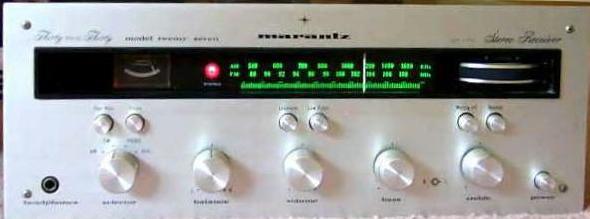
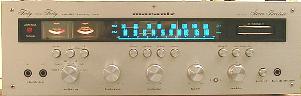
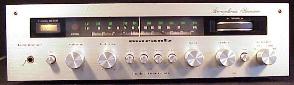
The modell 27 receiver was our best-seller in this category. 2x30 watts and tuner with the classical horizontal tuning wheel. Its dimensions was rather old-fashioned compared with the other Marantz receivers of the same period. Modell 22 was the most powerful Marantz receiver we imported. At 2x40 watts it also had a little more flexibility than the modell 27. The design was slimmer, more like the new series coming just after - the 2215, 2270 and so on. Left: The modell 26 - yielded only 2x10 watts, but popular in spite of that. We calculated it to 2.500 NOK retail price. A little later we got Rotel receivers that sold for less with more than twice the power.