A Great American
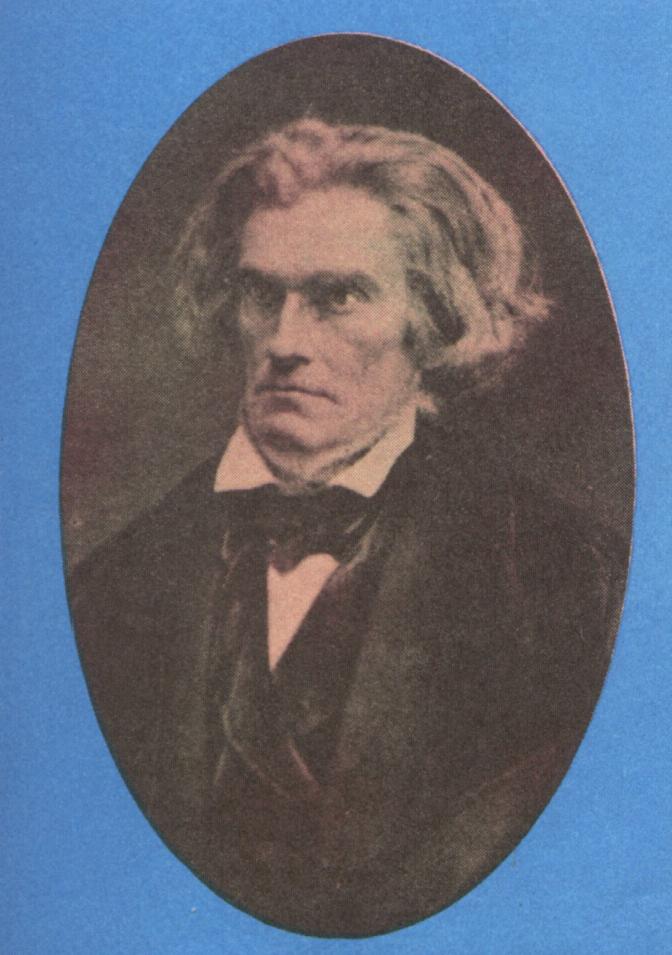
John C. Calhoun
1782-1850
Born:
March 18, 1782 near Abbeville, South CarolinaEducation:
Self educated then graduated from Yale College and went on to Tapping Reeves Law School in Litchfield, Connecticut.Occupation:
Public official, lawyer, orator, plantation owner, and slaveholder.Religion:
Family Life:
Married Floride Calhoun, his second cousin, in 1812. Floride's wealth enabled John Calhoun to settle on a plantation called Fort Hill. Floride snubbed Peggy Eaton, wife of the Secretary of War, resulting in Calhoun's resignation from his job in 1832.Political Career:
Member of the House of Representatives, 1811-17, Chairman of the House Committee on Foreign Affairs during the War of 1812. Secretary of War in James Monroe's presidential cabinet 1817-25. Vice President under John Quincy Adams 1825-29 and again under Andrew Jackson 1829-32. United States Senator 1832-43 and again from 1845-50.Highlights of His Career:
Calhoun often disagreed with Andrew Jackson and was well known for his strong debates in the Senate with Daniel Webster over slavery and states rights. Calhoun wrote the Doctrine of Nullification with Henry Clay, also called "The South Carolina Exposition." Calhoun opposed war with Mexico and sponsored a successful compromise to reduce tariffs on South Carolina.Appearance:
Died:
March 31, 1850 in Washington D.C. Calhoun was 68 years old.Buried:
Calhoun is buried in St. Phillips Churchyard in Charleston, South Carolina.Famous Words:
"The United States is not a union of the people, but a league or compact between sovereign states, any of which has the right to judge when the compact is broken and to pronounce any law to be null and void which violates its conditions." Words from the "South Carolina Exposition," opposing the tariff act of 1828."The South, the poor South." Said to be Calhoun's last words.