|
|
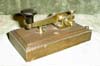
Key
|
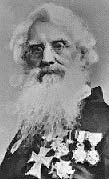
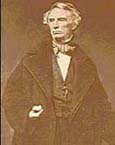
Samuel Finley Breese
Morse,
b. Charleston, Mass., Apr. 27, 1791, d. Apr. 2, 1872,
achieved distinction both as an artist, particularly as a
painter of miniatures, and as an inventor. He was educated
at Yale College but also went to Europe for art training. It
was during the return voyage from one such trip (1832) that
he conceived of an electromagnetic signaling system.
Although Morse continued with his artistic activities in New
York and became first president of the National Academy of
Design, serving from 1826 to 1845, his main activity after
1837 was the development of an electric telegraph.
|
Systems making use of a deflecting magnetic
needle had already been developed by a number of workers,
particularly Sir W. F. Cooke and Sir Charles Wheatstone, who
installed the first railway telegraph system in England in
1837. Morse's important contribution was that he based his
receiver on the electromagnet. This feature ultimately
ensured the universal adoption of his system. When the
electromagnet was energized by a pulse of current from the
sender, a soft iron armature was attracted to the magnet,
producing a V-shaped deflection in the straight line being
recorded on a moving strip of paper by a pencil attached to
the armature. The grouping of a succession of such marks
symbolized the words of a message. Morse soon devised a code
whereby letters and numbers were represented by combinations
of dot and dash symbols, which corresponded to signals of
short and long duration. With the aid of Alfred Vail, the
original receiver was greatly improved and adapted to print
the MORSE CODE
|