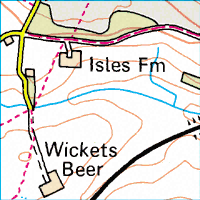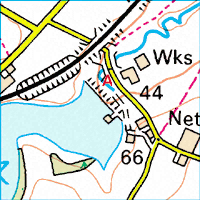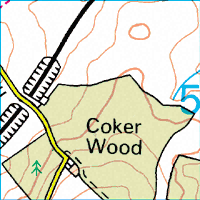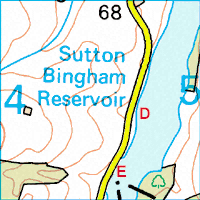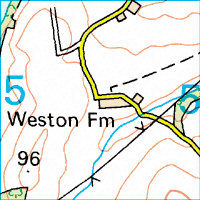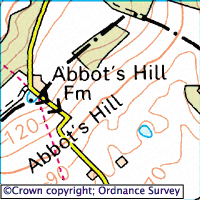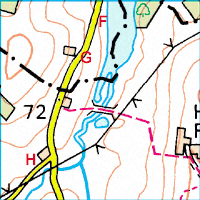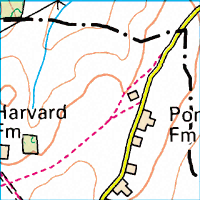

Map of Sutton Bingham Reservoir
This map also highlights some of the key viewing areas, as well as the best places to go for specific birds.
|
|
|
|
|
|
|
|
|
|
|
|
Key Locations
A: Dam and Water Works
Although access to the dam itself is prohibited (unless you have a fishing permit) plenty of birds can be seen from this area. Your best chance of seeing Grey Wagtails is in this area, but they are by no means a certainty. The water works provide a source of insects for Swallows, Martins and Swifts in the summer months, and the area is also your best bet for Collared Doves. Warblers frequent the stream side trees and bushes in the summer, as do finches and tits. Autumn passage may bring Common and Black Terns to the reservoir, and from here you may be lucky enough to see them fly overhead.
B: Higher Causeway
Parking on the road look out over the reservoir to your left and right to view the main area of water and the smaller pool. The small pool is often a good site for duck, both diving duck such as Pochard and Tufted Duck and dabbling duck such as Teal, Mallard and Wigeon, especially in the winter months. The secluded far end of the pool is worth checking for Grey Herons and occasional Shoveler. Swans and geese also favour this area of water. The main area of the reservoir on the opposite side of the causeway can yield views of feeding Swallows and Martins in the summer, and ever-present Great Crested Grebes, Coots and Moorhens. This is also the best place to view the gathering gull flocks as they come in to bathe before flying to the coast to roost. The causeway itself and the lawn outside the sailing club are the best places to see Common Sandpiper in the spring as they pass through on migration.
C: Car Park and Church
Park in the Wessex Water car park (which is not unfortunately open during the winter) and scan the numerous trees and shrubs around the car park and the track leading to the Norman church. This area is superb for tits, warblers, finches and other small birds. There is also a Rookery on the southern edge of the car park. The reservoir can also be viewed from the car park, and it is worth having a quick look for any wildfowl or occasional Kingfishers. Goldcrests and Coal Tits are frequent visitors to the coniferous and Yew trees, feeding on the insects. This is a good area to check at any time of the year.
D: Hide
Park in the small lay-by and walk down the path to the hide. It is always best to be quiet as an occasional Kingfisher may be seen perching on a post in front of the hide. The trees opposite the hide are often frequented by Cormorants as they dry their feathers after fishing. The partially submerged willows on the waters edge to the left of the hide can at times in the summer hold a singing Sedge Warbler. The small bay opposite the hide can be a good spot for wintering duck such as Teal and Wigeon, and Great Crested Grebes can be seen on the water wherever you view the reservoir from at the northern end.
E: Lower Causeway
The Lower Causeway gives similar views of the reservoir as the hide, but the area of rough scrub on the other side of the road is a haven for birds. Bramble bushes supply food and cover for birds in the spring and summer, including Whitethroats. A small pool in the undergrowth is an area worth checking for bathing birds. The causeway itself is often good for passage Common Sandpipers and the occasional Grey Wagtail. Again on the opposite side of the road from the reservoir, arable farmland which provides feeding grounds for a range of Corvids and winter flocks of Redwing and Fieldfare.
F: Roadside
Less than 20 metres down the road from the lower causeway there is a sizeable lay-by where good views of the reservoir and the farmland on the far side of the reservoir can be viewed. A scope is certainly useful from this position, check the fields for Pheasants and occasional Jays. The trees on the far bank are often good spots for woodpeckers and Cormorants. The pylons are often used by raptors as perches, including regular Buzzards, occasional Peregrines, and passage Ospreys (usually at least 1 spring record per year). The waterside vegetation is home to Sedge Warblers and occasional Reed Buntings in the summer. Towards the end of the autumn this area of the reservoir becomes quite dry as water levels drop, resulting in areas of exposed mud. This acts as a magnet for passage waders, including Green Sandpiper, Ringed Plover and Greenshank. As well as waders the exposed mud brings with increasing regularity Little Egrets. The opposite side of the road is also worth checking, with a mature hedgerow and small thicket that holds a good variety of birds. Feeding tits and finches, including Bullfinch can often be seen. In summer warblers are ever present, especially Chiffchaffs and Willow Warblers. Very occasional Willow Tit may also been seen in this area.
G: Hilltop Farm
At the top of the short hill, park opposite the farm entrance in the lay-by and view the extreme southern end of the reservoir. Swallows and martins can often be seen in the spring and summer hawking for insects above the willow trees. In winter large flocks of Wigeon and Teal gather in the relative shelter of the vegetation, and the occasional Kingfisher will perch on the partially submerged vegetation. This area is also good for Grey Herons and Canada Geese, both of which frequent the small islands in the reservoir. These islands are also the best site for wintering Snipe, though they are often difficult to pick out. Being at the top of the hill you can often get clearer views of the exposed areas in the autumn, and so it is worth having a quick check of any present waders, etc. The trees along the road often contain smaller birds looking for food, and perched singing.
H: Farmland and Stream
Although not strictly speaking part of the reservoir, this area does include the stream that feeds the reservoir, and is also a good spot for birds, hence the inclusion. Decent hedgerows and arable farmland can be found a few metres down the side road. There is space to pull in off the road and view the area. Check the fields and hedges for Yellowhammers and other birds, such as Dunnocks and Wrens. The stream-side trees can attract winter finch flocks, often comprising of Siskins and Redpolls, and possibly the occasional Brambling. The fields in winter attract thrush flocks, and on a good day five species of thrush may be recorded in this area in winter. The small area of trees and shrubs by the road junction is well worth a look, with birds such as Nuthatch, Marsh Tit and Treecreeper all being regular visitors. Commoner "garden" birds are also plentiful in this area, with a good variety of finches and tits.