|
The
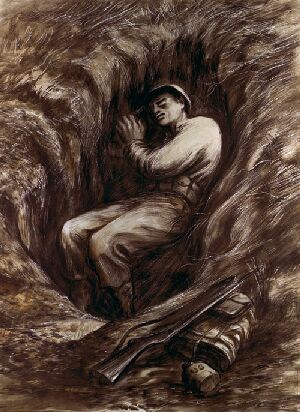
holes were usually rectangular, under the best conditions four to five
feet deep, two or three feet wide by six feet long. When the men were in
them for more than one night, or if they were veterans, they got them
covered.
Digging the hole was often arduous, sometimes exhausting. A typical
position would be in or on the edge of a wood, which meant many roots, as
most of the trees in Belgium were planted in rows close together. During
the second half of December, when the nighttime thermometer began to go
down to near or below zero, the ground was frozen to the depth of a foot
or more. Pickaxes were hard to come by on the front an even when available
they weren't very much help. Sometimes it took hours to chip away enough
frozen earth to get to unfrozen ground. Men used grenades or satchel
charges to blow away the frozen earth.
The cover protected the men from shrapnel and broken branches hurtling
down from the tree bursts. During an advance, GIs frequently were able to
occupy holes abandoned by the retreating Germans. Nearly always they were
deeper and better protected than ones made by Americans. Sometimes this
was because the Germans were able to utilize slave labor to dif; more
often because the Wehrmacht supplied better tools to its men than did the
U.S. Army, and because in many cases the German soldiers were more
strictly disciplined.
|
|
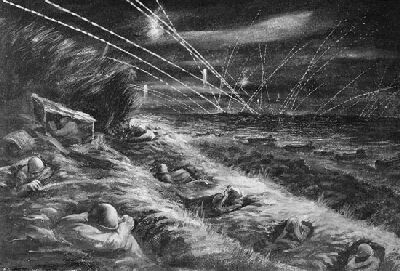
Foxhole on a Normandy Beach
Beach battalion men and shore troops sought refuge in foxholes along the
beach. Every night since D-Day, raids by enemy planes on the allied
beachhead became an accepted discomfort. The men crouched, laid or sat in
foxholes all night and caught whatever few precious hours of sleep they
could before dawn. Some Allied casualties in this area were inflicted by
friendly low anti-aircraft fire. |