|
I chose sandblasting as the method of cleaning most of the parts, as it seemed to be the most efficent way to
remove more than 30 years worth of rust, grease, grime, and what little paint there was left. Sandblasting IS an
extremely efficent method-when it works. So many things have to be right to make the process worth the trouble that
it's almost like painting in that regard. If it's too humid (or raining), forget it-the sand will clump up and clog the
nozzle. If the sand hasn't been filtered, and has too many pebbles in it, it'll clog the nozzle. If your compressor has
seen better days and blows a little oil and/or moisture through the lines, it'll clog the nozzle. Sometimes, all you have
to do is just look at the nozzle, sitting there on the bench, not hooked up to anything, and it'll get clogged-just for
the hell of it. Another wonderful side effect of using a sandblaster is that everything-(and I mean EVERYTHING) in
your garage(or within roughly a 100 yard radius) will instantly become covered with a fine, gritty dust, not too
mention that sand will find it's way into every bodily orifice you've got (and a few you didn't know you had). All
that being said, when it does work, it works great-you can take a rear control arm from a lump of grease and rust
encrusted iron to virgin gray steel in a matter of minutes(just make sure you remove the axle bearings first). I don't
reccomend using it on sheetmetal-the force of the sand and the heat generated can (and will) warp sheetmetal
before you can say, "What the ....?" Chemical stripping works best for large, flat areas of sheetmetal-I had the best
luck with Aircraft Stripper. Follow all the directions, use heavy-duty neoprene (not silicone, not rubber, NEOPRENE)
gloves and a respirator, and old paint will come off in layers. Be sure and rinse the part thoroughly-otherwise the
stripper can re-activate months later(yes, it can) and ruin the beautiful new paint job you busted your butt to create.
|
I didn't just use the sandblaster to clean parts-I also put it to use removing the chrome plating from the
headlight trim rings(which will be body color), the window frames, exterior door handles, 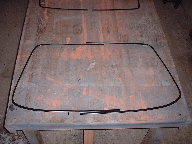 aluminum trim around the
windshield and aluminum trim around the
windshield and
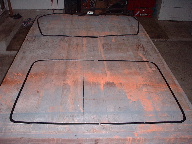 rear window-pretty much all the chrome on the car. rear window-pretty much all the chrome on the car.
Most of the exterior pieces I had powdercoated
semi-flat black rather than use paint-powdercoating is much more durable and will stand up to exposure and
repeated handling better-I also had the brake calipers done in a gloss red. The Eastwood Company has a home
powder coating kit I'll probably end up using on any future projects-when you spend this much time, effort, and
money restoring a car, you want your hard work to last a while. Using spray paints seems like a good idea at first-
they're cheap, easy, and lots of choices as far as color and gloss level. For a small project, or just a part or two,
sure, they're great-but-you don't want to do a whole car that way. At $3-$5 a can, the cost adds up. They're just not
as durable as real automotive paint, and nowhere near powdercoating in that regard. That being said, Eastwood does have an amazing selection of spray paints and coatings for just the right look and finish on different items, and the quality is much better than hardware store brands.
|
All of the hardware I removed from the car was rusty and I didn't trust any of it to hold the car together once I
started driving it again, so I decided to replace it. ALL of it- every single little bolt, nut, washer and screw. I ended
up measuring and counting all the old pieces, then ordered stainless replacements from Totally Stainless for everything except suspension
hardware-for that, I used metric Grade 10 cadmium plated. Here's a link to a business that deals in QUALITY metric hardware! Regular stainless is NOT strong enough for load-bearing
applications, but it's fine for the body and interior-and it'll never rust. Plus, it's gonna be SOOO nice when it comes
time to start re-assembling the car-all shiny, painted parts and polished hardware I won't have to worry about. |


