 THE IMPORTANCE OF BEING EARNEST:
The Word of God is NOT a book

PAGE TWO
Click HERE ...if you have not read page one.
"Hold it!" I just heard someone shout. "That was before Pentecost -- once the Holy Spirit filled them, it's different."
Oh, is it?
"THE END IS NEAR !!"
[The emphasis in each of the upcoming Biblical quotes is my own.]
Before we do, though, let's check in the Gospels with the ultimate authority, Jesus, and see what He had to say about "The End of the World:"
In fact, guess what? "Since day one" is not an exaggeration. Some very early, very famous Christians made the same sort of mistake -- despite the fact that Jesus told some of them in person that they could not know the time! Guess who made these mistakes?
Peter did:
Here's another point to consider: If all five of these men were writing the inerrant Words of God, then how could any disagreement possibly have arisen between them? Wouldn't they all, quite literally, had to have been "praying from the same hymn book" if all of them were writing infallibly on behalf of God? Yet they did disagree on some things -- some times to the point where it got downright nasty.
If we are to credit all of the Apostles with having written the supposed "infallible" Words of God, then when disagreements arise, who is right and who is wrong?
Consider the relationship between Paul and Barnabas:
Continued....
We learn from the Gospels that there are times -- even with Jesus right there in front of them -- that the Disciples didn't quite understand certain of His teachings. Even dear sweet Peter, bless him, gets taken down a peg in this account from Matthew 15 (Mark details this same event in chapter 7 of his Gospel):
No offense to our good comrades and brothers the Apostles/Disciples. But our Lord makes it clear they were not infallible in their understanding, even with Him right there to explain it. And if that be the case, how much more might they have muddled certain things up after Jesus physically left them?
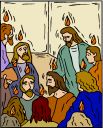 As to the issue of Pentecost, some people offer the argument that the apostles could have made some mistakes early, but later supposedly took on the power of writing infalliby on God's behalf after being filled with the Holy Spirit. That's a difficult stretch, because "infallibility" is not one of the promised gifts of the Spirit. But in any event, all of the Epistles were written after Pentecost (which is why you see them chronologically after The Acts of The Apostles). So let's take a look at parts of them.
And observe His warning in Luke 21:
That seems pretty clear to me. Yet look how many people got themselves all worked up for nothing this past New Year's Eve, thinking that the new Millennium marked "The Last Days." And of course we know that wasn't the first such episode. People have been misjudging this since day one.
....and so did Paul: 1 Peter 4:7: The end of all things is near.
....as did John: 1st Corinthians 10:11: ...For we live at a time when the end is about to come.
....and James:
....and Jude:
Every single Epistle writer got this point wrong! That's all of them -- Peter, Paul, John, James and Jude -- and they all made this mistake! Can we look upon their writings, then, as "The Infallible, Literal Words of God?" Obviously not.
Throughout Acts, we see these two men closely allied. Yet look at this:
The King James version, I feel, does a better job of emphasizing how heated this quarrel was. K.J.V. gives the following translation for Acts 15:39:
There appears to have been a reconciliation, but possibly one which took 14 years to arrive at (that is suggested, though not certain), according to Paul's writing in Galatians:
However long it took to come about, the reconciliation must have been shaky -- or at the very least, they found something else to disagree about. Observe here that in addition to quarreling again with Barnabas, Paul now takes a rather nasty shot at Peter over the issue of circumcision. And note how he contradicts Peter, another supposedly "infallible" writer of Epistles:
Peter makes no mention of circumcision in his Epistles that I can find, but we must assume he taught in favor of it, based upon what Paul wrote. And it's clear Paul was very opinionated on the matter:
(Some versions translate this as "castrate themselves." The King James expresses it this way: 5:12: "I would they were even cut off which trouble you.")

CLICK HERE TO READ NEXT SEGMENT

Return to menu of essays

Return to "V.E.'s" home page.
