For opinions you don't need!
    |
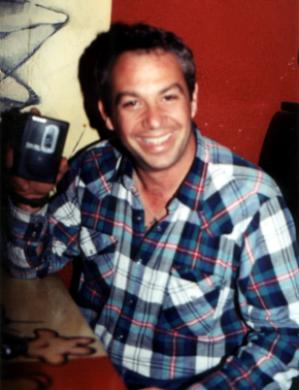
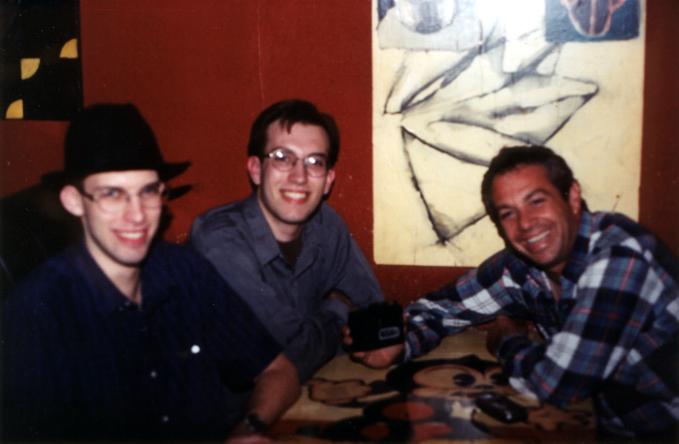
by Al Shipley interview by Al Shipley with Zac Shipley photos by Mat Schulman If Mike Watt were any more down to earth, you'd need a shovel to communicate with him. Thankfully, instead all you really need is to e-mail him and show up after soundcheck for a private audience for one of his trademark spiels. So although I was not particuarly nervous about this opportunity to pick the brain of a self-made living legend, I did approach our appointment with some thought and apprehension. The bassman may now be well into his forties with two decades of musical history behind him, but Watt had shown no signs of slowing until earlier this year when an abscess in his perineum threatened his life, sapped his strength, and left him laid up in bed for two months. But in true workmanlike fashion, he's opted to get his strength back by getting out on the road again, and recently completed his fortieth (!) tour with the Pair of Pliers, celebratorily christened the "Enough W/ the Pissbag Tour". Now he's on yet another hellride, joining J Mascis & Fog to promote the new album More Light, playing with a pick again, along with George Berz comprising the best lineup Dinosaur Jr. never had. After a failed attempt to catch up with Watt at the Pliers' gig at the Black Cat in Washington, D.C., we properly rendezvoused a couple weeks later when he swung back through with the Fog. The conversation got off to a fast start, with the lighthouses in Watt's eyes twinkling as he reminisced about past trips to the nation's capitol. WATT: The old 9:30 Club used to be right by the White House. D. Boon's favorite gig was playin' the 9:30, by the same alley as the Ford Theatre, because he thought from there, that when we did our spiels and hollered our points of view that they could hear us. That was the closest we were ever gonna get to the eye at the top of the pyramid. I've played to the new location [of the 9:30], and I don't like it as much, tall roof. The original one I've played maybe 17 or 18 shows there, that's the only place I ever played for years in D.C. All Minutemen, and all fIREHOSE except for one with the Beastie Boys. Gravvy: You should appreciate this, at the Elliott Smith show last night, for the encore they closed with a Blue Oyster Cult cover, "Don't Fear the Reaper". WATT: He's a good guy, who's in his band now, sometimes the Sleater-Kinney drummer? Gravvy: No, I think they're still on tour. But I heard that they're actually about to take a break, not doin' another record for another two years. WATT: I was talkin' to Carrie, she was sayin' it's kind of hard for them to tour, she just goes crazy. Gravvy: Yeah, they didn't even do any interviews on this last tour. I guess press can be kind of crazy with them, they had a 3-page spread in Time magazine this year, well, not just them but the whole Ladyfest thing. WATT: Oh, I got to play there with Kira in Dos. That was something. Those girls look up to Kira big time, since she was in Black Flag. Gravvy: So you think that press is a really vital aspect of music as a community? WATT: To me, man, the writing part, especially in the old days, was really important. Believe it or not, the Internet is a big part of that now. I know there'll be a day when bandwidth will be big enough and it'll be just like television. But for now, most of it's written, and people have to go back to reading again. I kinda like that. I think it's a real good thing. It gets kids, and older people, back to readin'. There's an art in the usage of the written word. I can't tell you how inspired I am by books. I mean, yeah, I play bass, and I make music, but, I think I'm influenced by more writers than other music people in a way. Because you don't wanna cop another guy's licks, but if you're translating the motions and feelings through words, you don't have to worry about rippin' off licks. Believe it or not, writing for me has flow, it has rhythm. I get rhythms out of it. But there's also philosophy, ideas, perspectives, tangents. With writing you can get several things talked about at once. You have to get kinda linear with them, but with music you don't have to at all, you can have several things at once. Gravvy: I was thinking the other day, this is kind of a corny idea, but since I'm a writer and a drummer, it occurred to me that percussion is sort of like punctuation. The words are the melody and the meat of the matter, but at the same time, the punctuation is essential to making sense of it. WATT: Exactly, what makes it breathe, what makes it live. So it's not all monotone and robotic. What's also important is the words that you use. English is very flexible, you don't have to use the same word for the same thought. You can use a three-syllable one or a one-syllable one. This is where a book like Ulysses, where the guy's Irish, but he uses English so well, he reinvents it. There's this thing about, oh, you wanna be original. But if like in Finnegan's Wake, you start inventing too many words, you don't even know what you're talkin' about. There's still ways to be original and still use the same 26 letters and the words. And that's what I would like for music people to get onto. They say, y'know, there's only 8 notes, but still, it's the way that you use 'em. You write a novel. Gravvy: The English language is just amazing. Even writers like Jerzy Kosinski who are fluent in several languages choose to write in English just because it's so flexible. There's so many tricky rules of pronunciation and double meanings that it can be easily manipulated. WATT: I think it's very important, it puts some character into it. And also, it can get some simultaneous things goin'. This idea of pilin' up things, not to be mysterious or somethin', but just so that you get a soup that's not all salt. You get a little symphony of flavors goin' on. Pettibon is a fine artist, does drawings. And a lot of his art is very inspired by writers. I'd say about a third of his captions are right out of Henry James. The writing is the one art that's just been stomped down the most in the last 20 or 30 years because of visual and audio, y'know, TV and (cough) so-called music. Because I think real music really embraces literature, it's not really at war with it. Gravvy: Kurt Vonnegut has a unique perspective, that written language won't survive very long because reading is so difficult and time consuming compared to other mediums. WATT: But what more private medium? Since you have to go in there by yourself and get meaning out of the symbols, you're almost one on one with the writer. So I think that in a way, like bacteria, where very early in the beginning, it never had to evolve much, it'd found its niche. I wouldn't like to be such a doomsayer and say that it's gonna be gone or be replaced. There's just something about it. It's like saying that 3/4 time is old-fashioned. No, you just might get tired of always writing in 3/4ths, but it's always gonna be there for you. I'll tell ya, as far as community, in the old days with the fan zines, sort of like the vibe I get from the new internet world. It's a community, but not with the 'mersh. It's not hiding from it, just parallel to it. And it doesn't even have to be localized anymore because of the worldwide exposure. But as far as the writing's concerned, it can reach the reader with no middleman, no Spin editorial, no Rolling Stone editorial, or Washington Post or New York Times, none of that. In fact, when you think about newspaper reporters now, why do they even have to go to a paper? They could publish their own stories on the web! Gravvy: The dissemination of ideas is always more interesting when there's more sources. When everyone hears the same story from the Associated Press with the exact same wording, everyone ends up with the same biases. But if everyone hears about it from their own channel, it's like the telephone game, there's all kinds of variations. It used to be that every city in America had its own music, its own sound. Now, no matter where you are the media gives you the same music, so people end up starting the same bands in every state. WATT: And that's bad. See, in the old days, the fanzines, that's how you knew what was happening elsewhere. I'm in LA, so I wanna hear what's happening in Austin, I wanna hear what's going on in Minneapolis with the Huskers. All these things. It was very literature-based with the fanzines, you had guys who cared about the music big time. Not a lot of money in it, they were doing it pure out of love, intense. They were really the fabric that held a lot of it together. A lot of the bands came and went, but not the fans. You couldn't see all those bands, a lot of the bands didn't tour in them days, so fanzines were so important. So I've seen kind of a revival of not the fanzines so much but the ethics with these websites. These websites have a lot of personality, a lot of individuality, they've got points of view. They're not filler for ads. You don't have to make compromises with the big guy, because you can get online so econo. And your website looks as big as theirs! What matters is the C word, content. It's not so much the delivery system anymore. I still see the spirit. Some people like to talk about the good old days. But I say that they're still with us in some ways. In fact, maybe this format is a little better. It's cheaper, it can reach more people. There's not as much risk, so you can go crazy. See, when real world risks go down, the ability to take chances goes up. You don't have to worry about makin' it 'mersh. You can really be raw. And I like that idea. Gravvy: A year ago, you were talking about plans for your next record, "The Secondman's Middle Stand," are you still planning to do that? WATT: Yeah, bass, organ, and drums. The problem is that I was in bed all year. Like we were talkin' earlier about the pissbag. I'm gonna do it next year. I had to tour right away. It cost a lot of money to save my life. Plus I'm still getting my strength back. My playing was real bad, it still is. This is real interesting playing with J now. I haven't used a pick in 17 years. I used to do it in the beginning of the Minutemen. And then I stopped. The last song with a pick is one song from "Double Nickels [On the Dime]" called "Shit From An Old Notepad". Everything else on that record, 45 songs, and 44 of 'em are with fingers. But everything before that's pick. Because punk was too fast for me. I used fingers before punk. Then punk came and we started the Reactionaries in '78 and I had to use a pick. And then I started playing like rhythm guitar! And I said goddamn, I gotta make it a bass again. So I started playing with the fingers. Then I lost it. If you don't use it, you lose it. And J's helping me get it back, in a way, through a Marshall! Gravvy: You've played with a lot of very unique guitarists, do you think that's really shaped your bassplaying? WATT: The one neat thing about punk was, before punk, the guitar players were like the big bosses of the band. And then when punk came, everybody was lame. So all the sudden the bassplayer is just as good as the guitar player and had all of the strength. I felt that a lot because I played before punk and I got the feeling that bass is where you put the lame guy. And all the sudden with punk, everyone's lame, so I was like 'Yes, I like this!' It had people thinking of more than just guitar gods. Although I have to say that J Mascis is one of the guys who can really fuckin' play the guitar, man. Reminds me of D. Boon and Greg Ginn and Thurston Moore, some of these guys that had their own voice, that can still take a tired old cliche like lead guitar and still make it theirs. Bass guys look good makin' other cats look good, that's why they don't really stand out. It's like when you walk in the bathroom. Do you see the tile or do you see the grout? I'm more the grout. I look at the grout. Most people look at tho se tiles. But you know without the grout those tiles'd fall out. Think about that too, bass is like glue. And what's glue with nothin' to stick to? Just a puddle. See, I don't wanna be a puddle, I wanna be stuck to somethin'. So it's a trippy thing. Y'know, his mother, D. Boon's mother, made me play it, we were thirteen, I didn't even know what the fuck it was. 'Coz at gigs, at arena gigs, you're so far you couldn't really see, they looked like guitars. I didn't really know they were even lower. I just thought it was a four string guitar. In fact, the first three years, I played a four string guitar. They don't really tell you about it. It's really the left hand of the piano. PF: Yeah, I remember being young and not really understanding the difference. You see drums and piano, but then the guitar and the bass look the same and you couldn't really hear the difference. Sometimes when you got the headphones on you heard a little in the lower registers, but you don't get distinctly different parts in most rock bands. it out, so did Jack Bruce. And then with the punk guys, Deedee Ramone is just as strong as Johnny. But then there are the quote 'virtuosos' like Flea and Les Claypool, and they really brought the bass out. J's actually havin' me do bass solos. I have a box he gave me called the Super Hard On. And I step on that, I've never stepped on a box before, and I get louder. We're playin' stuff of the first Dinasaur Jr. record, we're playin' stuff off You're Living All Over Me, which to me is the great record. It was a moment in their time, they were such young guys. That band started early. I'm about 8 years older than J, almost 9 years older than him. But you wouldn't know it. This is a weird perception of him, that he's somehow a slacker. The guy's mind is always goin'. I'm tellin' ya, in real life, he's always thinkin'. He talks, people think he doesn't talk. Even on the records, he's playin' everything. His mind is goin' like I said. I might be 9 years older but in some ways, he's like way more ahead of me. He is quite a thinker. Maybe he's not loud and quick with the words, but he's got words, believe me. He's always thinkin'. If you listen, you think he's not sayin' anything, but you can hear him goin'. He's got these guitar things goin' through his mind, out his mouth, mumbling 'em. And the other funny thing is when people say to me, "Why do you play with a pick? Why are you lettin' him tell you what to do, why are you playin' through a Marshall?" Like I don't get my way enough with my own bands, what the fuck? How're you gonna learn if you're always gettin' your way? But see, this is the kind of society we bred. Like really quote 'making it' is telling everybody what to do, always getting your way. And everybody knows the real world's not like that. It's kind of a fascist kind of idea. So I put myself in a situation to help a guy with his thing. And I haven't done it for many people. I'm doing it for J, I did a little bit for Rickie Lee Jones, I did it for Perry [Farrell]. And I tell ya, without doin' that for Perry, I don't think I ever woulda wrote the Opera. He turned me onto a lot of ideas. Not like sitting me down like a school teacher, just bein' around these cats. This is what's weird about school, the whole idea of one guy lecturing everybody. I don't know if you really learn stuff, I think you're kind of intimidated. But to really learn is to get put in a situation with people. And then they start rubbin' off on you and makin' you curious. Y'know, that's the most intense disease, is gettin' curious. Nothing can stop you. All the sudden there's no materialism, it's just somethin' in your mind that's gotta get quenched. And if a dude can fire that up in you, to me that's schoolin'. The school of life. And that's kinda what I'm in here with Mascis. It's really me, it's a really me thing. And I tell you, when I get done with this tour, I'm not gonna stop playin' the pick. I'm gonna write songs with picks. I'm not gonna let it go again. I've gotta play with fingers, believe me. But I'll write some songs with the pick. I'll tell you about this organ record, I want it to be about the now, in the moment. So already these songs that I wrote in the summer are real old. So I'm gonna write songs right after this tour. Now I wanna be in the present. And the next record is gonna be about the future. Gravvy: Are you ever gonna do a record with the Pliers or are they exclusively a live group? WATT: Yes I am. In fact, I'm gonna do a simultaneous record. I'll do one record with Vince [Meghrouni] amd Tom [Watson], the Pliers. And then a record with Bob Lee and Nels [Cline], the Black Gang, and release them simultaneously through Joe Carducci, the guy who ran SST Records. He has a label now with Billy [Stevenson], from the Descendants and All, it's called Owned & Operated, and I'm gonna give 'em back to them. I think things are changin' back to indie. My Columbia thing's always been like an indie thing. But now with the internet and stuff. Carducci, he tried this movie thing and stuff, and now he wants to get back to havin' a label. And there's nothin' like fired up people. So I'm gonna give 'em two records, the Watt and power trio guitar thing, Columbia one's gonna be first and that's gonna be the organ thing. Gravvy: Who's gonna play on the organ record? WATT: Barrett Martin, plays drums for the [Screaming] Trees, great guy, and this guy from Pedro named Pete Mazich. He's from a Croation wedding band, and he's a wicked fuckin' B3 player. What I learned from the wrestlin' record [1994's Ballhog or Tugboat?] is, bring somebody from the outside to make it exciting. I did that with the Opera with Hodges, Hodges played the blues. Mazich I've played with in the Madonnabes. Gravvy: Is there ever gonna be a Madonnabes record? WATT: I dunno, because they're not our songs, although we do change them radically. I like playing with them. The girls to college, we have dancers. Gravvy: How are you feeling after the illness, are you all better now? WATT: No, I still feel bad. I feel like there are scars inside me, well there are scars inside me where they cut, and so the blood doesn't flow through good there. It feels like a puppet where I'm not tied tight in the middle. It's like pitching with only arms, imagine being a pitcher and you can't get your body in it. That's kind of what I feel like. But that's comin' along, I think. I got a little foldup bike in the van and I ride every morning. It's important to me, my mind too. I wrote the whole opera on the bike, the bike's something else. There's something about being a little physical, I mean, I'm not a jock or an athlete or anything, but there's something about using your body and gettin' the blood pumpin'. It's got a sense of rhythm too, so writin' songs, you get these ideas fuckin' flowin' in your head. You also get out of the linear, regular world, you get more attachments, free association, instead of when you're sittin' there with the bass in your lap. There's somethin' about motion and havin' to be plugged into the real world so you don't run into a hole, you're alive. Gravvy: So that's how you write, you get thoughts on your bike and work on them when you get home? WATT: I usually start with a title. And then I get a music goin' from the bike. And then I get home and the words are last. Get the title first then the music then the words. The title says everything. To me, when I see the title of the song, this tells you what the song's about. And with other cats, the title has nothing to do with the song. Some Minutemen songs, the title's longer than all the lyrics. We always came up with titles first. A lot of Minutemen songs, the title isn't even used in the song! Like "The Roar of the Masses Could Be Farts", it never says that in the song. "Do You Want New Wave Or Do You Want the Truth", it never says that in the song. I just thought like when you go to the museum and you see the painting and then they got the little caption. There's no way they really relate. One's tryin' to describe the other but it isn't a little version of it. It talks about who the artist was, this is when he went through his Paris period. That's why, if you look at Minutemen words, they're not in lines, they're all in like a big block of writing. We were trying to make it like you were in a museum and trying to describe the paintings. We always thought that was a funny dichotomy. Why would you have to describe the painting, don't you have to just look at it? So we were havin' fun with lyrics like that, don't you have to just listen? But with lyrics, I guess, it can be hard to tell what the guy's sayin'. I remember the Germs record, when I got that, I was like goddamn, this is what he's sayin'? I'd seen 'em like 50 times, I never knew he was sayin' any of those things. But there was all this literate poetry, really wonderful. And sometimes it's better off not knowin' like REM. Gravvy: Where's the tour beard? WATT: Yeah, this is the first tour since Minutemen where I haven't grown a beard. Because I lived. I thought well, if I'm alive I might as well shave. I figured I did some other things too. I haven't worn socks or underwear since I was twelve. That's the real fascism there. Gravvy: Is there any medium you wish you could really get into? WATT: Film. In fact, I'm gonna do my first film in January, I was asked to do a soundtrack and score. I always thought my songs were like little films. Especially Minutemen songs, because they didn't really repeat parts, they had beginnings, middles, and ends. But that's one medium I think I'd like to try out is film. And I'm gonna get my chance, at least it ain't a romantic comedy, it's about a meth cook. I'm gonna work on it with Nels. I don't wanna make it all bass, it'd be very heavy. But Nels gets some wildass sounds. He's really gifted. The Opera is like a film too. It was really supposed to be all one song. Gravvy: You retired the opera after a few tours, do you think you'll ever bring it back? WATT: Yeah, but I don't wanna just play one song of it. If I do it with the Pliers, I wanna do the whole thing. I don't just wanna do "Blue Jacket Manual" or somethin'. 'Coz to me, it's gotta stay home. It's for George [Hurley] and D. Boon, it's really important to me that it stays home. And by just doin' the greatest hits and makin' a rock'n'roll medley out of it, ahh shit. I think I'd be makin' it little. Gravvy: You've been online for a few years and seem enthusiastic about it, where do you see it going as far what you can use and explore with? WATT: I'm really interested in some of the ways people can make music together on the net. The idea that, once there's enough bandwidth, that dudes can jam from their houses with each other, not havin' to be in the same pad. It might be a while before it's possible but I'm curious. Sometimes with everybody with different schedules, it's hard to play with cats, and be in the same moment. When I made that wrestlin' record with 68 dudes, it was hard, and there were a lot of cats I couldn't get on there because of conflicts. But maybe when we can play over the net, I'm not gonna say it's gonna be perfect or anything, but it's somethin' trippy that I'd like to check out. To me, the whole idea of petri dishes, things where you can experiment, I like mediums like that, that aren't closed, they're open, and you don't really know what's gonna come out of it. I like this thing. I think chaos is on our side. It's closer to what my state of mind is, which is more anarchy, y'know? photos: Watt with the tape recorder Zac, Al, and Watt at the Black Cat in DC For more WATT, please visit hootpage go back go to top. |
All material presented on this site is
©gravvy.com unless otherwise noted.