Maldives - At a glance
Geography
Location: Southern Asia, in the Indian Ocean off the southwest coast of India
Area:
total area 300 sq km
land area 300 sq km
comparative area slightly more than 1.5 times the size of Washington, DC
Maritime claims:
exclusive economic zone 35-310 nm as defined by geographic coordinates; segment of zone coincides with maritime boundary with India
territorial sea 12 nm
International disputes: none
Climate: tropical; hot, humid; dry, northeast monsoon (November to March); rainy, southwest monsoon (June to August)
Terrain: flat with elevations only as high as 2.5 meters
Natural resources: fish
Land use:
arable land 10%
permanent crops 0%
meadows and pastures 3%
forest and woodland 3%
other 84%
Environment:
Current issues: depletion of freshwater aquifers threatens water supplies,
natural hazards low level of islands makes them very sensitive to sea level rise.
International agreements party to - Biodiversity, Climate Change, Hazardous Wastes, Ozone Layer Protection; signed, but not ratified - Law of the Sea
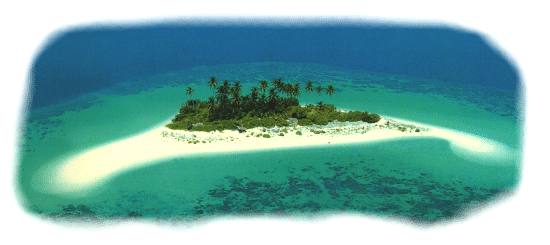
Note: 1,200 coral islands grouped into 19 atolls; archipelago of strategic location astride and along major sea lanes in Indian Ocean
People
Population: 252,077 (July 1994 est.)
Population growth rate: 3.61% (1994 est.)
Birth rate: 43.59 births/1,000 population (1994 est.)
Death rate: 7.45 deaths/1,000 population (1994 est.)
Net migration rate: 0 migrant(s)/1,000 population (1994 est.)
Infant mortality rate: 53.8 deaths/1,000 live births (1994 est.)
Life expectancy at birth: total population 64.67 years male 63.24 years female 66.17 years (1994 est.)
Total fertility rate: 6.26 children born/woman (1994 est.)
Nationality:
noun Maldivian(s) adjective Maldivian
Ethnic divisions: Sinhalese, Dravidian, Arab, African
Religions: Muslim
Languages:
Dhivehi, English spoken by most government officials
Literacy: age 15 and over can read and write (1985) total population 92% male 92% female 92%
Labor force: 66,000 (est.) by occupation fishing industry 25%
Government
Names:
conventional long form Republic of Maldives,
conventional short form Maldives
Type: republic
Capital: Male
Administrative divisions: 19 districts (atolls)
Independence: 26 July 1965 (from UK)
National holiday: Independence Day, 26 July (1965)
Constitution: 4 June 1968
Legal system: based on Islamic law with admixtures of English common law primarily in commercial matters
Suffrage: 21 years of age; universal
Chief of state and head of government President Maumoon Abdul GAYOOM (since 11 November 1978)
Economy
Overview: The economy is based on fishing, tourism, and shipping. Agriculture is limited to
the production of a few subsistence crops that provide only 10% of food requirements.
Fishing is the largest industry, employing 25% of the work force and accounting for over
60% of exports; it is also an important source of government revenue. During the
1980s tourism became one of the most important and highest growth sectors of the economy.
In 1988 industry accounted for about 5% of GDP. Real GDP is officially estimated to have
increased by about 10% annually during the period 1974-90.
Inflation rate (consumer prices): 15% (1993 est.)
Unemployment rate: NEGL%
External debt: $148 million (1993 est.)
Industrial production: growth rate 24% (1990); accounts for 6% of GDP
Electricity:
capacity 5,000 kW
production 11 million kWh
consumption per capita 50 kWh (1990)
Industries: fishing and fish processing, tourism, shipping, boat building, some coconut
processing, garments, woven mats, coir (rope), handicrafts
Agriculture: accounts for almost 25% of GDP (including fishing); fishing more important than
farming; limited production of coconuts, corn, sweet potatoes; most staple foods must be
imported; fish catch of 67,000 tons (1990 est.)
Economic aid:
recipient US commitments, including Ex-Im (FY70-88), $28 million; Western (non-US) countries,
ODA and OOF bilateral commitments (1970-89), $125 million; OPEC bilateral aid (1979-89),
$14 million
Currency: 1 rufiyaa (Rf) = 100 laari
Exchange rates: rufiyaa (Rf) per US$1 - 11.105 (January 1994), 10.957 (1993), 10.569 (1992), 10.253 (1991), 9.509 (1990), 9.0408 (1989)
Fiscal year: calendar year
Return to Main Page