 |
 (because the author of this site was a Hunter) |
|
|
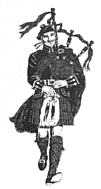
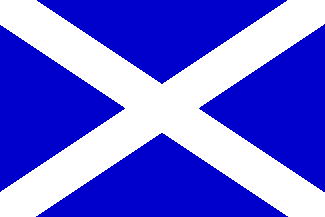
Misty glens, lochs, mountains, tartans, bagpipes
and kilts...these are the most familiar images of
Scotland. The Scots say the country does not have
a climate..it only has weather! It is surrounded by
sea on three sides and this causes the weather to be
varied. Three languages are spoken: Gaelic, (Lowland)
Scots, and English. All Gaels are bilingual.
When I think of Scotland, I think of bagpipes and DOGS!
The Scottie, the Collie, the Westie, the Skye Terrier.
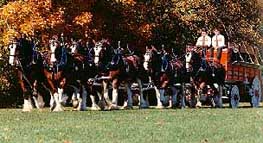
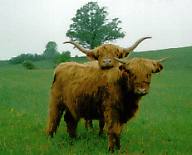
I think of those cows with bangs, the Clydesdales and SEAN CONNERY! |
|
|
(because the author of this site was a Hunter) |
|
|
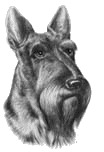
Tousled eyebrows, a bushy moustache and beard with a tail that points to the sky, the Scottie ranged the Highlands before the Roman invasion of the British Isles. It was once known as the Aberdeen Terrier and it is the national breed of Scotland. |
 |
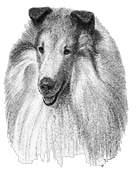 |
Most believe the Collie evolved in the highlands of Scotland and Northern England. Since sheepherding is one of the world's oldest occupations, the Collie's ancestors date far back in the history of dogs. The popularity began with Queen Victoria (1837-1901), who fell in love with the breed on visits to her Scottish retreat. It was then that the lowly farmers dog was elevated to a state of canine aristocracy. |
|
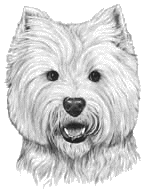
This terrier, according to notable authors, originated at Poltalloch,Scotland, where they had been bred and maintained for over a hundred years. They have a large amount of Scotch spunk determination and devotion crammed into a small body. |
 |
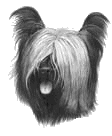 |
This breed is named for the chief of those northwestern islands of Scotland..the only terrier not common to the whole of the country. This dog was known to be without rival in the Skye where he is unmatched in the rocks,dens, cairns, and burrows. |
 |
 |
|
|
Sean, Burns and Nessie too!!
Robert Burns (1759-96) is the best-known figure in
Scottish literature. The son of a farmer, he acquired
a reasonable education and was an avid reader. He
became known as the maker of rhymes. In a period when
passion and poetry went together, Burns wrote some of his
best known works which culminated in the Kilmarnock
Edition in 1786. Today, his birthday, January 25. is
celebrated throughout Scotland and far beyond, whereever
Scots gather.
NESSIE...the Loch Ness Monster... Nessie was first spotted by the Vikings - Celtic and Norse folklore has stories of water horses seen in the lochs. The first written account of a meeting with Nessie seems to be that of Adamnan in 565 A.D. He describes St.Columba's sighting of a very large monster in Loch Ness. Legend tells of how St. Columba heard about the monster's murder of a man and how he rowed out to the center of the loch to order the beast to desist from such attacks in the future. Ever since that time, Nessie has never been known to have repeated its misdemeanor. The monster was also seen last century but the poor man who sighted the beast was so shocked he did not speak much about the incident. Throughout this century so many people have seen Nessie who seem to have no identifiable gain from telling of their sightings that it seems likely that a great unexplained mystery does exist. Nessie On The Net THE HIGHLAND GAMES Clan societies and other promoters of Scotland's romantic martial image give these games an ancient history but many believe they originated in early Victorian times. The games give club members an excuse to cavort in tartan finery! HOGMANAY Perhaps the best known of Scottish Festivals is Hogmanay the last night of the year. Until recent years, it was more important than Christmas! BALMORAL CASTLE 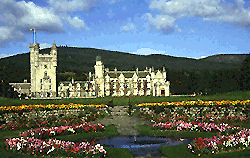 Balmoral Castle has been the Scottish holiday home of the Royal Family since it was purchased for Queen Victoria by Prince Albert in 1852. The only part of the Castle open to the public is the Ballroom. Here you can view many items of interest that are usually held in the castle, including a display of native wildlife shown in their natural habitat. You may also visit the garden and policies of Balmoral, the self-service cafeteria and the gift shops. In the gift shops you will find many items that are unique to Balmoral. Guide Books are also on sale and are available in English, French and German. Pony trekking and pony cart rides can also be enjoyed, when ponies are available. THE EDINBURGH FESTIVAL The Edinburgh Festival is the name for several annual and biannual international arts festivals that take place in Edinburgh, Scotland. Established in 1947, the world-renowned festival presents international and Scottish performers of theater, music, dance, and opera. Other festivals, each administered separately, have developed through the years, including the Edinburgh Festival Fringe. The Fringe, which began as an informal collection of theater performances on the fringe of the first Edinburgh Festival of Music and Drama, now showcases all art forms. SEAN CONNERY 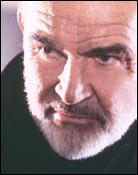 ONE of the most sought-after actors in Hollywood, Sean Connery has spun his unflappable charm and old-style star quality into one of the most enduringly and endearingly dashing screen presences in the history of celluloid.
The eldest of two sons born in Edinburgh, Scotland, Thomas
Sean Connery helped support the family by delivering milk
at 9 years old. He left school at the age of 13, taking jobs
as a laborer, steel bender, and cement mixer, and at 15, enlisting in the British Royal Navy for what was to have been
a 12-year stint. Severe stomach ulcers hastened his discharge
within three years, at which point he returned to Edinburgh
and set about making his living in various jobs. He occupied
his off-work hours by bodybuilding and his painstaking efforts to develop his physique culminated in a bid for the 1950 Mr. Universe title (he came in third place).
|