A NOTE ON PREHISTORY
For over 40,000 years, men with modern anatomical features have lived and died, but according to mainstream archeology, civilization began no earlier than 6,000 years ago in the Mesopotamian river valley. Hence, modern man is supposed to have lived as little more than a beast for some 34,000 years. Archeological excavations, however, have uncovered the remains of well-organized agricultural settlements as much as 10,000 years old in the case of Jericho, and there is evidence of agriculture in the region of Palestine dating to approximately 11,600 BP. But a growing number of dissident researchers are convinced that civilization is much older. The evidence, it is believed, has been submerged beneath the sea. Moreover, due to geological studies that place the landscape prior to 6,000 BP at a level below the presently existing Mesopotamian water table, evidence of earlier, inland civilization is thought to be long destroyed.
Even mainstream archeologists will admit that sea levels have been rising for the last 19,000 years, but they assert these levels rose gradually, without cataclysmic consequences. They ignore the legendary deluge described in the Old Testament, and similar, ancient flood stories repeated in cultures as diverse as those of China, Greece, and native America.
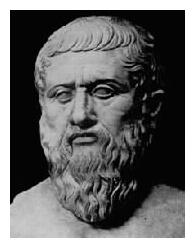
Plato for example, describes not one, but "repeated destructions of mankind by floods, pestilences, and from other causes, which leave only a handful of survivors." In his Critias dialogue, also dismissed by most archeologists, Plato describes the antediluvian acropolis as follows. "At present it has been washed bare of soil by one night of extraordinary floods in which an earthquake and the third terrible deluge before that of Deucalion befell together. But in other and earlier days it was so large that it reached to the Eridanus and the Illissus, enclosing the Pnyx and bounded on the side facing it by Lycabettus; the whole was covered with soil and save here and there, the surface was level. Without, directly under its slopes, were the dwellings of the craftsmen and the husbandmen who tilled the adjoining fields; higher up the fighting force had its abode by itself around the temple of Athena and Hephaestus, girdled by a single wall, like the garden of on house. On the northern side they had fashioned their common dwelling houses, and winter messrooms, with all that was proper for their mode of life in common in the way of buildings for themselves and temples, but no gold nor silver, for they made no use of these metals for any purpose. They aimed at the mean between splendor and meanness, dwelling in decent houses where they grew old, themselves and their children's children, each succeeding generation leaving them to another like itself."
In the Timaeus, Plato recounts a dialogue between Solon of Athens and an Egyptian priest, who says, “She [Athena] founded your city a thousand years before ours, receiving from the Earth and Hephaestus the seed of your race, and afterwards she founded ours [Sais], of which the constitution is recorded in our sacred registers to be eight thousand years old…But afterwards there occurred violent earthquakes and floods; and in a single day and night of misfortune all your warlike men in a body sank into the earth…” This account places the first of three great floods at approximately 11,600 BP.
Today a growing array of scientific evidence corroborates Plato. Among the most compelling evidence is found off the coast of Barbados where the remains of three ancient coral reefs form three distinct levels. The coral in question survives only at a specific depth. It was suddenly drowned three times during the last ice age—at approximately 14,000, 11,000, and 8,000 years ago. Moreover, with the invention of modern diving equipment, a number of recent, underwater archeological sites have been discovered near such places as Cuba, Egypt, India, China, and Japan. Most notable is the recent discovery of submerged city ruins at a depth of 40 meters in the Gulf of Cambay, India. The ruins have been mapped with high resolution sonar scans, detailing a city foundation 18 square kilometers in size—the size of Boston. A number of artifacts, including pottery, beads, pieces of sculpture, human bones, and human teeth have been recovered. These artifacts have been reliably dated to 8,500-9,500 BP. Furthermore, a piece of stone has been recovered which yielded an unknown script, pushing the invention of writing back thousands of years.
According to Herodotus, who wrote The Histories in the 5th century BC, the Egyptians traced their history to approximately 14,000 BP. Manetho, who wrote in c.300 BC, pushes the Egyptian king-list back 36,525 years. The Tamils of southern India and Ceylon trace their history through three separate periods dating to 11,600 BP. The first two periods were supposedly destroyed by great floods. Diodorus Siculus, writing in the 1st century BC, described legends of the arrival of a maritime people to the vicinity of Gibralter, who had an astronomical calendar, and taught the local population agriculture. The agricultural revolution of the region began approximately 10,000 BP.

A number of additional astronomical accounts push man's civilized history to earlier than commonly accepted dates. According to ancient Greek and Roman writings, the Septarishi calendar of India goes back to 6676 BC. As the great Indian scholar B.G. Tilak has demonstrated, the Vedas of India describe observations of astronomical alignments made in polar regions dating to at least 6,000 BC. "There are passages in the Rig-Veda," Tilak writes, "which… plainly disclose the Polar attributes of the Vedic deities, or the traces of an ancient Arctic calendar." According to related research, the Vedas in question describe astronomical cycles and celestial positions relative to the precession of the equinox which could only have been observed in latitudes above the Arctic Circle at a time no later than approximately 22,000 BC!
On the surface, it would appear that such a hypothesis is preposterous, particularly to a public accustomed to thinking in a frame of reference overly influenced by narrow archeology, but a review of the geologic record affords a startling corroboration. It is now known that during the era of maximum glaciation during the last ice age, the ice sheet of northern Asia extended only as far as approximately 90° degrees east longitude, a region due north of India. Sea levels were significantly lower than today, and Asia was linked with the North American continent across a vast area now referred to as Beringia. Beringia enjoyed a relatively dry climate, and was inhabited by a variety of big game animals such as mastodons, wooly mammoths, and bison. The first known human inhabitants of the North American section of Beringia arrived from Asia no later than 24,000 years ago, and hunted big game. Our knowledge of these inhabitants is limited due to the fact that most of Beringia was submerged by the glacial melt.

However, the work of Sylvain Bailly the great scholar, statesman and collaborator of Lafayette during the French Revolution, provides some illumination. Bailly was, of course, writing before the existence of prehistoric Beringia was known, but based upon his study of a wide variety of ancient sources he hypothesizes a northern origin for the science of astronomy. "This is what genius teaches us;" he writes, "and while locating the origin of science in the north of Asia, we did not intend to imply that it was born at the North Pole, even though a number of fables and even astronomical facts would make it a natural plausibility. Such is the fable of Proserpine who spends alternately six months on earth and six months in the kingdom of darkness; also the story of Hercules and the Amazons, in which we find that night had a powerful empire over the zones of the heavens, an empire that Hercules ripped away from them, by becoming the symbol of the spring Sun. This story becomes quite plausible, and receives a simple explanation, when we recognize that the phenomenon being described occurred near the pole, where one night goes on for six months."
Bailly also notes the striking worldwide similarities in ancient lore that could have only been established by observers near 71° degrees north latitude. For example, he shows that the tale of the Phoenix, which is found in both ancient Swedish and ancient Egyptian sources, is nothing but an astronomical metaphor. "They speak of a bird whose head and chest is of fire color, and its wings and tail of heavenly blue. It lives for 300 days, after which, followed by all of the migrating birds, it flies to Ethiopia, makes its nest and burn itself with its egg; then, from its ashes is regenerated in a form of a reddish worm which grows wings, and after acquiring the form of a bird, flies again with the migrating birds back toward the northern regions." As Bailly points out, this describes the astronomical condition of the region located near the 71st parallel where the sun sets over the horizon for 65 days, and then returns for 300 days. According to Bailly, this region also corresponds to Greek mythological accounts of the island of Saturn, located in the northern regions of the globe.
It can also be shown that certain ancient traditions in Iran, Japan, Akkadia, and China, as well as Egypt, Greece, and India, all describe a common, far-northern origin. For example, the second Farguard of the Iranian Avesta reads "There are certain uncreated lights and created lights. There the stars, the moon, and the sun are only once a year seen to rise and set, and a year seems only as a day." The most ancient book of Japan, the Ko-Ji-Ki, reads, "In the beginning, standing on the bridge of heaven, they pushed down a spear into the green plain of the sea, and stirred it round and round. When they drew it up the drops which fell from its end consolidated and became an island. The sun-born pair [Izagagi, and Izagani] descended onto the island, and planting a spear into the ground, pointed downwards, built a palace around it, taking that for the central roof pillar. The spear became the axis of the earth, which had been caused to revolve by the stirring round."
Another startling and simple discovery made by Bailly involves the fact that the ancient civilizations of Egypt, India, and China all adopted the same ordering of the weekdays with respect to the planets. This ordering is still used today: Sunday (Sun), Monday (Moon), Tuesday (Mars), etc. This ordering is absolutely arbitrary. The only variation is that the Egyptians started their week on Saturday, and the Indians started on Friday. The Egyptian, Indian, and Chinese calendars must have had a common source in distant antiquity.
It should also be noted that the oldest monuments and ruins of ancient Egypt are the most advanced, functionally and architecturally. The earliest pyramids, for example, where used not as mere burial chambers, but as astronomical observatories. The shafts in the pyramids are very precisely constructed to align with the positions of Orion’s brightest star, the North Star, and Sirius, in 2600 B.C. The Sphinx is facing due east at the position of Leo in 10,000 B.C., reinforcing theories that the Sphinx is some 12,000 years old.
In modern times, the Aboriginal Australians used astronomical terminology that revealed sophisticated astronomical ideas from a very early date. The same terminology is found in other very distant parts of the world. For example, indigenous tribal peoples of North America, Siberia, and Australia all called the Pleides star-group the “Seven Sisters.” The Aborigines are thought to have arrived in Australia 50,000 years ago. A recently discovered cave painting in the Kimberly's of Australia, reliably dated to at least 20,000 years and possibly 40,000 years old clearly depicts an ancient manned watercraft.

With all the evidence, though fragmentary and limited, it appears conclusive that many traditional, so-called myths must be treated largely as history. However, in the end it is the work of physical economy that must provide the final analysis. As Lyndon LaRouche, the world's preeminent physical economist writes, "…the conditions of hunting and gathering culture are such, that the transition from a primitive food gathering culture to a civilized series of cultures can be accomplished in only one general way, through only one aspect of the spectrum of primitive food-gathering activities. That aspect of food gathering activities is fishing, especially near the mouths of large river systems.
"This is readily shown, by restating population density in the language of thermodynamics. Of all the potential energy available in an average square-kilometer of habitable area, human practice at any level of development is able to obtain only a fraction of that total as useable energy employed to sustain human existence. In the food gathering culture, this is expressible by such statements as that approximately ten square-kilometers are required to sustain an average individual.
"The case of fishing near mouths of large river systems is an exception to this general picture. The development of such fishing along coastal regions, is the precondition for emergence of urban-like settlements. The useable energy available per square-kilometer of food-gathering activity, is the critical parameter in this case. The development of a maritime culture, associated with urban sites, is demonstrably the precondition for the production of the agricultural revolution."
In sum, LaRouche concludes that a global, maritime civilization emerged as early as 40,000 years ago. Due to its reliance on the sea for its necessary caloric intake, it must have developed rather sophisticated navigational techniques during its early phases. These navigation techniques were bound to the development of astronomy as a necessary science for survival. As the ice age came to a close following the last glacial maximum 19,000 years ago, a series of sudden catastrophic floods followed. The scattered remnants of humanity were driven inland to establish agricultural settlements far below the sophistication and development of earlier maritime civilization, now lost below the waters.