


FOOTBALL - GENERAL MANAGERS
HEAD COACHES
Click the picture for information
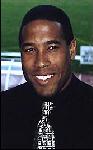
Click the picture for information
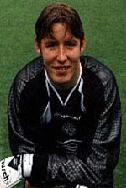
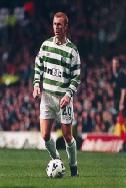
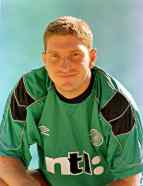
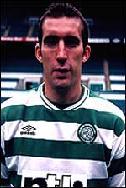
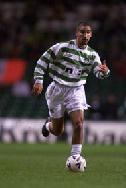
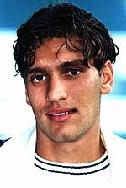
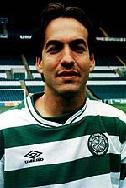
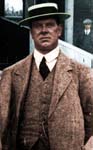
Willie Maley carved a vital and powerful role for himself as the first manager/secretary of Celtic Football Club. He was not only the first manager of the Celtic Park club but remains the longest serving, running the show for 43 years. His unfaltering dedication to the club was demonstrated by his 52 years of continuous service, from player to match secretary and then honorary secretary, followed by his appointment as manager in April 1897. Maley is remembered as an uncompromising boss - only the best was satisfactory, and his reign was marked by strict discipline. He once remarked: "The player who cannot conduct himself on and off the park has no place for his suit at Celtic Park". Yet he was held in high esteem by both players and fans alike. Maley was a proud man and employed himself tirelessly in promoting the image of the club. Pursuing a vigurous youth policy, he led the club to a host of victories. During the second decade of his era Celtic took the League flag in six successive seasons. Maley was dubbed 'The Organiser of Victory' by the Press during the club's second high-flying period of 1914 -1918 when Celtic won the League title four times in a row. The Scottish Cup went to Celtic Park 14 times during his reign, accounting for almost half of Celtic's Cup victories to date. In 1920 Maley became the proprietor of the Bank Restaurant in the city centre. 'The Bank' soon became an arm of the Celtic establishment where teams were selected by the Board every Thursday and players met after games. But sadly the rise of 'the Bank' became instrumental in his own downfall. The Maley years ended in a less than happy fashion. The Board was becoming increasingly uneasy over the way 'The Bank' had evolved as Celtic's unofficial social club. Desmond White, son of chairman Tom White, also made clear his intention to take over the post of secretary at Celtic Park during the 1939-1940 season and rumours spread that the manager would soon go. With Celtic at the bottom of the table, the situation came to a head and after a meeting with Tom White, Maley 'retired'. Maley was said to be furious about the manner in which he had been ousted but he was a man of 71 by this stage and his stubborn character would never have allowed him to go willingly. He left in the knowledge that Celtic, under his wing, had matured into the most successful club in the country.
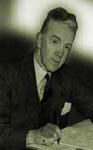
Jimmy McStay left Alloa Athletic in February 1940 to take up the manager's post at Celtic Park. An honourable and obliging character, McStay proved a refreshing change for the board from the stiff-necked tendencies of his predecessor. McStay was an obvious candidate for the position. A former Celtic captain, he made over 450 appearances for the club on the pitch. He also had strong family ties with Celtic Park. His brother Willie was also a Celtic star and played in the national side, and he was the great-uncle of later Hoops Paul, Ray and Willie junior. Celtic did not enjoy much success under McStay with no major victories to boast of during his five-year stint. The appointment of Desmond White, son of the then chairman Tom White, as secretary of the club just before McStay's arrival, however, somewhat reduced his role and influence as manager. The increased involvement of the Board in signing decisions also helped to undermine McStay's position. He could sign youth players at his own discretion but any major signing needed the Board's permission. It was seldom granted. In many respects circumstances were responsible for the barren years of McStay's era. He took charge at Celtic Park during the first war-time season and throughout his time as manager, the city of Glasgow became increasingly involved in the war effort. As a result, football soon slid down the list of priorities for most people in the city including, it seemed, the Celtic Board. McStay was forced to resign in July 1945, following a short meeting with the Chairman. He was apparently the last to hear about his dismissal and later told the Sunday Mail: "The whole affair has caused me much unjustified embarrassment". However, McStay didn't hold a grudge and it was not long before he offered to be a scout for his successor, Jimmy McGrory.
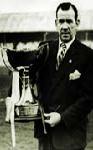
Already a legend at the club from his playing days, Jimmy McGrory took up the post of Celtic manager just before the war ended in 1945. Known as "Gentleman Jim", McGrory often seemed more of a figurehead than a coach. Players would not see him from one Saturday to the next, unless there was an issue of administrative importance to discuss. One of his signings, John Hughes, later criticised McGrory's laissez-faire attitude, adding that Sean Fallon would lock him out of the dressing room during team talks! But McGrory was seen as fair minded and good natured by his players, and they always addressed him as "Boss". His 20-year reign at Celtic Park saw some important victories. In 1951, the club won the Scottish Cup Final, with a League and Cup double following three seasons later. He also steered the Hoops to consecutive League Cup Final victories in 1956-7 and 1957-8, the latter the famous 7-1 defeat of Rangers. But he may be better remembered for the great players he signed than for match glory. Names like Charlie Tully, Jock Stein, Bertie Peacock and Sean Fallon rank among the best players in Celtic's history. In 1965 Jock Stein replaced McGrory as manager. To compensate, McGrory was given a life-long post as public relations officer by chairman Robert Kelly. His career in the driving seat at Celtic was not nearly as successful as his career on the pitch, but as John Hughes once commented: "Jimmy McGrory was too nice to be a manager."
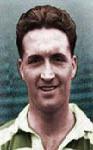
As the phoenix rises from the ashes, Celtic rose again to triumph in the late 60s - and their wings were Jock Stein. During his 13 years at Celtic, Stein helped the club to twenty-five domestic titles and European trophies. Many say he was the greatest British manager ever. Stein was described by one journalist as "a Protestant chieftain emerging from a Catholic stronghold to win great battles and memorable glories for the grand old club," regaining for Celtic supporters "a paradise they must have once thought lost forever." His own football playing days were ended by an ankle injury but he went on to exert considerable influence at Celtic in the late 50s as a coach and scout. It was at Dunfermline Athletic, however, that he first showed his managerial flair. He arrived at the Fife club in 1960 and within six weeks had pulled the team up from near-relegation to win the Scottish Cup, beating Celtic in the final. In 1965 Stein finally arrived at Celtic Park after a brief stint at Hibernian. Under Stein, the Celts dominated Scottish football, winning nine consecutive League Championships. They also won the Scottish Cup seven times, but perhaps their biggest achievement was winning the European Cup in May 1967. Goals by Tommy Gemmell and Stevie Chalmers took them to a 2-1 victory over Inter Milan and Celtic became the first British side to win the European Cup. No other Scottish side have even reached the final. Failures were few and far between but losing the European Cup final in Milan to Feyenoord, in May 1970, was probably the biggest dent Celtic's pride suffered during Stein's reign. In July 1975 Stein was almost killed in a car crash. He returned to Celtic a year later, a notably quieter, more subdued man, and many believe he never fully recovered mentally or physically from the accident. However, the old magic continued to shine when he returned after a year-long convalescence and he enjoyed one last season of success as Celtic took the first ever Premier flag and the Scottish Cup. In 1977-78, injuries to Conn and Stanton and the transfer of Dalglish to Liverpool, put paid to hopes of bringing the European Cup back to Celtic Park and Stein bowed out amid rumours that his relationship with the Celtic directors had seriously declined. After a short time with Leeds United, he took over the job as Scotland manager. On September 10th 1985, Scotland played a World Cup qualifying match in Cardiff, against Wales. Scotland got a late equaliser to make it 1-1 to give them the one point they needed to reach the finals. As the final whistle sounded, and Scotland celebrated their place in the World Cup finals, Stein collapsed and died.
McNeill spent almost 18 years at Celtic Park as a player and made nearly 800 appearances for the team. Retiring as a player in 1975, after Celtic's Scottish Cup final win over Airdrie, he became manager of Clyde two years later. But within ten weeks of arriving at the club, he had left to take over at Aberdeen. And only a season later, in 1978, McNeill would become manager at Celtic Park. His early days in charge at the club were punctuated with dramatic incidents. He left a journalist, travelling with Celtic for their European Cup tie in Hungary, with a black eye and he was involved in a confrontation with a referee in a game against Aberdeen two years later. However, along with the controversy came success.His first Celtic season saw them take the League title and the Scottish Cup and the League Championship followed in 1981 and 1982. The success continued into the 1982-83 season as the Celts clinched the League Cup, but that was to be the last trophy of McNeill's first period of residence at Celtic Park. After five years he left the club following a dispute over his salary and spent fruitless periods at Manchester City and then Aston Villa, before returning to Celtic Park in May 1987. On his return to Glasgow, he told the press: "I always dreamed I'd return, but at times I feared that dream would turn into a nightmare and I wouldn't get the chance." In the following season, Celtic celebrated its centenary and a dream double of the Premier League Championship and Scottish Cup. For six months and 31 games, Celtic went unbeaten, ultimately losing only five of the 55 games they played that season. This was to be the high point of McNeill's second period in charge. Things quickly changed for the worse. At the end of September 1988, Celtic were third bottom of the League and had gained only four points from six games. They ended the season in third place. During the next two years, the team suffered immensely from the departure of Frank McAvennie, skilled veterans Tommy Burns and Roy Aitken, and the dramatic defection of Maurice Johnston to Rangers. In 1990 the team failed to qualify for Europe (for only the second time in 28 years) and 1990-1991 saw another barren season - the first time since 1960 that Celtic had gone two years without winning a major trophy. On 22 May 1991 McNeill paid for the team's poor performance with his job and was replaced by Liam Brady.
David Hay took over the manager's job at Celtic when he was 35 years old, after playing for the club and Chelsea. The traumatic circumstances of Billy McNeill's departure prompted an initial critical reaction to the new manager from the fans, despite his popularity on the pitch in the early 1970s. An affable, easy-going character, Hay was sometimes dismissed as being too laid-back. The board recognised the potential for problems and decided to employ the fiery Frank Connor as his assistant to balance the act. As with all new managers, much rested on the success of his first season in 1983. Celtic started with five consecutive victories but were ultimately defeated in three Hampden Cup finals and finished second in the Premier Division. The following season also proved disappointing on the home front although the Bhoys had a better than usual year in Europe. The 1984-5 season witnessed the high point in Hay's reign at Celtic. The Celtic Park men came from behind to clinch the Scottish Cup, beating Dundee United 2-1. However the victory was marred by the departure of striker Frank McGarvey soon after, much to the disapproval of the fans. Frank Connor was also to depart the following February. The end of the rocky partnership coincided with the start of an unbeaten run of 16 games which set Celtic on their way to another league title. Hay was keen to buy players for the following season but the Board's attitude was summed up by the comments of one director who said: "If Davie's going to buy a couple of players the money will have to come from his own pocket." During the 1986-7 season, Hay landed himself on the wrong side of the SFA after a couple of spectacular outbursts, most notably after the Skol Cup final against Rangers when he blasted referee David Syme for poor judgement. The incident did cause critics of his disposition to swallow their words. After an unsuccessful season Hay became the first Celtic manager to be officially sacked after refusing to resign in May 1987. After a successful stint in Norway he returned to his roots in Paisley to head St Mirren before leaving for Florida. Reflecting on his Celtic career, Hay defended his managerial approach: "I was never too demonstrative because I always felt that the traditions of Celtic made that the way to act. It may be my undoing because people looked at me and might say I didn't care enough. Nothing could have been further from the truth."
Liam Brady was picked from a short-list of four to become Celtic's manager on Wednesday June 19 1991. He was the first manager not to have played for the club, having made his name at Arsenal and in Italy. Unfortunately his managerial career never matched the heights of his playing days. As Celtic manager, Brady spent almost £6m on new players, few of whom made a significant impact on the team's performance and his disastrous first season set an unfortunate benchmark. Celtic went out of the League Cup to Airdrie in a penalty shoot-out and suffered their worst ever European defeat in Switzerland, losing 5-1 in the second round of the UEFA Cup. Rangers' 1-0 semi-final win also ended their chances of taking the Scottish cup back to Celtic Park. The following season was equally barren. They lost to Aberdeen in the League Cup semi-final, to Falkirk in the fourth round of the Scottish Cup and finished third in the League behind Rangers. A brief glimmer of hope came in the UEFA CUP as Celtic triumphed over Cologne in the first round. It wasn't to last and they were knocked out by Borussia Dortmund 3-1 on aggregate. The 1993-4 season started equally poorly . Problems off the field mounted throughout the season as dissatisfaction with the Celtic Board of Directors mounted and "Sack the Board" became a common chant on the terraces. These conflicts left the team alienated and Brady found it increasingly difficult to work without the support of the Board. A 2-1 defeat by St Johnstone pushed Celtic into fourth bottom place in the league on October 6 1993 and Brady announced his resignation.
Lou Macari was a promising member of Celtic's first team during the 70s, but his return to the club as manager was to prove a brief, troubled affair. Celtic were in serious financial trouble when he joined the club in October 1993. Plans for a new stadium in Cambuslang were repeatedly promised but never came to fruition and, on 3 March 1994, the Board of Directors was informed that the club's "5million overdraft had been exceeded. The next day, Fergus McCann assumed control of Celtic Football Club, only eight minutes before it was declared bankrupt. The team was not blessed with a great performance during Macari's stay either. He led them to fourth place in the league (leaving them without a place in Europe) and they survived to the third round in the Scottish Cup. Players expressed their disapproval of Macari's apparently heavy-handed management style, in particular, his willingness to criticise them in public. His brief, unhappy tenure at Celtic Park ended in June 1994.
Tommy Burns took up the reins at Celtic Park in July 1994, after a spell at Kilmarnock. He got off to a flying start with victory over Airdrie in the Scottish Cup final - Celtic's first trophy for six seasons. Billy Stark was swiftly installed as Burns' assistant, the two having already proved a strong management team at Rugby Park. A Celtic man through and through, Burns played for the club for 16 years during which he developed from a headstrong young player who frequently clashed with authority, into a true and solid sportsman. He described his appointment as manager as "a bit like having a dream that you never think is going to become real". Burns soon set about revamping the infrastructure of Celtic. His plan included the reorganisation of the boys club and youth team and expansion of the club's scouting network. Progress at Celtic Park was boosted by chairman Fergus McCann's decision to convert Celtic into a public limited company. The share issue in January 1995 turned out to be the most fruitful flotation of any British football club. Expected to raise £9.4m, the issue was oversubscribed by £4.4m. Burns praised the fans on its success: "That shows you the incredible potential we've got here. They've got great fierce pride in Celtic Football Club and in being a supporter." In his short time as manager, Burns signed some important players, notably Tosh McKinlay, Germany's Andreas Thom, Holland's Pierre van Hooijdonk, Portuguese international Jorge Cadete and most recently Paulo di Canio and Alan Stubbs. Under the ever positive guidance of Burns, Celtic regained much of its old strength. Captain Paul McStay believed his manager's attitude was a vital tonic for the club that began the decade so poorly. "Tommy is the same as he was as a player. He's committed and eager and hungry to achieve things here." The Scottish Cup win in 1995 was to prove Burns only success despite a dramatic improvement in playing standards, which took the club within an ace of ending Rangers title domination. However it was the inability to beat their greatest rivals that thwarted Celtic's ambitions. With only three wins in 15 attempts, Celtic's progress stuttered and the Scottish Cup semi-final defeat by first division Falkirk in May 1997 was by Burns own admission an embarrassing failure. It proved to be the catalyst for his downfall and Tommy Burns' three year reign as Celtic Manager ended on Friday 2nd May 1997. But however history and statistic portray the Burns era, no-one can deny his dedication and commitment to the Celtic cause.
Jock Brown was appointed as General Manager of football, at Celtic Football Club in June 1997. He was at the time a practising solicitor, specialising in Sports Law and BBC Scotland's television football commentator. While never before involved directly in professional football, he has been a football devotee all his life and as an amateur player captained Cambridge University. Jock's short time in this position ended in 1998 when he tendered his resignation on November 7th.
Wim Jansen was appointed as Head Coach of Celtic Football Club at the beginning of July 1997. His playing career was principally with Feyenoord with whom he made 474 appearances and scored 41 goals between 1966 and 1980. He played in the European Cup final win over Celtic in 1970 and in the 1974 UEFA Cup final success against Tottenham. He was in the Feyenoord team which won the World Club Championship in 1970. He ended his career with short spells with Washington Diplomats and Ajax. He won 65 caps for Holland and played in the 1974 and 1978 World Cup Finals. His coaching career began with the Feyenoord Youth team and proceeded with coaching Lokeren of Belgium, SVV Dorrecht, Feyenoord and Sanfrecce Hiroshima in Japan. Wim Jansen, after leading the team to victory in the 1997 Coca-Cola Cup final and the 1997/98 Scottish League Championship, resigned from the club on 11th May 1998.
Jozef Venglos was appointed as Head Coach of Celtic Football Club on 17th July 1998. With a wealth of coaching experience at the highest level, having coached in a number countries, twice winning the Czechoslovakian Championship with Slovan Bratislava, as well as being runner-up in the Cup Winners Cup. An international midfield player for Czechoslovakia, he has also coached the national teams of Australia, Malaysia, Oman, Slovakia and Czechoslovakia. Jozef led Czechoslovakia to victory in the full European Championship in 1976, beating Holland in the semi-finals and West Germany in the Final, as well as reaching the quarter-finals of the Italia '90 World Cup. As a coaching advisor to FIFA, and Technical Director to Slovan Bratislava, Jozef also has a Doctorate in Physical Education as well as specialising in Psychology. He speaks four languages and has co-ordinated FIFA study groups at the World Cup in 1986 Mexico, 1994 USA and France 1998. Jozef was appointed President of the European Coaches Union in 1995 as well as being chosen to coach European and World select teams in the 80's and 90's. He has also coached Sporting Lisbon (83-84), Aston Villa (90-91) and Fenerbahce (91-93). Jozef Venglos has been selected by FIFA on various occasions to lecture at the FIFA Academies throughout the world in countries including Malta, Cyprus, Iraq, Bermuda, Mauritius, South korea, China, Nepal, Bangladesh, Thailand, Malaysia and Holland. Season 1998/99 saw some excellent form for the team under Jozef Venglos. However, at the end of the season Jozef took up a new position of European technical advisor, and assisting John Barnes.
John Barnes was announced as new Head Coach of Celtic Football Club on 10th June 1999. Barnes has an exceptional record as a player on both international and domestic level. In 1981, he made his first team debut for Watford and as well as scoring 13 league goals he helped the team win promotion into the First Division. Whilst at Watford he also helped coach the football team at top Public School, Eton. In 1983 he made his international debut, at the age of 19, when he came on as a substitute against Northern Ireland in Belfast. And in 1984, Barnes scored his first international goal, an unforgettable solo effort against Brazil, which ended by England winning 2-0. In 1986 John enjoyed his first World Cup, in which he helped England reach the quarter-finals in Mexico. In 1987, John signed for Liverpool under the management of Kenny Dalglish and was crowned England's Player of the Year in 1988, an honour which was repeated two years later. 1990 was also the year in which Barnes helped England to the semi-finals of the World Cup in Italy. The last of his 79 England caps was against Colombia in 1996. In 1997, he left Liverpool and again joined Kenny Dalglish, this time at Newcastle. Two years later he moved to Charlton at the tail end of the season, before becoming Celtic Head Coach in 1999. His record includes - two English titles, two FA Cups, one League Cup, 79 caps and 11 goals for England. After a bright start to season 99/00, a string of bad results, culminating in the defeat against Inverness Caledonian Thistle in the Scottish Cup, saw John's contract terminated in February '00. The position of Head Coach was taken over in the interim by Kenny Dalglish, with the assistance of Tommy Burns.
THE SECOND signing of John Barnes and Kenny Dalglish, Kharine was regarded as one of the best shot-stoppers in the country whilst at Chelsea.
Won an FA Cup runners-up medal at Stamford Bridge and has 36 Russian caps to his name. A severe knee cruciate injury curtailed his first team chances with the blues, as did the arrival of Ed de Goey.
Celtic record for season 1999/2000 - Apps: 6 Shut Outs: 4
SIGNED as cover for the injured Gordon Marshall and Stewart Kerr at beginning of 1997/98, but quickly established himself as Celtic number one -and stayed there during the Championship winning season.
Kept his goal intact throughout the entire 1997 Coca-Cola Cup winning campaign. His fine form was awarded with a new four-year contract and a late call-up to the Scotland squad for the World Cup in France 98.
Has had strong competition this season for the number one shirt.
Celtic record up to end of season 1998/99 - App: 90 Shut Outs: 39
Record for season 1999/00 - App: 38 Shut Outs: 15
Regarded as a future Scotland No.1, injury and the arrival of Jonathan Gould combined to curtail Kerr for the last few seasons and, despite a brief first team revival towards the end of last season, Kerr had stated his desire to find first team football elsewhere.
Towards the end of this season, fully fit, Stewart has again come back into competition for the number one shirt.
Record up to end of season 1998/99 - App: 37 Shut Outs: 14
Celtic record for season 1999/00 - App: 5 Shut Outs: 2
Made his first team debut against Motherwell at the beginning of April, and became the youngest player to pull on the hoops - ever!
At 16 years and 231 days old - Kennedy beat Roy Aitken's record of 16 years and 290 days.
Definitely one to watch for the future.
Record for season 1999/00 - Apps: 5 Goals: 0
Has made a big impact in the first team squad, getting the chance to show what he can do in the final few games of the 1999/00 season.
A natuaral left footer who takes a mean free kick.
His inclusion in the first team squad has also resulted in a call up to the Scotland under 21 pool.
Record for season 1999/00 - Apps: 9 Goals: 0
After signing from Gremio for a reported $7.2 million, the Brazilian defender saw more of Scotland from a hospital bed in his first few weeks in the country after being rushed to hospital to have his appendix removed.
Ranked one of the best central defenders in the world, Rafael was rewarded by getting six call ups last year to FIFA's number one ranked team in the world - Brazil.
Record for season 1999/00: Apps: 3 Goals: 0
AFRICAN born strong defender Tebily was one of several John Barnes acquisitions on arrival at Celtic. Tebily spent only six months in England before leaving to come north -a move which even surprised the player.
Is contracted to Celtic until June 2004. After Stephane Mahe he becomes only the second Frenchman ever to join Celtic.
Celtic record for season 1999/00 - App: 32 Goals: 1
PROMOTED to club captain following Paul McStay’s retirement, Boyd is the model professional - assured and confident and able to play in the central defensive or full back roles. A regular fixture for both club and country, he now has over 50 Scotland caps, earning him a coveted place in the SFA Hall of Fame.
Celtic record up to end of season 1998/99 - App: 336. Goals: 2
Celtic Record for season 1999/00 - App: 14 Goals: 0
PLAYED against Celtic in the Cup Winners’ Cup in season 95/96 for Paris St-Germain, before missing out on the final and seeing his career slip somewhat during spells with Auxerre and Rennes.
Moved to Scotland to resurrect his career, and made the left-back role his own despite a much publicised red card against Rangers last season.
Celtic record up to end of season 1998/99 - Apps: 71. Goals: 1
Record for season 1999/00 - App: 26 Goals: 4
A Danish internationalist with over 50 caps, Rieper settled in brilliantly to the defence at Celtic Park alongside Alan Stubbs after three seasons in the English Premiership.
Scored the opener in the 1997 Coca-Cola Cup Final and played for Denmark in France 1998 before an ankle injury and then a double toe operation put his career in jeopardy.
Still fighting back from what has proved to be a career threatening toe injury, Marc was delighted to be asked to help train his teammates along with Kenny Dalglish after the departure of John Barnes.
Insists that he doesn't see it as a long-term solution.
Celtic record up to end of season 1998/99 - Apps: 48. Goals: 3
Celtic record for season 1999/00 - App: 0 Goals: 0
THE club-record signing’s first season was marred by injury problems, and the defender was given a rough time by the unconvinced media and some of the fans.
Under ex-boss Wim Jansen and alongside Marc Rieper, Stubbs was outstanding during his second term, and was at least as good in his third. Family difficulties have forced the Englishman to seek a move back to England.
Excellent form has prevailed throughout the 1999/00 season.
Celtic Record up to end of season 1998/99 - App: 100. Goals: 4
Record for season 1999/00 - App: 33 Goals: 0
Arrived at the Club in January on a trial basis and after impressing the backroom staff signed until the end of the season.
Played against Bayern Munich in the Millennium Challenge match in February and is now starting to break into the first team as a regular.
Record for Season 1999/00 - Apps: 2 Goals: 0
Stilian's move to Celtic was protracted due to the question over his eligibility for a Work Permit which was eventually granted.
The 20-year-old is widely reported to be the best young midfielder in Eastern Europe. He has already won 11 full international caps for Bulgaria and played in the last consecutive nine internationals.
Celtic Record for season 1999/00 - App: 29 Goals: 1
BERKOVIC joined West Ham in 1997 after previously being Israeli player of the year and scoring 40 goals from midfield in 200 appearances.
His small frame and speed enables him to torment defences and joining Celtic has excited many supporters.
His transfer broke the previous Scottish record held by Andrei Kanchelskis and Rangers.
Record for season 1999/00 - App: 33 Goals: 10
PETTA spent three years at Ipswich Town and came to Celtic under the Bosman Ruling.
He played understudy to countryman Regi Blinker at Feyenoord and will now ironically challenge him for his place at Celtic.
He has represented Holland at U-18 and U-21 levels. He is predominately a left-sided winger.
Record for season 1999/00 - App: 17 Goals: 1
Johan came to public attention both here and overseas when he scored the winning goal for Sweden against England in their European qualifier in September '98.
The former newspaper distribution man joined Celtic after 14 years at AIK to make his debutin the 5-1 thrashing of Rangers. His no nonsense play won over the Celtic fans.
Record for season 1998/99 - Apps: 21 Goals: 1
Celtic record for season 1999/00 - App: 36 Goals: 4
THE VETERAN Slovakian midfielder arrived at Celtic Park as the second signing of Dr Jozef Venglos after being the former head coach's protégé as a youngster with the Czech and Slovakian national teams, going on to claim over 70 international caps as skipper of the latter.
Part of the Czech side which reached the last eight of Italia 90, Lubo is a cultured middle man with tremendous passing and vision.
Delighted supporters when he signed a further one-year contract, making him a Celtic player until the end of season 2000/01.
Record for season 1998/99: App: 17 Goals: 6
Record for season 1999/00 - App: 39 Goals: 10
The versatile midfielder has played in virtually every position bar goalkeeper in a colourful career after he began his career with Kongsvinger as a striker!
A regular pick in the Norway side which reached the second stage of France 98, the big midfielder is president of his own small club in Kongsvinger and a firm favourite with the Celtic fans.
Record for Season 1998/99: Apps: 30 Goals: 3
Record for season 1999/00 - App: 38 Goals: 1
PICKED up by Celtic scouts in Ireland, Healy joined with little or no pedigree, but paridly advanced through the ranks to make his first-team debut in May 1999 against Dunfermline, after appearing as a sub in a tempestuous clash with Rangers.
Can play wide or in the centre of midfield.
Record for season 1998/99 - App: 3 G: 0
Record for season 1999/00 - App: 13 Goals: 1
REBORN midfield star who now fills a holding role following a footballing education during his European Cup winning year at Borussia Dortmund. Had left Motherwell 12 months previously on a free transferunder the Bosman ruling.
Signed on at Celtic for four years, and has already shown he is an effective and genuinely high-quality addition to the squad who rarely wastes a ball.
Also a Scotland regular.Record up to end of season 1998/99 - App: 78 Goals: 3
Record for season 1999/00 - App: 30 Goals: 1
A bargain buy of former boss Tommy Burns, the marauding defender turned wing-back captured the 'Players Player of the Year' award in the Championship winning season of 1997/98 with a place in the Scotland World Cup squad as his reward.
Even by then, however, a persistent knee injury was restricting his appearances and season 1998/99 was spent largely on the treatment table.
Record up to end of season 1998/99 - App: 97. Goals: 2
Record for season 1999/00 - App: 31 Goals: 0
Wieghorst earned a man-of-the-match award in a Coca-Cola Cup Final and earned a deserved place in the Denmark World Cup squad before suffering every player's nightmare.
A cruciate knee injury forced him to miss the first nine months of last season before he bounced back towards the end of the season and signed a new three year contract.
Record up to end of season 1998/99 - App: 82. Goals: 11
Record for season 1999/00 - App: 21 Goals: 4
Record for season 1999/00: Apps: 1 Goals: 0
Joined Celtic on freedom of contract after French club Mulhouse experienced serious financial problems.
Impressed new management team as a trialist during pre-season tour and training camp in Norway in July 1999.
Stephane is a small but pacy forward and will add weight to Celtic's first team squad.
Record for season 1999/00 - App: 0 Goals: 0
Moved north from Chelsea for a record Scottish signing fee as Martin O'Neills first aquisition for Celtic.
Formed the 'SAS' partnership with Alan Shearer at Blackburn, when the Ewood Park side clinched the English Premiership in 1995. Finished joint top scorer in the Premiership with Dion Dublin and Michael Owen in '98.
Seen as the natural foil to Henrik Larsson after the departure of Mark Viduka.
Record for Celtic : Apps: 0 Goals: 0
THE Dutch winger arrived with the unenviable task of replacing Paolo DiCanio and scored on his debut against Berwick Rangers in the Coca-ColaCup before hitting a sticky patch and losing his place under his Old Feyenoord mentor Wim Jansen.
A wide man in the old-fashioned style, Blinker made a comeback to the first team last season - a return he hopes will herald better times this season.
Record up to end of season 1998/99 - App: 48. Goals: 7
Record for season 1999/00 - App: 22 Goals: 5
RATED as one of the club's brightest young hopes, many believe the prolific and lightning-quick youngster is the future of Celtic.
Scored his first top team goal against Dundee United last season and had grabbed eight by the end of the term despite limited first team appearances.
Suffered disappointment when he was surprisingly omitted from the Scottish Cup Final squad at the end of last season.
Record up to end of season 1998/99 - App: 24 Goals: 8
Record for season 1999/00 - App: 35 Goals: 12
THE most unlucky man at Celtic Park endured what seemed like a never-ending injury nightmare prior to finally returning to the first-team in time for the Cup Final last season.
The amiable Englishman also endured a run-in with former coach Wim Jansen - hence his poor appearances record.
However, a goal every two games suggest he could still have a role to play under John Barnes' tutelage.
Was on loan to Everton for 3 months, however has now returned to the club to fight for his first team place.
Tommy is enjoying a great return to form at present.
Record up to end of season 1997/98 - App: 14. Goals:
Record for season 1999/00 - App: 13 Goals: 11
POSSIBLY the best thing to happen to Celtic last season was the decision of the fans' hero to sign a four year extension to his contract and stay in Glasgow.
A member of the Swedish international side who came third in the USA in 1994, Larsson swept the boards in Player of the Year awards last season - both in Scotland and in Sweden - in the process of scoring a phenomenal 39 goals.
After sustaining a double fracture in his leg against Lyon in October '99, it was thought Henrik would be out of action for months, however the Swedish international has made a miraculous recovery against all odds returning to the fold for the final match of the season against Dundee United.
Record up to end of season 1998/99 - App: 95. Goals: 57
Record for season 1999/00 - App: 13 Goals: 12
 View My Guestbook
