|  |
|
|
| |
|
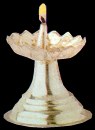 Diwali or Deepavali, the Festival of Lights, is one of the most colorful occasions in India. Celebrated in October-November, this festival spans three days. Diwali is celebrated with merriment and lights of various kinds. It marks the advent of winter. Prayers are said to invoke the blessings of Goddess Lakshmi, the Hindu goddess of wealth.
The origin of this festival can be traced to the Hindu mythologies.
 The Muslim traveler and historian, Alberuni, refers to Diwali as a festival when people dressed festively, distributed gifts, visited temples to give alms and played merrily with one another till noon. At night, they light a great number of oil lamps and burst crackers. The Muslim traveler and historian, Alberuni, refers to Diwali as a festival when people dressed festively, distributed gifts, visited temples to give alms and played merrily with one another till noon. At night, they light a great number of oil lamps and burst crackers.
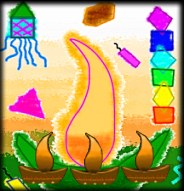 In North India, on Diwali old lamps are thrown away and new ones, fresh from the family potter, are lighted and placed in the house. The new lamps are thought to help the souls of the dead find their way to heaven.
In Gujarat, Diwali marks the end of the old year and the beginning of the new year. Being associated with Lakshmi, the Goddess of wealth, Diwali is a day of great economic significance to the business community. In West Bengal, the night of Diwali's new moon light is reserved for the worship of goddess Kali. In Maharashtra, songs are sung on Diwali to restore the rule of Bali. |
| About India | Arts | Cuisine | Fairs | Festivals | Neighbours | Society | Religions |
| Site Map | Disclaimer | About Us | Write To Us |