
Medical History


Tracy has a history of hypopglycemia, an endocrine discorder, which was untreated at the time of the alleged crime, and not mentioned in the trial.
On Tracy's hypoglycemia (an abnormally large amount of sugar in the blood), US-based human rights lawyer Clive Stafford-Smith has said:
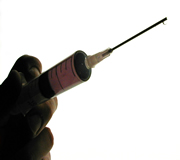
source: http://www.freeimages.co.uk
"It certainly would have affected him, particularly because of allegations of alcohol involved [in the case]."
Mr. Smith has also said: "It is very unlikely [in consideration, of his medical condition] that he could have been convicted of murder [rather than manslaughter] under British law. America does not recognize 'diminished capacity,' which is one of the reasons that Europe will not deport people back [to the U.S.] to face capital charges."
Childhood Trauma
Tracy was born a month premature and weighed only 3.5 pounds. He remained in an incubator after Lula's discharge from the hospital. Tracy was sickly from birth and suffered such bad health that the family moved to North Carolina. .
Tracy's childhood, spent in impoverished circumstances in North Carolina and Columbia Heights, Rhode Island, a ruined former mill town, was marked by serious illness and injury. He suffered constant headaches and fevers (one of 105 degrees), for which his father - who 'did not believe' in doctors - refused to seek medical help. At the age of seven, he fell off a roof and was knocked unconscious. Badly concussed, his pupils were dilated for several days. Later he was concussed again when another child attacked him with a baseball bat. Finally, at the age of 11, he sustained brain damage after losing consciousness again in a car crash.
It was not until years after Housel's trial that his appeal lawyers, Beth Wells and Robert McGlasson, had him examined by two mental health experts and several leading neuro-physicians. They later testified that he suffered from an extreme form of hypoglycaemia, which made him prone to periods when he would lose control of his actions and became unable to distinguish right from wrong. They added that all the available evidence suggested it was during such a psychotic episode that he committed the crime for which he was sentenced to death.