|
|
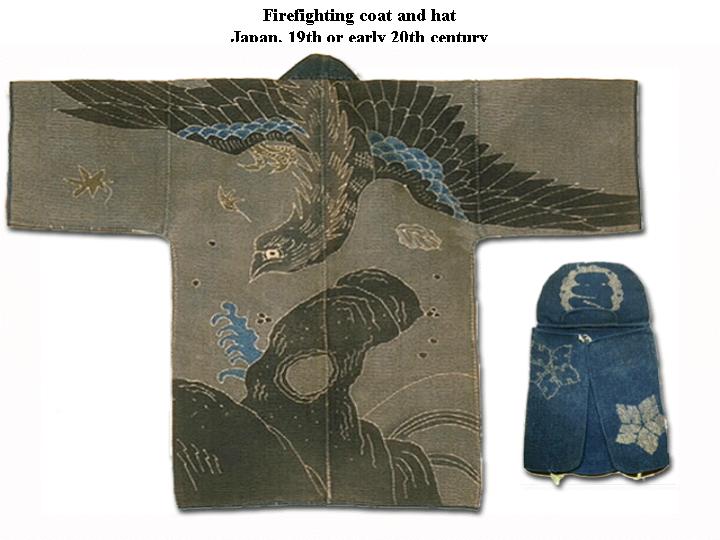
Fire was a dreaded disaster in the cities of Japan, where most houses were built of wood, paper or straw. The system of commoner townsmen firefighters or machi bikeshi was established in Edo (present-day Tokyo) in 1720. Adored by the people of Edo, machi bikeshi were idealized as heroes. Made of two or three layers of sashiko-stitched cotton fabric, commoners' firefighting coats (hikeshi banten), hats, and mittens were soaked with water to protect the firefighters. Fully drenched gear, including hood, coats, trousers, and mittens, could weigh as much as eighty pounds and protected the firefighters as they approached a blaze with hooks, pulling down structures to prevent the spread of fire.These coats are decorated with a paste-resist dyeing technique (tsutsugaki) and sashiko stitching. The stitches hold together multiple layers of fabric to provide strength and warmth. This is quite a common technique also seen in the fishermen's coats from Awaji Island in Japan, which are on display at The Textile Museum through September 2, 2001. |
|