 With the reorganisation of the states, the union of the
states of Saurashtra and the Union Territory of Kutch along with the
former British, Gujarat became a part of the bilingual state of Bombay.
The present state of Gujarat came into being on 1st May 1960. The state
is bound by the Arabian sea on the west, Pakistan and Rajasthan on the
north and north-east respectively, Madhya Pradesh in the south-east and
Maharashtra in the south.
With the reorganisation of the states, the union of the
states of Saurashtra and the Union Territory of Kutch along with the
former British, Gujarat became a part of the bilingual state of Bombay.
The present state of Gujarat came into being on 1st May 1960. The state
is bound by the Arabian sea on the west, Pakistan and Rajasthan on the
north and north-east respectively, Madhya Pradesh in the south-east and
Maharashtra in the south.
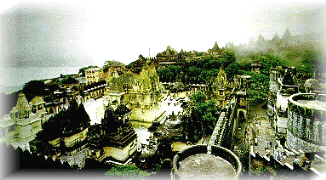
Gujarat has always been an important centre for the Jains, and some of its most important sights are the Jain temple complexes like those at Palitana and Girnar Hill. Other places of tourist interest include religious spots like Dwarka, Somnath, Pavagadh, Ambaji, Bhadreshwar, Shamlaji and Taranga; Porbandar, birthplace of Mahatma Gandhi, memorable architectural and archaeological monuments in places like Patan, Siddhpur Ghumli, Dabhoi, Vadnagar, Modhera, Lothal and Ahmedabad; beautiful beaches like Ahmedpur-Mandvi, Corwad, Ubharat and Tithal; the hill resort of Satpura, the lion sanctuary of Gir Forest and the Wild Ass sanctuary in the Kutch area.



