Situated in the north eastern corner of the country, Nagaland has Assam, Arunachal Pradesh and Manipur on its domestic borders, while Myanmar shares with it, an international boundary on the east. Nagaland lies to the South of Jorhat in Assam, and is home to myriad tribes and sub tribes. The Naga Hills run through this small state, which has Saramati as its highest peak at a height of 12,600 ft. The main rivers that flow through Nagaland are Dhansiri, Doyang, Dikhu and Jhanji.
Nagaland comprises the former Naga hills districts of Assam and the former Tuensang frontier divisions. Administered earlier by the President, Nagaland was made a state on 1st December 1963. Nagaland is divided into the six main districts of Mokokchung, Tuensang, Mon, Wokha, Zunheboto, and Kohima.
Folk dancers
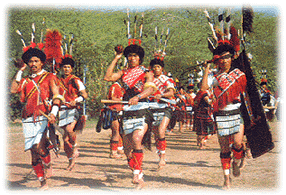 The
Nagas are a handsome and friendly people. High cheek bones, almond eyes,
sparkling teeth and bronzed skin set the Nagas apart. In colourful tribal
outfits, with bamboo shields sheathed in bear skin and decorated spears,
the Nagas are simple people, almost entirely tribal. There are 16 tribes,
each having its own dialect, customs and traditional costumes, with the
common link being their passion for music, dance and pageantry. The social
position of a Naga is borne out by the number of bone necklaces he wears.
The
Nagas are a handsome and friendly people. High cheek bones, almond eyes,
sparkling teeth and bronzed skin set the Nagas apart. In colourful tribal
outfits, with bamboo shields sheathed in bear skin and decorated spears,
the Nagas are simple people, almost entirely tribal. There are 16 tribes,
each having its own dialect, customs and traditional costumes, with the
common link being their passion for music, dance and pageantry. The social
position of a Naga is borne out by the number of bone necklaces he wears.
Weaving is a traditional art handed down through generations in Nagaland. Each of the major tribes has its own unique designs and colours. Warm and colourful Naga shawls, handwoven shoulder bags, decorative spears, table mats, wood carvings and bamboo works make magnificent souveniers.
Tribal dances of the Nagas give us an insight into the inborn reticence of these people. War dances and dances belonging to distinctive tribes, form the major art form in Nagaland. In colourful costumes and jewellery, the dancers go through amazing mock war motions, that could prove very dangerous, if one were to be a little careless. Festivals, marriages, harvests, or just the joy of the moment - are occasions for the Nagas to burst into dance. Some of the important festivals are Sekrenyi, Moatsu, Tuluni and Tokhu Emong.
Situated at the southern tip of the state, overlooking the valley, is the mountainous capital, Kohima. Kohima does not have monuments, monasteries or temples to offer by way of stock tourist attractions. However the unhurried pace of life, calm and serene environs and fresh, unpolluted air makes a welcome change for a jaded city dweller. The Second World War Cemetery in Kohima, the State Museum and the Zoo are the principal places of interest here. Excursions from Kohima lead to Khonoma village, Japfu peak, Dzakou Valley and Mokokchung.
Cultivation on terraced fields, and in some cases Jhum or the shifting system of cultivation, is followed by the people in this state. Rice is the important foodgrain. The process of industrialisation of the state is in its infancy, but the need to have more industries has been recognised. There are several plans on the anvil to increase industrial investment in the State.


