 U.S. Army/Air Force Aviation Journal U.S. Army/Air Force Aviation Journal
|
|
Vol. 1 Nos. 11/12 |
December 2003 |

www.combatreform.org/usarmyaviationjournaldecember2003.htm
|
Table of Contents
EDITORIAL
Stay-in-Your-Lane, Live off another's Legacy?
LETTERS
LTC Wilcox: USAF not up to MAS/CAS anymore
GEOSTRATEGIC
Babbin exposes the Shinsekiites: New Army CSA cleaning house
OPERATIONAL
U.S. Air Force Special Operations on path to irrelevance?
TECHNOTACTICAL
Should the U.S. Army have VTOL and/or STOL aircraft?
Is the UAV unworkable on the 21st Century battlefield?
The ATAX: is this the Army's next generation attack aircraft?
DoD HOT LINKS
Carlton Meyer's www.G2mil.com
November 2003 Articles
Letters - comments from G2mil readers
Roster of
all mobilized Reserve units (pdf) - 169,279 reservists on active duty
Fire Rockets from TOW tubes - dumb rockets can
boost firepower
OV-6B Rangers - 2-seat observation/attack aircraft are needed today
Federalize Military Prisons - transfer inmates
to Federal institutions
Is Missile
Defense on Target? - an expert says no
Barrett 6.8mm
M16 - to replace the 5.56mm?
CBO
U.S. Defense Plans (pdf) - costs will grow 20% annually
Invasion
of the Transformers - transformation is nothing new
Insanity at the Pentagon - unknown foreigners welcome to enlist
The
Unbuilding of Iraq - fools at work
Inside
the Boeing Deal Scandal - the KC-767 lease
Every Time
the Wind Blows - with the 3rd ACR in Iraq
How
we trained al-Qa’eda - U.S. tax dollars at work
Israel Deploys Nuclear Arms in Submarines - disputed by Israel and the USA
At Least 100
Bases Said to Be in Line for Closure - out of 425 major domestic bases
Too Much TV -
makes most American ignorant
G2mil Library
Previous G2mil - November 2003 issue
Library Tour
Visit G2mil's library
PME HOT LINK
The Tactical Air Support Group
E-mail U.S. Army Aviation Journal Staff
ON THE RADIO
General David Grange's Veterans Radio Hour
Return to U.S. Army/Air Force Aviation Journal home page,
click here
|
EDITORIAL

ARTWORK courtesy of the SkyRaider Association http://skyraider.org/skyassn/index.htm. Stay-in-your-lane, live off someone else's legacy? So far this year's U.S. Army/Air Force Aviation Journal (AVJ) has focused primarily on the attack aviation Close Air Support (CAS) problems of the U.S. Army, namely that the USAF only operates the fixed-wing armored A-10 reluctantly and our rotary-wing helicopters are too slow, get easily shot down and are expensive to maintain. Retired Army General Barry McAffrey has an excellent article in the October 2003 issue of Armed Forces Journal International explaining why a lack of combining arms has resulted in Army helicopters being shot down, though the AH-64 Apache is very much feared by the Iraqi enemy. No safe rear areas in the air, either
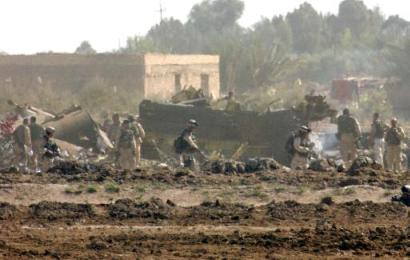
U.S. Soldiers carry a stretcher at the scene after a U.S. Chinook helicopter, center, believed carrying dozens of Soldiers to leaves abroad was struck by a missile and crashed west of Baghdad, near Fallujah, Sunday, Nov. 2, 2003, killing 13 Soldiers and wounding more than 20 others, the U.S. command and witnesses reported. (AP Photo/Anja Niedringhaus) http://story.news.yahoo.com/news?tmpl=story&u=/ap/20031102/ap_on_re_mi_ea/iraq&cid=540&ncid=716 Yesterday, a CH-47D Chinook was shot down by MANPADS over Iraq, killing 13 Soldiers. It wouldn't bring these brave men back to say we told you this would happen, but it might prevent losing more men. Was the CH-47D fitted with InfaRed CounterMeasures (IRCMs) ie; decoy flares? If so did they work? If there were no IRCMs, why not? Why were the Chinooks not flying above MANPADS altitude then spiralling down once over the secure Baghdad International Airport (BIA), Saigon-style? Were the helicopters painted in light desert tan or better gray to blend in better with the sky to be harder to optically sight/track? How about flying at night to evade day optically aimed weapons? Where were the quiet 2-seat manned observation/attack fixed-wing STOL aircraft flying top cover on the look-out for MANPADS teams? Helicopters are noisy; its likely the enemy heard the Chinooks coming and were waiting on a likely route to BIA. Noisy AH-64 Apache and OH-58D Kiowa Warrior helicopters alert enemies lying in ambush to hide from detection. Helicopters fly slow and are easy to track by optically-aimed weapons. There are two schools of thought to fix this: 1. Make Army VTOL helicopters fly faster with fixed-wings and pusher thrust (over 200+ mph) ie: Piasecki VTDP kits. Exploit V/TOL capability to operate away from unmovable air bases like BIA where enemies can lie in ambush. Basically the AH-56 Cheyenne but improved. 2. Get the Army its own fixed-wing STOL aircraft that are faster flying, easier to maintain, and get the Army "lead out" when it comes to building forward operating bases with short runways to operate these aircraft and NOT rely on predictable, immovable air bases. This is not an either/or proposition---all of the proponents of these schools of thought support the other's ideas. The fact is WE NEED BOTH: better Army rotary-wing aircraft AND Army fixed-wing that fly FASTER and farther. "Hop 'n hover" ain't gonna cut it. Its also a given that the Army must reorganize to combine arms better so artillery suppresses and masks for aviation etc. but the fact remains that the basic parameters we have set for ourselves are condemning us to these failures. Combining arms to cover inherent weaknesses is not always possible--you can't lay a carpet of artillery fire down on civilian neighborhoods just in case a MANPADS shooter is there. The best way to cover for inherent weakness in a combat arm's platform/system is TO SOLVE IT. We must co-locate Army Aviation units with the ground maneuver forces of our Army even if it means towing helicopters on trailers. Get Army Aviation away from obvious air bases. The photo below is of the Iraqis TOWING a captured AH-64D Apache LongBow helicopter shown on their TV. We should be able to LEARN FROM OUR ENEMIES. If a helicopter conks out, and the Iraqis can figure out how to trailer and tow it, then certainly we in the U.S. Army can do the same.
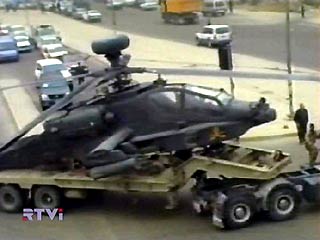
If helicopters with their V/TOL cannot operate alongside ground units, what's the point? If they are going to be far in the rear then that rear could have a runway for the same energy expended making comfortable tent cities. We cannot always count on a brilliant plan which skillfully combines arms to compensate for our own self-produced short-comings. There comes a time when we face our weaknesses head-on and FIX THEM and set the conditions for success. U.S. Army Armor branch has a lot of delusional thoughts about itself, however it has done one thing right; by making the M1 Abrams tank nearly invincible, it has carried the day at the platform technotactical level of war even when the plan was lacking. The sad fact is that the majority of U.S. Army Aviation Branch is in denial and content to live off the legacy of James Gavin, Harry Kinnard and Hal Moore, continuing to operate slow, conventional helicopters with short ranges that are hard to deploy inside USAF transport aircraft and when on the scene are too easily shot down. These folks forget or don't realize these legendary leaders had fixed-wing JOV-1 Mohawks for armed recon/CAS and CV-1 Caribou STOL aircraft for airdrop/airland troop transports. Read the Howze Board report. If you are going to follow a legacy, at least do it right and fully live up to it. My personal conclusion is that the daily Army routine is so full of non-sense that an anti-intellectual climate has been created where no one has the time to THINK honestly about what's going on. The current Army Aviation vision of business-as-usual with some RAH-66 stealth scout helicopters and Unmanned Aerial Vehicles (UAVs) to gadgetize mentally what we are doing physically in a slow and short-ranged way is a recipe for further "Blackhawk Downs!" and "Robert's Ridges". We must not live off a partial legacy of others, we must BUILD OFF THE LEGACY OF THE GREATS. This means original thinking and risk-taking with new ideas based upon SOUND WISDOM. The Army's daily brain-dead routine and blind obedience culture must be replaced with a thinking, seeing obedience. In next year's AVJ we are going to focus on the responsibilities of Army Aviation to enable 3D air-mechanized maneuver--not the warmed-over dismounted air assaults that have led to heavy casualties. For details now, read our book, "Air-Mech-Strike: Asymmetric Maneuver Warfare for the 21st Century". In this issue we will discuss reformer Chuck Spinney's "Death Spiral"; how new aircraft are hard to come by and the curse its bringing to USAF AFSOC. Ed Heinneman's curse of overly complex aircraft will also be discussed. We recently discovered we have counterparts in Australia!! Their Army Aviation Association has been fighting a battle to get their wannabe-lawn darts Air Force to provide CAS. In their excellent report they make some observations about the highly successful German Air Force/Army cooperation in WWII: The Tactical Air Support Group By O.M. Eather. MBA www.fourays.org/archives/closeair.htm
"Examining the Luftwaffe's development reveals sound principles of tactical air support that were later reflected by other air forces as they sought to emulate the effectiveness of the Luftwaffe's 'Blitzkrieg' techniques. From the outset and in spite of the pervasive influence of classical air theorists, the German High Command realised that technical limitations would always constrain air power from being the decisive arm. Rather, the Luftwaffe would always act in concert with the Wehrmacht, and to a lesser extent, the Kreigsmarine. Great attention was paid to cross training army officers and non-commissioned officers as observers in reconnaissance squadrons and, both in basic flying training and at the Air Command and Staff School, to train young flyers in ' the science of Army Tactics.' (Ref 15) This had the very real benefit of giving Air Force officers, particularly air crew, a proper military education grounded in an appreciation of those elements of their defence forces that were actually decisive. NOTE: the idea we proposed of enlisted ground observers flying in aircraft as air observers is an old German idea! We just need a two-seat fixed-wing observation/attack aircraft to enable this. The need for these aircraft to be co-located with ground maneuver units by being able to fly from short unimproved runways is a must. Jed Babbin's theory of Army misguidance is interesting and included here: he proposes that the Shinsekiites are basically selfish Army types who are not joint service "team players". While true, I don't think that's the central problem. The central problem is that they are still Tofflerian bombard & occupists--a USAF mentality in Army Green. The disease is RMA/Tofflerian firepower thinking that does not value ground MANEUVER. We are in Van Crevald's "4th Generation" of warfare (4GW) not discredited sociologists Alvin/Heidi Toffler's "Third Wave" of civilization. Clearly, the U.S. Army immediately needs a fixed-wing, MANNED observation/attack aircraft for Iraqi COIN operations. Its time EVERY AVJ member to contact the two Representatives who sponsored the recent GAO report on CAS failings and ask them to sponsor legislation to achieve this:
Vic Snyder-Arkansas, 2nd District
Washington, D.C. Office
Office in Arkansas
Solomon Ortiz-Texas 27th District
2470 Rayburn Building Note: He's a former U.S. Army MP Air Assault!
Mike Sparks LETTERS NOTICE: you write it, we will publish it. This is YOUR e-magazine. Unless its helping the red chinese communists or vulgar, we are going to publish it. The Journal comes out every 30 days and you can sign the guestbook 24/7/365 at our web site: http://www.oocities.org/usarmyaviationdigest From: Greg Wilcox [wilcox@wdc.sri.com] "I've given up on the Air Force. This is an Army problem. We have the right to do it. We used to have L-19s in the Army as signal corps and field artillery assets. Where did they go? They went the same place as the Beavers and Otters. Caribous were another matter. They were victims of the USAF. Let the Army take care of it's own. Buy the Cessnas and put them in the fleet under Army Aviation. Better yet, give one directly to every combat unit commander. Let him figure out how best to use them." Greg
AL Boydstun
"I was scouts, OH-58 helicopters, nice to have Cobras, I have been out since 1982 but I`m recently involved with OV-10`s, I`m doing upgrades, engines, avionics etc., I think the Air Force, marines retired these aircraft too soon, I`m working on a group of 10 headed to South America...great aircraft, sometimes I think the goverment thinks more is better, but in this case I think they made a mistake....bring them back....
GEOSTRATEGIC
www.nationalreview.com/babbin/babbin081403.asp
August 14, 2003, 8:45 a.m.
Purge of the Princelings?: Moving toward jointness.
By Jed Babbin
When Congress gets back from its August recess, you'll hear some caterwauling about how Big Dog is conducting a political purge of the Army. But what is going on in the Army right now is apparently not directed by Secretary of Defense Donald Rumsfeld and is not even a purge. But it may be the beginnings of one.
As soon as Mr. Rumsfeld took office, his plan to transform America's military ran into various levels of resistance in each of the services. The Navy was shaken by the thought that the aircraft carrier would have to evolve from its current form. The Air Force didn't want to hear that its new fighter - the F-22 - wasn't needed as much as it had been in the Cold War. But nowhere in Fort Fumble did he encounter utter refusal to change except in the Army.
According to an Army source, shortly after his accession Mr. Rumsfeld walked into the Tank - the vault-like conference room on the fourth floor of the Pentagon in which top-secret matters can be discussed freely - for a meeting with the Clintons' Army Chief of Staff, General Eric Shinseki. Shinseki is the protégé of Hawaii Senator Daniel Inouye, and as political as his mentor. In that meeting, Shinseki tried to give Big Dog the Don Corleone treatment. Let me run things my way, said Shinseki, and I'll make you look really good on the Hill. But forget about transformation. The Army doesn't need it, and we don't plan to do it. Rumsfeld, to the surprise of his interlocutors, declined the offer they thought he couldn't refuse.
Shinseki should have been fired. That he wasn't is a tribute to the White House's fear that Sen. Inouye - ranking Democrat on the Appropriations Committee - would take his revenge, with ballistic-missile defense the most likely target. Shinseki stayed and the Army stood fast against change, insisting that its 1950s Cold War culture and configuration should remain. In essence, Shinseki chose irrelevance, taking the Army off the table as a tool of national policy and defense.
Shinseki's choice of irrelevance was demonstrated convincingly in the Afghan campaign. When Big Dog asked what the Army would need to defeat the Taliban, Shinseki wanted at least six months to assemble and move what amounted to the entire Army. When the Afghan campaign began on October 5, 2001 - less than a month after 9/11 - the Army (except for the Rangers and other Army special ops, who performed superbly) watched from home. Privately, Shinseki called the Afghan campaign a "police action," something the Army shouldn't be involved in.
Shinseki's retirement two months ago coincides nicely with the planned - but yet unannounced - retirement of Inouye at the end of his current term in 2004. Shinseki will run for that seat, and most likely will win. He'll have Inouye's support and will claim credit for placing a $1 billion brigade of his pet "Stryker" armored vehicles in Hawaii, where they will be an expensive political ornament.
Shinseki's departure doesn't end the problem. His legacy is an Army of rigidity, commanded by his faithful. In four years as chief of staff, Shinseki personally chose about 40 colonels for promotion to general each year, as well as a proportional number of generals for promotion to two-, three-, and four-star ranks. These hundreds of generals were promoted based on their fealty to Shinseki's view of what the Army should be, and how it should fight. In Shinseki's view, the Army was only meant to fight wars such as World War II in which massed armies met, or to engage in the feckless U.N. peacekeeping missions. Only those who agreed with that view were given stars under Shinseki. It is that view - and those who insist on it - that the Army most urgently needs to shed.
To replace Shinseki, Rumsfeld needed someone who wasn't mired in the Cold War. After Gen. Tommy Franks (and, reportedly, at least two others) turned him down, Rumsfeld took the very unusual step of bringing a general back from retirement to do the job.
Peter Schoomaker is a former Delta Force operator, later commander of Delta Force, and also of Special Operations Command. Soon after he was named, Schoomaker - through the acting chief of staff, Gen. John Keane - began the job of ridding the Army of obstacles to change.
So far, at least six of Shinseki's cadre have been given their walking papers. Among them are some of the worst obstacles to progress, and greatest devotees of political correctness. At the top of the political correctness pyramid was Lt. Gen. Dennis Cavin, commander of the Army Accessions Command. ("Accessions" is Pentagonese for recruitment.) Cavin, sources say, was solely focused on recruiting minorities and women. Any other subject was simply not worth his attention.
"Jointness" is one aspect of transformation that has been displayed in both Afghanistan and Iraq. "Jointness" means combining elements of one or more services to train and fight together, usually for a particular mission. It cherry-picks parts of the services and knits it together with the result being much more than the mere sum of the parts. In cases such as missile defense, it translates into huge cost savings. Gen. Joseph Cosumano, Shinseki's commander of the Army's Space and Missile Defense Command, threatened the success of the joint ballistic-missile-defense plan by insisting that the Army's role had to be separate. Cosumano is another who should have been fired, but wasn't. Now he is. And so are Lt. Gen. John Caldwell, Gen. Paul Kern, and Lt. Gen. Charles Mahan. Each of the three had charge of some part of the Army's weapon-system acquisition mess.
Instead of following Rumsfeld's orders, Shinseki slow-rolled transformation. He rolled it aside entirely on the wheels of his central "transformation" initiative, the "Stryker" interim armored vehicle. Stryker - a 38,000-pound machine incapable of fighting a war for too many reasons to list here - is a $12 billion tribute to the U.N. peacekeeping missions of the 1990s. Caldwell fought for the Stryker, in denial of its failure to meet mission specifications and repeated cost overruns. Kern, one of the architects of Stryker, was kept on by Shinseki for a year after the law required his retirement. Mahan was Shinseki's deputy chief of staff for logistics and part of this same inner circle. Stryker's future is uncertain. It should be cancelled.
Lt. Gen. Johnny Riggs was Shinseki's director of the Army Objective Task Force, supposedly the office in charge of transforming the Army according to Rumsfeld's plan, but actually the office in charge of obstructing it. When Rumsfeld asked for an Army timetable for transformation, Shinseki and Riggs came up with a plan that would have taken 30 years to perform. By the year 2032, that plan - based on buying all sorts of things including Stryker - would have provided the "future force." When Rumsfeld rejected that, Riggs and Shinseki backed off by twenty years, but still effectively precluded transformation.
With those men going, the question quickly becomes, why only them? The last time a new leader had to force a cultural change on the Army was in 1939, and the parallels to this time are very direct. Like Rumsfeld bringing Schoomaker out of retirement, FDR catapulted Gen. George C. Marshall from one star to four overnight. Between June 1939 and June 1940, Marshall fired 54 generals and 445 colonels in an Army numbering only about 225,000. Today's Army numbers about 480,000. Schoomaker's success as chief of staff will not be measured by how many of Shinseki's political princelings he fired. To force the cultural change the Army needs, many more heads will have to roll. But whose?
The criteria can't be too difficult to divine. First any general like Shinseki, whose political ambitions interfere with his willingness to carry out civilian orders, must go. That's not implementation of a competing political agenda. That's what the Constitution requires. Second, those who adhere to Shinseki's view that the Army has a role only in massive wars or in peacekeeping missions, and nothing in between must go. The Big Green Machine must be changed from its Cold War garrison culture to a force that thinks, adapts and moves quickly, and gets to the battlefield before the enemy escapes.
Third, those generals who - like Cosumano - oppose "jointness" cannot command effectively in the war we are now engaged. Our Army has to train and operate - which means sharing resources, not fiefdom building - with the Air Force, marines, Navy, and Coast Guard as never before. Those not on the jointness train have to be left at the station. Fourth, there are a lot of bureaucrats who are generals. As one of my friends, who is a real warrior-intellectual often reminds me, no one is beatified by having a star pinned on each shoulder. There are, I am sure, future Grants, Pershings, Pattons, and Bradleys out there. Let's hope Gen. Schoomaker finds them, and promotes them before Senator Shinseki starts blocking the promotions of those he doesn't favor.
- NRO Contributor Jed Babbin was a deputy undersecretary of defense in the first Bush administration, and is now an MSNBC military analyst. He is the author of the novel, Legacy of Valor.
By Ted Cormaney and Mike Sparks
Aircraft are VERY expensive to own/operate let alone create. Whereas the ideas we speak of in LAND POWER TRANSFORMATION (LPT) e-magazine are things that can be done in your garage and paid for by the individual Soldier, to include operating a light tracked M113 Gavin armored fighting vehicle, aircraft are "BIG TICKET ITEMS". Simply the will is not enough, you need the bucks.
Pentagon budget analyst Franklin "Chuck" Spinney has concluded that as we replace existing aircraft with newer types the new types are ever more complex and less physically reliable creating a "death spiral" where more and more dollars are spent keeping less and less aircraft in the air. The B-2 Stealth bomber costs half a billion dollars each! ($500,000,000) for example.
Ed Heinemann, designer of the A/B-26 Invader, A-1 SkyRaider, A-4 SkyHawk concluded long ago:
"The obstacles to any simplification may seem insurmountable, and the reasons for more complexity are many and powerful. But if we permit this Frankenstein of complexity to continue to work at its current plodding, insidious rate, it will slowly overwhelm us to impotency".
The day he warned about is today. Platforms have become "cash cows" to milk tax money from civilian leadership, resulting in overly large and complex aircraft and ground vehicles to do the mission. The Army has drifted into platform-centricity because it fails to have a Cavalry Branch to insure smaller multiple platform style warfare is fully developed. In the USAF, the fighter-bomber mafia hogs up dollars for aircraft to do air superiority and strategic bombing missions to the detriment of CAS for ground forces and escort for Special Operations Forces (SOF). To counter this, Goldwater-Nichols legislation created a U.S. Special Operations Command (USSOCOM) to insure special operations units trained together from all thes ervices and got a guaranteed "piece" of the budgetary "pie". This is no guarantee that the money will not be used unwisely as you will see.
One of the "legacies" of Vietnam that thankfully has continued is the "Air Commandos" of the USAF. However, the agile, slow-flight capable A-1 SkyRaiders and A-37 Dragonflies that used to provide armed CAS and escort to today's Air Force Special Operations Command" (AFSOC) have vanished. The A-10 does this job now, but its not owned and operated by AFSOC and is in constant jeopardy of being retired by the fast fighter-jock mafia running the USAF. Some A-10s should be transferred from the "boneyard" to AFSOC to fix this; preferably teo-seat "OA-10B Nimrod IIs".
However, none of this common sense is seen in the current AFSOC vision Ted has presented below.
Instead AFSOC has chosen to retired its proven long-range MH-53J Pave Low III/IV helicopters for unproven and unsafe CV-22 Osprey tilt-rotor aircraft that cannot even carry armament. Basically, AFSOC has decided to "get out of the helicopter business" by adopting an unworkably too complex aircraft far worse than any helicopter to maintain. What they really have done is put their institutional survival on a VTOL platform that will not work; and when it fails will be unable to land vertically and take-off to extract special forces units. U.S. Army Special 160th SOAR and regular Aviation units will have to "pick-up the slack" when this debacle becomes apparent. Hopefully, via Piasecki VTDP technology Army helicopters will be able to support USSOCOM SOF units with reliable VTOL capabilities as their MH-47E and CH-47D Chinooks proved in the high altitudes of Afghanistan recently.
The only bright spots in the AFSOC plan is the push to develop a stealthy "M-X" replacement for the MC-130 Combat Talon I and IIs that can parachute airdrop SOF units in and fly them out via VTOL or Extremely Short Take-Off and Landing (ESTOL) capabilities. They should look at the Burnelli design to achieve this ESTOL capability. Tracked and Air-Cushion landing gear should be utilized to increase the number of terrain openings where the M-X can land and take-off.
The AC-130H/U replacement with a combat laser is another good innovation though not articulated well--to suppress enemy optically aimed MANPADS and other AAA systems the "RAND BOGEYMAN" often used to argue against 3D air-ground maneuver and should be pursued.
I have one quibble, the AC-130U uses a longer-ranged 25mm chain gun not 20mm Gatling guns (AC-130Hs use these) as a rapid-fire area effect weapon.
HILLINT: U.S. Air Force SOF Investment Strategy
Ted Cormaney
AIR FORCE SPECIAL OPERATIONS COMMAND
PRIORITIES
* SOF mobility in denied areas: CV-22 & M-X
* Precision employment/strike: Next Generation Gunship (NGG)
* Advance Enabling Force: Special Tactics/Combat Patrol
* Global Engagement: Combat Aviation Advisory (CAA) ops
AFSOC transformation priorities
* #1: Procure 50 x CV-22 Osprey
* # 2: Develop a long-range, low-observable, ultra short or vertical
take off and landing, air mobility to conduct clandestine ops in denied
airspace (M-X)
* #3: Build overseas CAA capability to help integrate SOF, conventional
forces and Coalition aviation partners...assess, train, advise and
assist allied air forces build coalition interoperability and gain
access to bases.
* #4: Develop a survivable platform/concept that provides persistent
application of tailored surgical or area saturation fires to defeat,
destroy, disperse and deny an adversary's ability or will to fight
using selectable lethal and/or non-lethal means (NGG)
UNCONSTRAINED SUBMISSION
CV-22
* FY05 initial delivery (2 a/c)
* FY09 IOC
* FY17 (50 TAI)
M-X
* FY03 AOA
* FY09-14 RDT&E
* FY18 IOC (8 of 24 TAI)
* FY22 FOC (24 TAI)
NGG
* FY02 AOA (AFSOC and ACC)
* FY05-09 RDT&E
* FY15 IOC (10 of 24)
* FY22 FOC (24 TAI)
Two CAA squadrons
* Pacific theater (FOC FY10)
* European theater (FOC FY10)
AFSOC ASSIGNED TOPLINE BASELINE SUBMISSION
FY05-21 = $12.73 Billion
Average $749 Million/yr
UNCONSTRAINED SUBMISSION
FY05-21 = $28.5 Billion
Delta = $ 15.77 Billion
NGG PROGRAM OVERVIEW
* CSAF directed studies to recommend improvements in AC-130H/U
gunship (Task Force Warlord/Gunship Enterprise)
* CSAF directed NGG AoA in FY02 (manned a/c, UAV, combination thereof,
space-based, etc.)
* AoA sponsored by AFSOC and ACC (AFSOC lead)
* Alternative will be asses with respect to lethality, connectivity,
survivability and persistence capabilities.
* AFSOC 2030 mission area plan (MAP) recommended IOC target of 2024.
* AFSOC MAP recommendation based on maturation of directed energy
technology and capability to create various effects with extreme
precision.
AC-X WEAPONS
The next generation gunship, codenamed AC-X and nicknamed "Son of
Spectre" by U.S. defence officials, will carry all the weaponry already
used on the AC-130, including twin 20mm Vulcan cannon (capable of
firing 2,500 rounds per minute), 40mm Bofors cannon (100 rounds per minute) and
a 105mm Howitzer. Its 21st-century addition, however, will be its
biggest punch: a chemical oxygen iodine laser (Coil), capable of
carrying out lethal and non-lethal attacks.
Paul Wolfowitz, the U.S. deputy defence secretary, has given the go-ahead
for the next-generation AC-130, which includes full funding for the
"integration of a direct-energy weapon". (Telegraph)
LMT AND BA COMPETE FOR AC-X AND M-X
Lockheed Martin and Boeing are in a race to develop a concept for two
near-term requirements to support U.S. Special Operations Forces (SOFs).
Lockheed Martin revealed its design...called the MACK conceptual
aircraft, the idea is to have a common design for a medium-lift,
multirole platform that both SOFs and conventional military forces can
use. The suggestion is that with a stealthy aircraft frame, modular
systems could be installed to perform a variety of missions, from a
next-generation gunship to a transport, cargo-lifter, or even a
refuelling tanker capable of being a network-centric sensor and relay
platform. Although still just a concept, the MACK is supporting Air
Force Special Operations Command (AFSOC) studies for a next-generation
gunship, called AC-X, as well as a possible future stealthy transport
called M-X.
However, the MACK concept is not the only one being considered for the
AC-X, projected to be fielded after 2010. U.S. Air Force officials said
they are also considering a modified Boeing C-17 Globemaster III, a
large unmanned combat air vehicle (UCAV) and groups of UCAVs. Moreover,
Boeing said it is offering a concept based on the company's blended
wing body (BWB) design, subscale versions of which have been tested and
flown in conjunction with the National Aeronautics and Space Administration.
(Janes)
KIRTLAND LASER FUNDING BOOSTED
Research on the new weapon, known as the Advanced Tactical Laser, or
ATL, is ongoing at Kirtland Air Force Base. The Pentagon made the laser weapon a priority for development last year, and the Bush administration has proposed increased funding.
A boost in proposed funding for the special operations budget is now
driving interest in the laser. About $62 million for
research is proposed under President Bush's defense budget for the next
fiscal year ó four times the $14.9 million currently allotted.
(Albuquerque Journal March 5, 2002)
A SECOND OPINION
John Pike, director of the Virginia-based defense watchdog group
globalsecurity.org, said hitting moving trucks or other vehicles through a cloud of dust or smoke could be difficult with a laser.
M-X
System Performance Factors
* Covert delivery/recovery of mounted troops in denied areas.
* USTOL/VTOL technology challenges
Assumptions
* Increased risk for C-130-like a/c
Limitations
* USTOL/VTOL capability in austere objective areas.
Offsets
* 14 x MC-130E Combat Talons and or 23 x MC-130P Combat Shadows
NGG
System Description
* Manned or unmanned platforms employing lethal/non-lethal effects,
directed energy for variable effects on soft and hard targets.
Limitations
* High-risk technology
* Assumes National Security priority will dedicate resources to produce
it.
Linked Programs
* AC-130H/U programs
* Directed energy programs, advanced tactical laser, active denial
technology
* ACC UCAV, ABL
Combat Aviation Advisorty (CAA) Overseas Squadrons
System Description
* Tasked in wartime/peacetime to support theater commanders in Foreign
Internal Defense (FID), Unconventional Warfare (UW) and Coalition
Support
Limitations
* Selective manpower, training instensive
CAA intended to function as a complement to U.S. Army Speical Operations
Command (USASOC) and Naval Special Warfare Commande (NAVSPECWARCOM)
ground, maratime and rivering foreign training provided to host-nation
forces within various theaters of operations.
The 6th SOS units are currently operating with foreign aviation forces
in four major overseas theaters and sixteen countries. The squadron's
one hundred five authorized personnel represent thirty two Air Force
Specialty Codes (AFSC) and a broad range of skills that include fixed
and rotary-wing tactical flying, aircraft maintenance, command and
control, communications, airbase defense, and personal survival. (Pike)
FINDINGS
NGG ranked above M-X in budget priorities. NGG in baseline option.
M-X only makes it in the Unconstrained budget.
AFSOF wants a stealthy C-130 follow-on for AC-X. Hardly anyone else
needs stealth on an intratheater lift a/c. AFSOC only wants 24 x AC-X, hardly enough to spread the cost of the stealth features.
HILLINT RULES OF ENGAGEMENT
HILLINT is drawn from open sources. HILLINT may be reproduced in whole
or in part without further permission with
proper credit given.
HILLINT is archived at http://www.egroups.com/group/hillint
In accordance with Title 17 U.S.C. Section 107, this material is
distributed without profit or payment to those who have expressed a
prior interest in receiving this information for non-profit research
and educational purposes only.
TECHNOTACTICAL
Should the Army get VTOL or STOL capable aircraft?
Chuck Myers starts the debate:
"Personally, I think flying helicopters is a real kick but have a couple of
reservations:
1. Poor crew survival when shot down (the job we are talking about,
especially BNOC (beneath the overcast)).
2. Slow traversing from one battle location to another.
3. Maintainability/Repairability."
Major Al Huber writes back:
"I agree that conventional helicopter does not fit all circumstances. I also agree that speed is a relevant factor in missions. CAS is almost inevitably a mission that dictates speed for multiple reasons (response and survivability). I do however see that VTOL is a very desirable capability because I can move the CAS with the force without having to tie ground forces specifically to geographic locations for the operation of the CAS aircraft. At least they are (currently) far more mobile than runway requiring airframes. Also VTOL gives me opportunities that do not avail themselves to fixed-wing aircraft if the circumstances permit. There is no one-size-fits-all solution and all are compromises. From my experiences and analysis high-speed VTOL provides Army Aviation the best solution set for a return to the asymmetric and nonlinear battlefield we expect to find ourselves on. Indeed most of the aircraft being worked in the sixties and seventies, until we went into the WW 3 mode, were variations of high speed VTOL."
Al
Roy Ardillo then asks:
"How about the marine STOVL Version of the F-35 JSF to support Army formations with CAS?"
Roy
THE DEBATE CONTINUES.......
By the Maneuver Air Support Working Group (MAS-WG) Staff
Right now the media-spun success of the USAF/CIA General Atomics Predator Unmanned Aerial Vehicle (UAV) as a recon and attack platform using Hellfire ATGMs has created a fad within DoD to field more Unmanned Combat Aerial Vehicles (UCAVs). Army Hunter UAVs are now test dropping self-target-seeking submunitions. This push began years ago with the casualty-averse politicians demanding DoD be 1/3 unmanned vehicle by 2015.
The problem is with reality.
The reality is that UAVs, UCAVs simply DO NOT WORK.
1. As recon platforms they have a narrow field-of-view "soda straw" and their use has resulted in us not having MANNED observation/attack aircraft like the OV-1, O-2, OV-10s when we really needed them: when Al Queda terrorists and Iraqi leaders fled across the border to safe havens.
2. As recon and attack platforms, the basically plodding and unimaginative slow (under 200 mph) flight path UAVs GET SHOT DOWN. If your UAVs are getting easily shot down, DO YOU HAVE RECONNAISSANCE? Do you? In Bosnia/Kosovo NATO lost OVER 48 UAVs!!! Towards the end of the conflict they had almost zero UAVs available. Enemy air defenses had literally blinded NATO! Where were the manned recon aircraft like the SR-71???
Thus, to think CAS/MAS can be effected by UCAVs is absurd.
Let's face it.
Dod is populated by humanists who worship man as on some kind of technological ego trip. They are so impressed that human beings in 2003 can create UAVs that that in itself justifies their use as a war implement. They are on an agenda to exalt mankind with themselves as technoheroes rather than GET THE JOB DONE. These folks forget or do not know that at the turn of the 20th century, legendary scientist Nicholai Tesla had working UAVs for WAR. Its not a new idea they created. Compounding this folly is that DoD technowonks are not in uniform, and thus UAVs give them a chance to PRETEND like they are warriors via remote control. This all smacks like a bad Star Trek TV episode except there's no Captain Kirk reminding us that human beings make wars not machines, and WE HAVE TO GET THE JOB DONE FOR REAL or REAL PEOPLE ARE GOING TO DIE.
So, realizing all of this, if we were to field an observation/attack aircraft that could be either unmanned or MANNED we could ride the DoD fad and get a better capability; when the unmanned option proves itself unworkable against alert, human enemies the MANNED option will be intact to save the capability and make it relevent. This is why an Unmanned/Manned Combat Air Vehicle (U/MCAV) is what we in the MASWG propose constantly if we get a brand-new aircraft for CAS/MAS.
However, after all of this, the fact remains the aircraft manned or unmanned to survive above the terrain mask must fly at least over 200+ mph. One such aircraft that can do this is the Douglas A-1 SkyRaider designed by the legendary Ed Heinemann.
Nicknamed the "SPAD" it has flown more successful combat missions in support of ground troops during Korea, Vietnam I (French 1947-54), Algeria (1958-1962) and Vietnam II (U.S./SVN 1958-1975) than any other CAS aircraft until the advent of the A-37 Dragonfly, A-10 Warthog and SU-25 Frogfoot. In Army service as a U/MCAV a "new" SPAD would still fly 200+ mph faster than current conventional VTOL helicopters and be far more battle damage resistant.
If you don't already know, we have two groups already working on the CAS issue; an inner circle called the "Maneuver Air Support Working Group" (MAS-WG) led by Chuck Myers that shares emails on a DAILY basis.
MASWG
...and outer circle of a 2,000+ member online magazine called "U.S. Army Aviation Journal" (you're readng it now!) which shares ideas on a BI-MONTHLY basis:
AVJ
MAS-WG member, Roy Ardillo therefore poses the question:
"I counted 51 x SPADS around the world that are left in flying condition.
So why don't we produce a A-1E follow-on?
The Czech's have something as well as the Argentinians. They would probably work great supporting something in Columbia or some other South American Drug haven.
I will research."
Roy
U.S. Army Vietnam combat veteran and historian Lonnie Shoultz writes back:
"I answered someone last night and said that the A-1 was continually upgraded
during Vietnam until they got up to the "J" model, I believe. I don't know
how many of those you found that have replaced wing spars but that puppy has
been in the air since the late 1940s and fought 2 wars. I imagine the
flight hours are pretty high and more of them are in the desert at Tucson
than are flying. The official Skyraider website is at:
http://skyraider.org/skyassn/index.htm.
They've got the entire scoop.
That site shows this to be the last serial number in
the series:
142072* AD-7 (A-1J) N Royal Thai AF Museum,
But, they're not certain that it is an original plane. It may be pieces of several planes cobbled together. Just check their site. They can tell you all about them such as the Air Force training for these things was done at Hurlburt Field/Eglin AFB Florida from 1964-1973. They trained just under a 1,000 pilots. 40 x Navy and 104 x USAF pilots died in those things in SE Asia.
It's all there on the site above.
The major Air Force 'bone yard' is near Tucson, AZ. In theory,
airplanes that have outlived their usefulness (airframes with a jillion hours on them) are stored in the dry, hot Arizona desert in case anyone wants
something off of them 'for official use.' Now, what the hell would anyone want off of a C-46 or C-47 'for official use?' It all sounds like another boondoggle for someone's civilian friend after a plane is stored for ... say 40 years. Then, they need to be what? Melted down, chopped up, whatever will
shrink the size of that reservation that the government is paying to keep
secure. I've looked at this site several times and don't quite get the drill.
It is an active AFB but the 'bone yard' planes are described as 'a mixture of
public and private.' Now, what does that mean? I guess I'll go there
and take the tour someday and try and piece it together. In the meantime,
the site can be viewed at: http://stan.web2010.com/AvCorner/DavisMonthan/.
Take a look. This will tell you where all of the F-102s, C-46s, C-141s and
other such Cold War stalwarts all ended up."
SPADS in Action!
Actually, I got to know some of the VNAF pilots over here for training.
While waiting for my classes to start at the University of Southern
Mississippi in Hattiesburg I worked for the Gulfport, MS Police Department
in 1967. When I returned to the area in 1972, the air was full of A-1
"Skyraiders." They were doing touch and go landings at Gulfport-Biloxi
Memorial Airport. I spoke to the commander of the Air Force component there
and found out that VNAF training in A-1s was being done at Keesler AFB. The
next time I had to go over there to arrest an Airman I got the OSI Special
Agent with me to take me over to the Vietnamese quarters. Since they were
flying under the control of American controllers, the ability to speak
English was a big factor governing who got to come to America to learn to
fly and who joined the ARVN infantry. They had some very fine English
speakers there. They were a lot of fun to joke with about what would happen
if they had to bail out over some of those Southern Mississippi woodlands...
Lonnie
Roy Ardillo reports back:
"Sorry. I screwed up. Didn't tell the whole story.
The ones that were in Tuscon were all either sent to museums of bought by private owners in the last five year, or are on display as some AFB/VA
site at the entrance.
None are currently able to fly without extensive overhauls and as you say, they have many, many hours in the aiframes."
These are the number of aircraft built. The AF took our the inventory on the Davis-Monthan site, but I did have the numbers at one time. I
remember about 150+ x A-10s there.
Number Build/Converted
A-1E* 212 SkyRaider
A-10* 713 Warthog
A-37* 618 Dragonfly
F-4G* 116 Wild Weasel
F-5* 2,221 Freedom Fighter
C-27* 10 Spartan
C-130** 867 Hercules
T-6B*** 600? "A" Model Texan II Follow-On
* From the Air Force Museum web site
The problem with the SPAD as you can see is that not a lot of airframes are around to be exploited and put back in service. There are a lot more T/A-37s available. The OV-1 and OV-10 are also sadly very scarce. Really, our only options to get a CAS/MAS, observation/attack aircraft using existing O/A aircraft would be the O-2 or the T/A-37 or to modify an existing prop-plane trainer like the T-6 Texan II like LTCs Mike Robel USAR and Walter Bjorneby USAF (retired) and former USMC Captain Carlton Meyers have proposed:
"If I were God, I'd immediately buy each Army and marine Division a squadron
of T-6A Texan IIs. www.fas.org/man/dod-101/sys/ac/t-6.htm They are modern and in production and only $3 million each. Every pilot knows how to fly them since they are used in training. The parts and support pipeline is in place. They would be for observation and FAC, but also have hardpoints for rockets and such. I'd yank a few from the training squadrons today and send them to Iraq where the complex and expensive Apaches are getting worn out doing road watch."
Carlton
LTC Robel adds:
"This idea makes much more sense than does trying to resurrect the A-1, the OV-1, the O-2, OV-10, the A-37, or any other phased-out aircraft.
Here is some more detailed information on the aircraft:
www.af.mil/factsheets/fs_124.shtml
General Characteristics
Primary Function: Entry-level trainer in joint primary pilot training
In planform, it even resembles the F-51 Mustang!
However, I suspect it has no armor, and the fuel tanks are probably not armored/sealing.
http://www.airforce-technology.com/projects/texan/ indicates that it is capable of supporting air-to-ground weapons training, and has six underwing hardpoints, three on each side for carrying air-to-air and air-to-ground weapons systems. The centre station on each side is "wet" for external fuel tanks.
As a two-seat aircraft, it would certainly be able to support a pilot/gunner-observer crew - critical for combat tasks at low altitude.
It probably doesn't have any armor, although it probably has self-sealing fuel tanks. Might need a new engine to carry any decent size payload, and I wonder how much runway it needs to take off. Of course, it could take off from a road and would not be subject to FOD as much as helicopters or jets.
A squadron of 12 - 16 would probably be supportable per U.S. Army division."
Roy Ardillo has discovered that a "B" attack model T-6 will soon fly.
"Look at the T-6B. It is light attack and
probably have all those features you are talking
about already installed."
Roy
Flight Visions integrates Raytheon
Flight Visions will provide the avionics for the new T-6B, which will serve as both a trainer and a light attack aircraft.
David Riemer, Raytheon Aircraft Co. Vice President—Government Business, announced on the eve of the show that the company has selected Flight Visions, Inc., as the avionics systems integrator for the T-6B, a new-generation trainer and light attack aircraft based on the U.S. Air Force T-6A Texan II trainer aircraft. Flight Visions, a wholly owned subsidiary of CMC Electronics, will deliver avionic suites for the trainer that consist of an FV-4000 Modular Mission Display Processor (MMDP), a SparrowHawk head up display (HUD), stores management, and multifunction displays.
Flight Visions' avionic suite will provide the new T-6B version with advanced cockpit-management functions employed in the latest front line fighters and will include an open architecture mission computer, giving the aircraft a multi-role capability as both a trainer and a light attack aircraft. According to the companies, the incorporation of the HUD and MFDs with the latest cockpit-management techniques reduces training time and cost and can increase the overall pilot retention rate to up to 95%.
The FV-4000 is a rugged, military-qualified unit that uses a 500 MHz G4 PowerPC processor. Operating in the T-6B, the FV-4000 will drive the display graphics for the SparrowHawk HUD as well as all the multifunction displays. The missionized T-6B will be outfitted with guns, rockets, and bombs, fulfilling a secondary role as a light attack aircraft and making the T-6B suitable for counter insurgency operations.
Sven Ortman, LastDingo@gmx.de writes:
"While I like the idea, it actually remains to be seen if the T-6 can haul a usefull load and what it really brings to the table that helicopters do not, other than being cheaper.
Carlton Meyer replies:
"Cheaper? They list the T-6 at $5 million each while an Apache costs over $20 million. They also have much greater range. Once again, their primary role is that of observation and FAC, and other key duties like radio relay. If you read accounts in Afghanistan and Iraq, the problem was the fast movers showed up low on fuel and don't have much time for situational awareness nor a nine line brief. An airborne FAC can start talking to them before they arrive on station and ensure friendlies are not hit. A good example was shown in the movie 'Apocalypse Now".
As a turbo prop, the T-6 would be no more vulnerable to SAMs than our helicopters, perhaps less so.
Turboprops put out much less heat than jets so they should be safer from
MANPADs, especially since they can fly lower to provide less shooting time.
And compared to helicopters, they are much faster. However, CAS would be a
secondary role, they are needed for observation and FAC, which they can do
above 3000 feet to be safe from MANPADS.
Also, they are great for anti-air recon, e.g. bait. Its much better to send a $5 million prop looking for trouble than a $150 million F-22 or F-35."
Mike Robel elaborates:
"Concur with Carlton's cost figures.
Did some research on the T-6A/B vs the AH-64. Figures are from Jane's, but seem in line with various other sources.
Conclusion: The T-6A/B should be a viable addition to Army Aviation."
Item: T-6A/B vs. AH-64
Empty Weight: 2136kg/5352kg
Weapons Load (various configurations)
Weapon: T-6/AH-64
Note: Don't see why T-6 could not carry a laser designator and Hellfires or Stingers if needed after further development: Predator UAVs employ the former..
Editor: Carlton/Mike's idea of using the T-6A/B Texan II would inded work. Its ironic sense its forebear, the original T-6 "Texan" was also pressed into service as a FAC plane for the Korean war! Deja FAC-vu all over again! After the initial Iraqi crisis, where USAF units would perform the mission we would insist on U.S. Army ownership of these same or other purchased aircraft to connect USAF TacAir and Army Field Artillery together with a fixed-wing observation/attack aircraft. Otherwise, we get yet another aircraft/mission the USAF reluctantly performs.
Chuck Myers provides further insight:
"Ten years ago we contacted Beech to discuss using the PC-9/JPATS as a
surrogate ASP (Agile-Survivable-Potent) in exercises with the Army to illustrate/test the MAS concept. They were very interested.
For concept exploration, it would be a good choice. Need some communications
additions and some hard points for LIGHT armaments. Start with a GECAL50
and some rockets. Establish the tactics and operrational relationships and the
evidence of the value of MAS. Initially, could even work w/o armament (make
believe) to display the mooe of operations and flight techniques. Borrow two or
three to practice with ground elements.
Modify a dozen with vulnerability reduction engineering changes (foam in
tanks/patch on light weight armor. Proper comm suite. Create the Catus AF lead
element and let the idea grow.
Then it could be declared the interim MAS aircraft for the Army. Could also
go aboard carriers for Navy and Marines (CV qualified). Probably operate
without arresting or catapults as did the OV-10.
Politically Engineer: Congressional reps from states which make the main
components.
Afer the concept is accepted and we have a coalition of pilots and grunt
approval and a political constituency within Comgress and the ARMY, we can create
the REAL ASP.
Go for it!"
Chuck
START FROM SCRATCH?
Or we could start from scratch and build a CAS/MAS aircraft like Rutan's ARES or the ATTAX Scott Kalin has presented to us (see details below).
But lets say we re-started production of the A-1 etc....
The problem I see it, is its huge C-119 radial piston engine it uses--could we maintain it today? Do mechanics know how to repair such beats in the west? AN-2 mechanics in the east notwithstanding...
Me thinks we'd have to replace it with a lighter, more powerful turboprop, maybe even a twin counter-rotating prop like the Russian BEAR bomber uses, to get almost 500 mph speed and no more torque problems. The turbine engine would lose the robustness and protection the radial engine has but I see no other choice.
Sven Ortman asks:
"There was a Ground Attack turboprop version of the WW2 Mustang made in the
70's; the Enforcer, intitially from Piper, I believe."
Mike Robel elaborates
"Correct, the PA-48 was made by Piper and two examples were produced for the USAF to evaluate: http://www.wpafb.af.mil/museum/annex/an2.htm
The problem here might have been that the USAF was evaluating a propeller driven aircraft. Were the project to be evaluated by the Army, it would probably face the same institutional resistace, because it is not a helicopter. Previously, the Army has evaluated the Fiat G-91 (looks like a little F-86D) and the AV-8 Harrier (in its predecessor form of the Kestral), and perhaps a couple other ground attack aircraft."
Vietnam tanker ace and futurist, Ralph Zumbro writes:
"Gents;
I was in the Piper works last year and asked about the Piper Enforcer and was informed that what the AF was looking for was something that would haul the
GAU-8 30mm into the air and the Enforcer simply would NOT. I was also told that its performance specs were 'similar to the F-80'.
Thus, the PA-48 Piper Enforcer CAS plane was a turboprop based on the P-51 Mustang that failed to get USAF interest. Therefore, our best hope is to get the U.S. Army to own/operate a prop observation/attack aircraft.
Chuck Myers lays out the desired Characteristics of a Maneuver Air Support Candidate for Combat Utility Evaluation (CUE):
2. ATLAS Development: The primary product of the CUE will be MAS mission relevant data. If the results suggest high military utility, the DoD should consider funding a design and development effort leading to procurement of a tactically significant batch of manned and unmanned aircraft to demonstrate the ability to execute MAS in the face of enemy air defenses. Characteristics for a MAS mission capable aircraft which can exploit the Terrain Flight Environment (an Army term for the region between the mud and 300 feet), to be called the ATLAS (Air/Terrain Light Attack System), see Fig.2, would include:
High agility (accel or decel quickly as well as generating desired turning “g”)
Can attack in a nearly vertical flight path (large speed brakes or neutralizing/reversing thrust to create instant high drag)
STOL under 1500 feet dirt strips (UDF/Turbo Prop possibilities – (see appendix f )
Exceptional cockpit visibility with TV cameras for relaying imagery to ground
Low “A” kill vulnerability to ground fire through 23mm (emphasis on projectile entry from forward and below)
Turboprop or UDF pusher configuration (explore both one and two engines)
Minimum IR and Visual signatures (size & power source considerations)
Camouflage paint scheme to blend into sky/foliage
Redundant flight controls like A-10/AH-64
Recovery Parachute for entire plane (option for both manned and unmanned)
Tree Top Altitude Snatch Escape for Crew (old Yankee System)
Message Drop Capability ala OV-10
EO/IRCM with SEAD/DEAD and smokescreen capability
30 or 25mm cannon/.50 caliber guns, quick rockets and low-alt sub-munitions
Fixed-wing: long loiter/high reliability/minimum maintenance/crew escape
Low-cost (goal < $5M ea. for 500 units); explore “throw away” concepts
Manned and unmanned versions and dual tandem crew options
Supportable under austere conditions via five ton trucks
Self-Start Capability
Fuelable and Maintainable from ground standing position
Enlisted pilot/technicians for operating unmanned versions
WO/Officer pilots from AH-1/UH-1/A-10 communities for manned versions
Self-deploy from CONUS using external fuel tanks (3,000 mile range)
USAF C-17 can internally carry at least a half dozen per load
Option of operating from a CV without arresting gear/catapult (thrust reverse)
Fig.2 A Sample ATLAS Design
A Future VAL for the Navy. Spot Factor about 1.0 re: an A-4 SkyHawk.
LTC Walter Bjorneby proposes:
"Here is what I thought would be a good frontline CAS vehicle for low-intensity conflicts. It sure as hell wouldn't survive in a major war with radar-directed flak and missiles bt for what we're doing now [COIN] it would be just fine.
Basically it would be a low-wing version of the old Dornier hammer-headed twin, Vmax of 400, cruise 360, STOL with tundra tires, aerodynamic controls like a Cessna 182 WREN conversion allowing controlled flight at 30 miles per hour. (Yes, the WREN can do that- and take off in 100 yards!)
Engines - twin turboprops or of someone would come up with a decent turbosupercharged multi-fuel engine to burn Army JP-8 gas/diesel we'd be money ahead in the long run, except the speeds would slow somewhat. Fore and aft seats, dual controls, the observer would know enough to at least pilot the bird back home if the pilot was incap'ted.
Full commo to talk to anyone local. Full nav, laser designator also
affording target coords data link to arty central. At least one cannon,
selectable ammo, maybe an MG too. Oh yeah, low-wing for better ground
effect. Built to be field-reparable to the max. (Soviet style!) BTW
looking at TV and seeing Su-25s showing up - let's get them back somewhere and
clean them up and use them . . . might even be practical if there's say fifty
of them . . .
Cheers -"
Walt BJ
* READY TO SERVE A NATION’S NEEDS TODAY
* READY TO DEFEND AMERICA’S ASSETS COASTLINES AND BORDERS TODAY!
* AS WELL AS THE NEEDS OF OTHER COUNTRIES
* COIN
Table of Contents
1. Cover Letter/Introduction
2. Overview
3. Description of the various markets we serve
4. Airframe Specifications and Limitations
5. Advanced Tactical Attack X-Planes
6. Comparison of ATAX with Close Competitors
7. Brochure ending
INTRODUCTION
ATAX Engineering Corporation (AEC) manufactures and sells 3 different lines of aircraft ranging from the ATAX Homeland Defender to the fire-breathing 5000 lbs. payload, armored ATAX VIPER.
America needs the ATAX Homeland Defender ATAX, for a myriad of reasons. Wide spread fielding of this capable aircraft is possible within months to a year.
Ever since the terrorist attacks of September 11, 2001 America has struggled with securing herself from further attack. The nation’s military has been called upon to patrol her skies with planes of war. There is no airborne asset used by the government from which a common and practical airborne defense strategy can be either created or implemented.
The aircraft used today are either very expensive high flying jet fighters with limited loiter capability, expensive helicopters or under-equipped civilian aircraft. There is a need for a dedicated homeland/border defense aircraft that can immediately respond to situations utilizing retrofit off-the-shelf armament and avionics, relay real-time information and respond with force as necessary to prevent catastrophe.
That aircraft has arrived.
The ATAX is a single and tandem seat turboprop aircraft that is capable of 1012 hour loiter times over cities and borders. It is able to carry all the modern off-the-shelf technology that allows it to communicate with ground units, and as required, to track, interdict and if necessary destroy ground targets within minutes of being notified.
As demonstrated below, the primary advanadvantagess of the ATAX Homeland-Defender over other assets are numerous:.
ATAX MILITARY JET HELICOPTER ACQUISITION COST $612, 0750,000 $30,000,000+ $4,000,000+ HOURLY COSTS $150.75 $8,000 $1000+ LOITER TIME 102 HOURS 3 HOURS 2 HOURS TURN RADIUS 200 FT 1 MILE MINIMAL
The ATAX Homeland Defender is production ready. The modular platform of the ATAX airframe is the foundation upon which all ATAX models are built. This unique modular platform creates a force-multiplier effect that cannot be understated, because ATAX aircraft maximize the deterrant value of homeland defense missions with its ability to add-on surveaillance, detection, and interdiction ordianance systems to match anymany potential threat levels.
As the information on the following pages explains, the modular systems in the ATAX, including the wings, help make the ATAX it not only one of the most capable, but also one of the most cost- effective easiest aircraft to manufacture, maintain and operate. in the world.
Mission Statement
The mission of ATAX Engineering is to manufacture aircraft that fill current mission requirements using off-the-shelf technology coupled with an innovative airframe and to deliver the customer a cost-effective solution.
Company Overview
Bradley Aerospace has been in business since 1989, has 8 aircraft designs and has sold over 160 aircraft around the world. The ATAX line of aircraft and tooling has been underway for the past two years culminating with threetwo production ready aircraft models for national defense and homeland security around the world. ATAX International has been established to handle global sales and marketing, and all inquiries should be directed to the San Diego, California based office.
Market Overview
When aircraft are compared using acquisition and operating costs, endurance, payload, and maintainability, the ATAX line of aircraft are in a class of their own. All three aircraft models can operate from basically any airfield in the world, fly for 8 to 108 hours non-stop and deliver 1000, to 2000, or 5000 lbs of ordinance toor sustain (FAC) Forward Air Control and (CAS) Close Air Support missions.
Suitable domestic markets for the ATAX aircraft include: the Defense of America’s Nuclear Power Plants, protecting our cities and landmarks, protecting American coasts and borders, maritime interdiction, and the U.S. Department of Defense for military applications. International markets include over 150 potential countries. The ATAX helps address solves coastal pirating and, allows small countries to affordably field and maintain both a defensive and offensive capable air force. Again, with the ability to operate from any surface including dirt and grass and with an operating cost rivaling that of a small single-engine piston aircraft with no payload, speed, or endurance. The choice becomes very clear.
ATAX aircraft are designed and built to fill a large gap in the aircraft market around the world. ATAX Engineering Corporation has the technology to build and deliver an aircraft that has a range, payload capability, maintainability, and cost-per-hour, virtually without rival unsurpassed anywhere in the world. AEC aircraft use off-the-shelf engines, avionics and weapon systems coupled with an innovative airframe design. The different aircraft comes standard with multiple hard points and wiring. In a number of minutes, external guns and rocket pods can quickly be outfitted creating an asset that can fly for 8 to 10 hours at 300 mph and sustain 15g’s high g’s in a combat environment, day after day.
A more advanced ATAX configuration could could includes a weapons targeting Forward Looking Infrared Radar (FLIR) pod mounted in the fuselage and an assortment of gatling guns, Sidewinder, Hellfire, Maverick, and 2.75 inch Hydra 70mm rockets. The higher payload military versions can carry 2000 lbs. and 5000 lbs. of weapons, respectively, and 1 or 2 pilots more than 2,200 statute miles without refueling.
Aircraft Overview-Design specifications
The aircraft are areis truly expeditionary. Every major part on the aircraft is modular. For example, the wing is 3 separate modules. The outer two wing modules can be removed in under 2 hours each and replaced with factory new modules and flying in the same amount of time. The entire airframe can be maintained with a small tool pouch by any qualified aircraft mechanic in the world.
Fuselage-the fuselage frame is fabricated of 4130 Chromoly steel. The innovative and patent pending design results inallows for a fuselage that is lightt, and both stronger and and offers increased pilot safety. Safer than it’s aluminum or composite counterparts.
The fuselage increases pilot survival in some impact situations where an aluminum or composite fuselage would crush or splinter.
The smaller ATAX “Homeland Defender” comes standard with an industry leading ballistic recovery system that deploys in under 1 ½ seconds allowing the aircraft to parachute. The parachute deploys in under 1 ½ seconds and brings the ENTIRE aircraft safely to the ground. If there were sufficient altitude, the pilot could still bail out. The recovery system allows for another degree of safety while carrying weapons over a populated area or during a stall situation while the aircraft is both low and slow and bail out isn’t an option. The two heavier versions of the aircraft come with have optional ejection seats designed into the fuselage structure.
Wing-all three versions of the aircraft use a Corrected Riblet Airfoil. Specifically, the 37A315 laminar airfoil. The wing is constant cord with integral fuel tanks. Aircraft can be delivered with internal fuel capabilities from 150 to 400 gal U.S. All fuel is stored in the wings carried in multiple integral fuel tanks in the wing and will accommodate 244 to 400+ gallons of fuel, and can carry more, depending on customer needs. The main wing and aft spar areis 10 inches tall and 1 ½ inches wide. The material is solid 7075 T6 mil-spec aluminum. The aft spar is 6 inches tall and ¾ inch wide 7075 T6. If part of the wing structure is damaged, it can be removed in several hours and a new or repaired wing section can be installed the same day. The plane is operational again in hours.
Control Surface Actuation-To enhance control surface reliability, pulleys and cables have been replaced by The control surfaces are directly actuated using Chromoly steel rods and ends. There are no pulleys, bungees or cables in the entire plane. Engineering simplicity is reliability. Three-axis electric trim systems are installed in all versions of the aircraft.
Empennage-both the horizontal and vertical stabilizers have Chromoly spars and are mounted using similar methods employing sealed roller bearings. The complete empennage is virtually maintenance-free. If necessary, both horizontal and vertical stabilizers can be removed and replaced the samein a single day by one mechanicperson. The damaged modules are sent back to the factory and new sets are immediately sent to the customer. The customer can easily maintain an inventoryhas the opportunity to stockpile of inexpensive, factory new modular components of all flying surfaces for immediate major repairs that will, facilitateing high-tempo combat operations with and quick aircraft turn around times. of hours, not weeks or months for battle-damaged aircraft. Now an aircraft with a destroyed wing and tail section can be fitted with a factory new wing and tail section in a single day, including removing and installing the modular landing gear system.
Cockpit-the cockpit was is pressurized, air-conditioned and designed to allow for optimal comfort and operational effectiveness. The cockpit uses configuration is a standard center stick and left-hand throttle quadrant.
Aircraft Systems-Engine, Avionics, Landing Gear
Engine-ATAX Engineering Corporation features three different lines of combat capable aircraft. The three versions are individually listed below. Depending on which part of the world the aircraft are sold, there are different engine combinations that can be substituted and retrofitted to the existing fuselage configuration. Our standard engine configurations arethe following three power plants for these combat capable aircraft:
300-450 HP: The engine used in the ATAX Homeland-Defender II is a 300-450 hp, single spool, single stage turboprop tailored after the 1960’s T-62 Solar turbine. The turboprop has a 10,000 hour TBO (time before overhaul). The fuel system is a triple redundant computer controlled fuel injection system modeled after modern fuel injection systems. This feature allows the engine to operate on a variety of fuels including JET A, Kerosene, gasoline, and diesel. Before now, changing fuels in a jet engine was not possible without internal parts change. Now the aircraft will accept any type of fuel available at the time, further increasing flexibility. The Model 250 Rolls Royce turboprop engine has much utility in the field.
850 HP: The engine used in the PYTHON is the Pratt and Whitney PT6A-42, rated at 850 HP @ take off.
1600 HP: The engine used in the VIPER is the Pratt and Whitney PT6A-68, rated at 1600 HP @ take off.
Avionics-the avionics for the military attack aircraft version are left up to the customer to decide in what capacity the aircraft will be used. Upgrades to the avionics configuration will be driven by customer preference. With the ability to carry 2000 lbs. of ordinance and stay on station for 8 - 14 hours, homeland defenders and/or war planners can use the aircraft in one of many different ways from Forward Air Controlling, to supporting a special operations raiding party with multiple area and point suppression weapons systems.
The standard avionics package included with the lighter weight ATAX Homeland-Defender model is a triple redundant EFIS glass cockpit. The navigation system includes four independent GPS receiver systems. All engine management is included in the EFIS display including digital fuel flow, totalizer, aural warning tones, and a 3-axis digital coupled auto pilot. Images from the optional onboard FLIR pod can be displayed on any one of the 3 cockpit displays with the flip of a switch allowing the pilot to customize cockpit displays. FLIR pods can also be accessed using any one of the 3 EFIS panels. There are 3 separate redundant electric power sources for the aircraft.
Landing Gear-the landing gear is an electro-hydraulic tricycle trailing link design and is electro-hydraulic with manual backup for emergency.. The system is designed with an emergency extension and down lock subsystem. The trailing link gear allows the aircraft to operate effectively in very harsh terrain. The landing gear is constructed of titanium, Chromoly steel and aluminum, permitting resulting in an extraordinarily strong and light weight system ensuring long life and reliable service.
Aircraft Models
ATAX Engineering Corporation offers three different versions of similar airframe designs. The three ATAX aircraft are the named HOMELAND-DEFENDER (I & II), PYTHON AND VIPER, respectively. The smallest aircraft “ATAX Homeland-Defenders” is geared toward domestic defense uses and smaller developing countries, operated for under $100 to $15000/hr and both are capable of has a 1000 lbs. full fuel payload. The more capable aircraft “PYTHON” answers the call of more modern militaries and special operations forces in the United States and around the world. The PYTHON features a larger engine, pressurized cockpit, ejection seats and, 2000 lb payload and retains all the other features of the smaller ATAX. The largest and most capable aircraft, "VIPER", is powered by a 1600 hp PT6, has an 8 hour range and can carry over 5000 lbs. of ordinance.
A TRUE EXPEDITIONARY WARFARE / DHS PLATFORM PACKAGE
The ATAX RDU (Rapid Deployment Unit)
As a result of Turkey's refusal to allow U.S. forces to use its airspace, 225 aircraft that were to be based in Turkey were not ready for action. This delay caused a critical setback and affected the ability of Allied forces to launch its campaign in a timely manner, which dramatically increased the risk to soldiers on the ground in Iraq. The ability to rapidly deploy a tactical air support operation in a remote or austere location without available aviation facilities normally restricts war planners to rotary/VSTOL aircraft only.
At the end of the Iraqi Restore Freedom campaign, the ability to deploy multiple ATAX RDU along the Syrian-Iraqi border would have helped secured the border from fleeing war criminals, weapons of mass destruction, and established theater presence and dominance. Today ATAX RDU deployed to Afghanistan and Iraq in support of U.S. ground forces would allow for close proximity tactical air interdiction 24 hours a day.
The ability of the U.S. military to rapidly deploy ground forces with immediate and adequate or even overwhelming air support in a location selected in advance by our military planners, without having to deal with issues of sovereign air space or without any consideration at all for distance to a friendly base of operation, is crucial to a successful deployment strategy given our recent experience with Turkey.
The ATAX RDU is shipped in a stackable twenty-foot shipping container. especially designed to carry an ATAX Aircraft fully assembled but without the wings attached. The aircraft, these components along with everything needed to complete the final assembly of the aircraft fits entirely within the shipping container. With this system a sizeable force can be deployed virtually anywhere within in a very short time frame via pre-positioned maritime assets or parachute airdropped with ground troops behind enemy lines using military air transport aircraft..
Upon the ATAX RDU reaching its destination, an accompanying crew of five plus the pilot, can completely unload and reassemble an individual ATAX aircraft, and have it fueled, combat-ready and airborne within two hours. Attaching wing sections does not require electrical power. The crew can also replace a damaged wing section on the aircraft within two hours.
The climate-controlled container serves as both a shop and ground station and would be outfitted with appropriate communications and mission support equipment. A generator for electrical power along with hand tools for assembly, fuel, and key spares all included in a single ATAX RDU container.
The ATAX RDU system’s configuration for remote rapid deployment missions would total four containers including: Container’s one and two each hold an ATAX aircraft, with container three dedicated for spare components (the Shop) and container four for fuel and ammo. The mission would carry sufficient supplies and support to sustain an assault team of 12-individuals and The basic unit Rapid Deployment System (RDS) could include 4 containers: 2 containers with aircraft, one container with spare parts, and one container with fuel or ammunition. This 2 plane section of aircraft is completely self-supporting and can operate independently of other units. A squadron of 12 aircraft could be dropped by several C-5 aircraft and operate indefinitely providing air replenishment. The wings and tail section can be removed and replaced in several hours if necessary. Complete wing sections and tail surfaces are stored for immediate installation should the need arise allowing the ATAX to continue fighting after initial major airframe damage.
The ATAX RDU will forever change the way ground wars are fought today and in the future. There will always be a need for a close-air-support aircraft that will be there with enough firepower to be effective and enough endurance to stay until the job is done.
The Department of Homeland Security (DHS) will now be able to set up remote operating bases anywhere along the border within hours and have spare parts and crews arrive with the shipping containers to support their aircraft operating overhead. Any road in the country can now become an air base in hours. Much like combat scenarios, the containers will containhouse essential spare parts, fuel and communications gear to support mobile command centers enabling the autonomous ATAX Homeland-Defender force to effectively support law enforcement agencies of DHS by providing cost effective 24 hour on-station surveillance, detection, and prosecution.
Prior to breakdown and loading into the ATAX RDU container each ATAX aircraft will have been fully flight tested with all avionics and weapons systems on-board given operational clearance.
Comparable Aircraft
ATAX Engineering Corporation Aircraft
AIRCRAFT DESIGNATION ATAX PYTHON VIPER PC-9 EMB-314 COMMON NAME HD(I&II) Python VIPER Pilatus Tucano Wingspan 26/28 ft 30 ft 34 ft 33 ft 5 in 36 ft 6 in Length 21.9 ft 23.1 ft 27.4 ft 33 ft 3 in 37 ft 5 in Height 7ft 6in 9ft 6in 11.2 ft 10 ft 8 in 12 ft 9 in Empty weight 900/13900 lb 2000 lb 2400 lb 4707 lb 5324 lb Weapons payload 1000 lb 2000 lb 5000 lb 660 lb 4360 lb Max take-off 3300/43100 lb 64000 lb 10,000 lb 6300 lb 10,819 lb Max range 3500 sm 2600 sm 1970 sm 1000 sm 932 sm Max endurance 12.5 hr + 1 11 hr 12.3 hr 4 hr 6hr 30min Max internal fuel 244/280 gal US 302 gal US 387+ gal US 150 gal US 183 gal US Max Speed 275/300 mph 320 mph 370 mph 315 mph 347 mph Cruise Speed 250/275 mph 300 mph 334 mph 328 mph 370 mph POWERPLANT ATP Turboprop Rolls Royce Model 250 PT6A-62 PT6A-68 PT6A-62 PT6A-68 Horsepower 300/500 SHP 1150 SHP 1600 SHP 1150 SHP 1600 SHP Airframe g limits 10.5g -105g 10.5g -105g 10.5g, -10.5g 7g, -3.5g 7g, -3.5g Acquisition Cost $MIL $750,000/ $1.2 MIL 765,000 US $3.53 MIL $3.5 MIL $5 MIL
-Acquisition cost (1/46 helicopter, 1/4050 tactical jet)= $1, 207, 650, 000 USD
-Endurance (57 x times helicopter, 47 x times tactical jet) = 1014 hours
-Operating Cost (1/712 helicopter, 1/5070 jet) = $150/75/hour
-Operate from dirt or grass – 4300 –ft takeoff
-No engine overhaul for 10,000 hours – Full factory maintenance package; Rolls-Royce powerplant reliability
-Existing force multiplier for pennies on the dollar
-Aircraft Carrier deployable, tail hook option
-Triple redundant electrical and navigation system
-No pulleys, no cables, no vacuum system
-Minimal maintenance that can be performed by any aircraft mechanic
YEARLY OPERATION COSTS (1000 hours)
Tactical Military Jet ($8000+/hr) $8,000,000+
Military/Civilian helo ($1000+/hr) $1,000,000+
ATAX HOMELAND-DEFENDER ($150.75/hr) $150,750
The above prices for jet and helo don’t include extra expense for engine replacement, etc. All such costs for long-term maintenance and replacement are included with ATAX.
Contact:
Scott Kalin
ATAX International
GET INVOLVED!
You can sign the General Gavin petition if you haven't already done so to name the M113 after its creator:
General James M. Gavin Petition
Next, you can write your Senator/Congressmen and insist that the Army's last two Brigade combat teams are TRACKED so they are COMBAT capable and safe for our men to operate from. Particularly focus in on Senators Ted Stevens, Mary Landrieu and Inouye who seem only concerned with getting local "PORK" for their voters. Inform them they can have a IBCT in their state, but it must be composed of TRACKED COMBAT capable vehicles not rubber-tired Lav3Stryker deathtraps.
In the same or better other letter, urge Congress to mandate that the U.S. Army have a fixed-wing, manned observation/attack capability beginning with transfer of ownership of O-2s and A-37s at Davis-Monthan AFB and all technical information now stored at Hill AFB. Key representatives to contact are:
Vic Snyder-Arkansas, 2nd District
Washington, D.C. Office
Office in Arkansas
Solomon Ortiz-Texas 27th District
2470 Rayburn Building
In light of the need for better CAS in places like Iraq, U.S. Army Aviation Digest suggests reading:
The Tactical Air Support Group
By O.M. Eather. MBA
www.fourays.org/archives/closeair.htm
Return to Main Page, click here
Staff, U.S. Army Aviation Journal
|


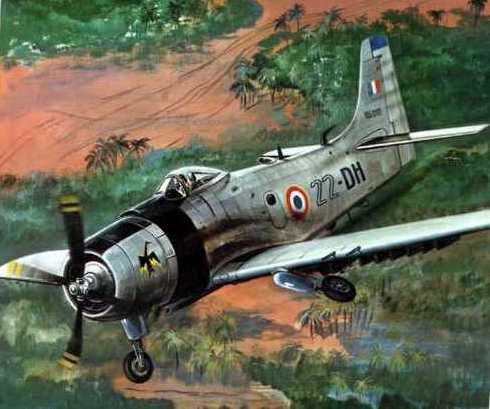

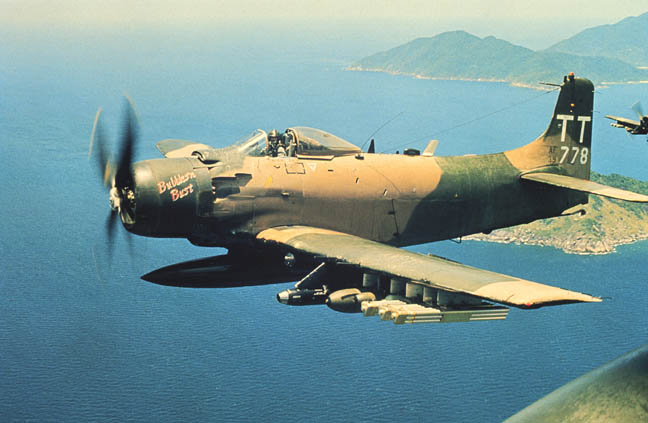

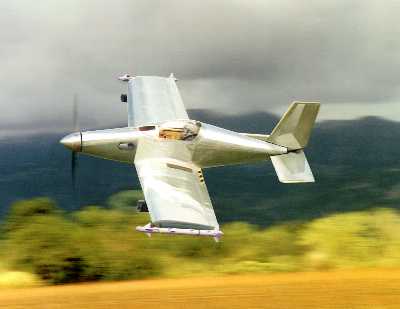
 WHAT CAN YOU DO ABOUT THE CURRENT MESS?
