Healthy Option
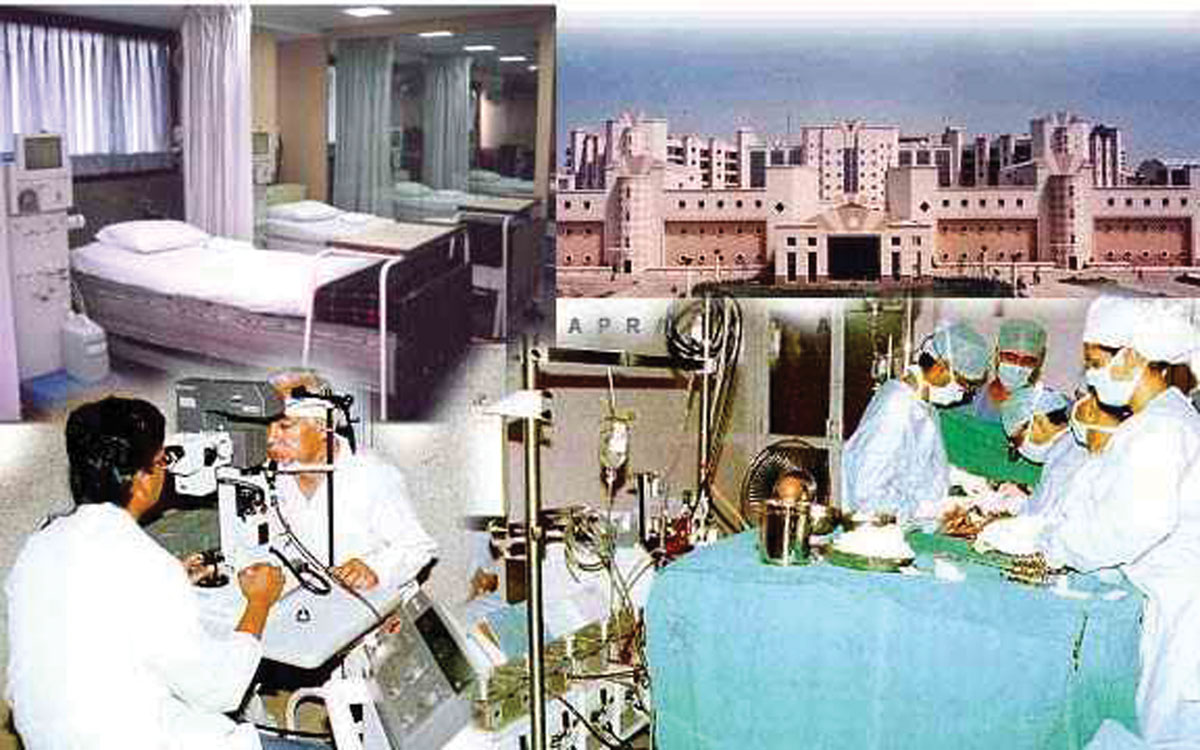
Aruna Thuriarajan, 50, was in acute pain as her spinal problem was getting worse by the day. Her doctor in Alberta, Canada said she would have to wait for three years for a corrective surgery. Unwilling to wait for so long, she decided to trawl the net to look for an alternative option. She came across a hospital in India which not only promised her a world-class treatment at almost one fourth of the cost but also offered her a vacation at the Taj Mahal. Six weeks later, she could lift her arm, and endorse a cheque from Alberta reimbursing her for almost the entire cost of the surgery despite the fact it was done in a foreign private hospital. "I’m glad that I went over to India for the surgery," Aruna says and makes it a point to tell others of her ilk to look to India as a healthcare destination.
Similar is the story of Flaine Ackrill, a Buckingham Palace employee, who decided to come to India for an operation at the Apollo Hospital in Chennai for uterine cancer. Cyril Parry, a 50-year-old man from Birmingham also underwent a successful hip replacement at the same hospital.
Traditional destination spots still attract foreigners by the hordes to India, but lately, medical tourism is proving to be one of the most lucrative and viable options. Word to mouth publicity about the top-class facilities available is augmenting the flow.
Figures speak for themselves. About 1.5 lakh ‘medical tourists’ visited the country last year and their number is expected to almost double this year. A research by international consultancy major McKinsey revealed that medical tourism industry in the country is growing by 30 per cent every year. It observes that if medical tourism were to touch 25 per cent of the private up-market players, up to Rs 10,000 crore will be added to their revenue. With internationally recognised healthcare professionals, holistic medicinal services and low cost of treatment, India can earn $ 5 billion every year and attract over one million health tourists every year, according to industry body Confederation of Indian Industry (CII).
What has led to this sudden change in attitude towards a country which is still perceived to be lacking in healthcare infrastructure? The reasons are not far to seek. While a heart surgery costs $30,000 in the US, it costs $6,000 in India. A hip replacement could be done at one of the best hospitals in India for $ 10,000 while the same would cost $50,000 in the US. Similarly, a bone marrow transplant costs $26,000 here compared to $250,000 in the US.
Though medical treatment is free in the UK under the National Health Service (NHS), the long waiting period prompts many to opt for private treatment, sometimes at an astronomical cost. There are around one million people waiting for an orthopaedic surgery in the UK. Labour MP Frank Field recently described India as the cheapest place in the world to have a cataract operation. "For 50 pounds one can have an operation at an Indian hospital with an international reputation," he famously said.
Adding to India's attractiveness as a low-cost medical destination is a group of super speciality hospitals like the Apollo, the Escorts Heart Institute, the Jaslok Hospital, and the Hinduja Hospital in Mumbai. "We have well equipped, state-of-the-art hospitals and we can offer the same level of care as anywhere else in the world," Apollo Group chairman Dr Prathap C Reddy said. "There is no reason why we shouldn’t become the healthcare destination of the world," he adds.
The Apollo group alone has so far treated 95,000 international patients, many of whom are of Indian origin. Dr Reddy is awaiting a response to his proposal for sub-contracting work from NHS in Britain to carry out operations at a fraction of the cost.
Market-savvy hospitals like the Apollo and the Escorts also offer add-ons like pick-up and drop facilities from the airport, swank suites at the hospitals, complete with office set up, and a post-operative vacation at almost no extra cost.
Apollo Hospitals Group is even scouting about for partnering with hospitals in other countries. "We’ve just entered into a partnership to provide operational management services to Lagos-based Hygeia Nigeria, one of the largest healthcare groups in west Africa. We’ve also bagged a project consultant job for a 100 bed multi-speciality hospital in Ghana . Projects in Kuwait, Yemen, Sudan, Ethiopia, UAE, and even Bangladesh, Nepal and Malaysia are also at various stages of association," revealed group vice-president Dr Hari Prasad.
Meanwhile, the UK government has invited tenders to treat 2,50,000 NHS patients a year and this has created opportunities for a number of Indian players to jump into the healthcare bandwagon. The Manipal Group, a leading south-based healthcare player, recently entered into a joint venture with a British healthcare company, 4 Ways Healthcare (4WHC), to bid for patient waiting lists of NHS. The current plan is an attempt at breaking the log-jam.
"The government is making a huge investment in NHS. But it remains low on capacity. There is a shortfall in facilities and doctors. The solution was to bring in doctors from overseas," says Sanjiv Agarwal, CEO of 4WHC. "We’ve capabilities in all these areas and we should be able to send our doctors to the UK as required for short periods," said Rajen Padukone, CEO, Manipal Healthcare.
SRL Ranbaxy Laboratories, the diagnostic service company, has also tied up with a healthcare group in the UK to offer laboratory testing services. Janak Singh Bajwa, director, SRL Ranbaxy, said the company had started working with some of the group's private hospitals in the UK on a pilot basis and is planning to scale up its alliances in the country.
"Wockhardt has an entirely new clinical strategy for medical tourism plan. For the moment, we are venturing into markets in West Asia, Africa and South-east Asia. Next will be the tougher terrains of the US and UK . We’re already receiving patients from these markets which would now get a momentum through these efforts, said Vishal Bali, vice-president of the group.
Along with some of the top hospitals, various industry bodies like the CII, Federation of Indian Chambers of Commerce and Industries (FICCI) and the Federation of the Indian Exporters Organization (FIEO) are making an orchestrated effort to promote medical tourism. The CII along with Indian Healthcare Federation is working with tour operators for promoting packages to attract more medical tourists. CII healthcare committee member (eastern region) Tapas Mukherjee says that West Bengal has the potential to cater to around 50 crore foreign health tourists from Bangladesh, Nepal, Bhutan and China. "We are in talks with the Centre and the Tourism Ministry for setting up a separate health zone in the city which would have facilities for international treatment along with board and lodging facilities for the patients' relatives. Some of the best hotels in town have agreed to offer special discounts. We’re especially targetting patients from the Middle East, trying to convince them that the total cost of air travel and treatment will be much less if one comes to West Bengal," he said.
The FICCI recently formed a task force comprising eminent people from public and private sectors to make recomm-endations on promoting medical tourism in the country. "We want Kolkata to become the healthcare hub of Southeast Asia," said Sajal Dutta, president of the Association of the Hospitals of Eastern India.
Several hospitals like the Apollo Gleneagles, AMRI, CMRI and the Ruby General have joined hands with Indian Airlines to offer 30 per cent discount to patients who come to Kolkata for treatment. The package includes not only air fares but also takes into account a wide range of diagonostic and therapeutic services.
However, lack of accreditation is a major roadblock in drawing patients from abroad. But most corporate hospitals are already in the process of upgradation and accreditation. Rating agencies like Crisil and ICRA have graded a few hospitals for setting standards, but certification also needs to come from international agencies like Joint Commission on Accreditation of International Standards (JCAHO).
While accreditation from an international body such as the Joint Commission International (JCI) facilitates better response from Europe and the US, recognition from the National Health Services (NHS) ensures international standards in terms of patient care, quality improvement and patient safety.
However, India is also pitted against Thailand, Singapore and some other Asian countries which have good hospitals, salubrious climate and tourist destinations.
There is a flip side to medical tourism as well. Government and basic medical insurance, and sometimes extended medical insurance, often do not pay for the medical procedure, meaning the patient has to pay cash.
There is little follow-up care. The patient usually is in hospital for only a few days, and then goes on the vacation portion of the trip or returns home. Complications, side-effects and post-operative care are then the responsibility of the medical care system in the patient’s home country.
Most of the countries that offer medical tourism have weak malpractice laws, so the patient has little recourse to local courts or medical boards if something goes wrong.
There are also growing accusations that profitable, private-sector medical tourism is drawing medical resources and personnel away from the local population, although some medical organizations that market to outside tourists are taking steps to improve local service. (TWF).