Arunagirinathar
An erudite scholar
An erudite scholar
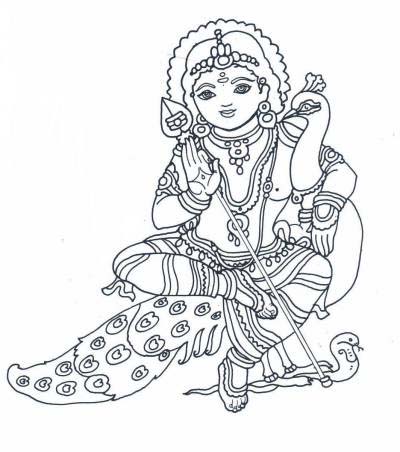
Muruga is magnificent and defies description. Nakkeerar explained in his classic works, “Thiru Murugattu Padai” how Muruga, full of compassion and love, comes to rescue the devotees. Sivachariyar has made exhaustive study on the life of Muruga and the significance of His Avatara (incarnation). The glory and greatness of Muruga have been magnificently described by the Spiritual Leader, Adi Sankara in his Subramanya Bhujangam, Many others composed songs glorifying Lord Muruga. According to legend, it was Arunagirinathar, who had the fortune of belonging to the “Blessed Three” who received the saintly advice (Upadesa) direct from Muruga, the other two being Lord Shiva and Saint Agasthiyar. Having had the vision of Muruga and the experience of realizing Him, Arunagiri extolled the various divine qualities of the Lord, His benevolence, His knowledge, His valour and courage, His exquisite beauty and brought all His magnificence into full focus. In the song: “Thandayani Vendayum, Kinkini Sadhangayum” he likened the beautiful face of Muruga to that of an effulgent and exuberant moon. Perhaps, no other works portrayed the glory of Muruga so eloquently and elegantly as did Arunagiri through His Thiruppugazh songs. Quite appropriately, his works have been named: “Thiruppugazh” which means, Glory to Lord Muruga. Arunagirinathar himself says that he would never forget the Lord's mercy and blessings which endowed him the skill to compose Thiruppugazh. (“Thiruppugazh Viruppamodu Seppana Enakkarulgai..Maravene”)
That was the time when number of saints like Agasthiar, Nakkeerar Manickavachagar, Thiru Gjana Sambhandar, Thayumanavar, Appar, Sundarar, the Nayanmars all have established a hoary tradition of Shiva worship. Tamil Nadu is noted for its magnificent Shiva temples like Thiru Annamalai, Brahadeeswarar, Jalakandeswar, Sundareswar, Chidambaranar, Sanghameswarar, Ardhanareeswarar, Nellayappar, Vaitheeswaran, Kapaleeswarar, Patteeswarar etc. The advent of Arunagirinathar gave another direction and brought Muruga at the centre stage of worship, though Arunagirinathar himself worshipped at these temples and drew inspiration from saints like Gjana Sambhandar. It is true that Muruga worship is as ancient as the Tamil language itself. Tholkappiyam, which deals with the science of language and literature, dates back to several centuries. Even in this earliest works in Tamil, reference to Muruga worship is found. From then on, through the period of Tamil Sangam, Muruga worship has been prevalent in Tamil Nadu. However, Arunagirinathar brought the glory of Muruga to all-time high. Muruga, already known as Thamizh Kadavul, became the Lord most loved, adored admired and worshiped.
Arunagiri had not received any formal learning. It defies reason how such a person could compose a magnum opus like Thiruppugazh and how such a person could create a work that equals the knowledge of the Vedas. Arunagirinathar himself answers this question: "This knowledge, this talent, this eloquence and this skill do not belong to me. They are the gift of Lord Muruga". (Yam Odhiya Kalviyum Em Arivum). It was the enormous grace of Muruga that helped him to compose a work of such magnitude and find answers to various human problems. Thiruppugazh encompasses all aspects of human relations, between one another and between God. As the two-way relation between human and God progresses, it merges into one. The same saint who saw and admired the Lord and described Him in elaborate details gradually takes the position of 'knowing Him within.' (Unai Enathul Ariyum Anbai Tharuvaye).
Music is the language of God. There is God in music (Nadha Brahmam) that is set to Raaga, Thaala and Laya. The revered Saint Narada, who initiated the concept of Name Sangeerthanam said that the most effective and easy means of reaching God in the age of Kaliyuga is through musical form of worship. Arunagiri used the medium of music to commune with God. Composing his works in the Chandam style, he presented his beautiful set of verses. Temple 'Othuvars', musicians, bhajan singers, devotees all render the songs of Arunagiri and experience the sublimity of Thiruppugazh.
Guruji Sri A.S. Raghavan who set the verses of Thiruppugazh to sweet sounds of music says: “As mother bird trains its fledglings to jump and fly, from lower to higher branches of a tree, before they can take off skyward, Arunagiri trains us to go from the relatively simple to the complex in spirituality by linking up charity, control of anger and meditation”. The songs of Arunagiri made enormous influence in the minds of people. While saints appreciated the depth, range, and message and scholars appreciated the diction, poetic excellence and the literary richness, the devotees found in Thiruppugazh a novel, easy and pleasant form of worship.
The saint-poet's most favourite medium to address the Lord was Tamil, the language which Lord Muruga Himself helped saint Agasthiar to develop. It would seem Tamil language has acquired a unique dimension and colour in the hands of Arunagiri who blended it with the divine language of Sanskrit. Going through his songs, it would seem that Tamil has rarely been handled so beautifully in poetic verses before. According to Tamil scholars, the poetic expression of Arunagiri, his language and style, the metaphors and similes he used, all went into making his works an outstanding literary masterpiece. Every word having formed as a flower, the song he composed brightened up as a beautiful garland. He was conferred the title: “Vakkukku Arunagiri” ('Arunagiri' – For Best Usage of Words). Literary critics hailed Arunagiri as the master craftsman of letters and a distinguished poet. Never before, there was a poet of such distinction and erudition. Saints like Sri Sachidhananda Swamigal have highlighted Thiruppugazh as the powerful form of worship. Thiruppugazh which provides the platform for expression of prayer, helps one to overcome the storm and sail through this ocean of life smoothly. Thiruppugazh is described as the outpouring of devotion.
Perhaps, literature and devotion has never been blended so harmoniously before. It is difficult to judge who is greater, the poet Arunagirinathar who composed the verses with remarkable skill or the saint Arunagirinathar, who propounded the doctrine of devotion (Bhakti) in a convincing manner. Needless to say, it is his devotion towards Muruga that helped the poet in Arunagiri to bloom in full colours. The versatile Arunagiri and his immortalized works would continue to remain as perennial source of inspiration for all spiritual aspirants.
Sri V.S. Krishnan deems it a privilege and honour to pay tribute to such an outstanding personality in his book: “THIRUPPUGAZH: GLORY TO LORD MURUGA”.

____________________________________________________________________________________________________________________________
*After certain study it was estimated that Arunagiri's birth occurred in the star of Moolam in the month of Ani (Tamil). The day which falls during June-July is celebrated as Arunagiri Jayanthi.