PSYCHODYNAMIC THEORY
THEORY
All behavior is motivated by basic needs and drives, often through the unconscious.
BASIC COMPONENTS OF THEORY
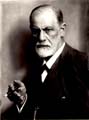
Freud: All psychological events are tied to energy, drive, and instincts based on biological needs. Psychological reality is desire rather than reason. One major motivating force in human behavior is sexuality. He states we move through stages in our early years of life (roughly 0-7) where our child rearing experiences especially in weaning, toilet training and the role of the family in the handling of sexuality and aggression are extremely significant factors in development. The following years are mainly spent working through issues that have not yet been resolved during the earlier years. Anxiety, frustration and inner conflicts are coped with through various types of defense mechanisms.
IMPACT ON ADOLESCENT DEVELOPMENT
Freud: By eliminating the father figure and not replacing it with something of equal stature you disrupt the stage development theory. Sexual tension of mother and father would not exist. Therefore, by eliminating the Oedipal and Electra complexes the adolescent will not be able to resolve these sexual feelings toward the opposite sex parent, which Freud states is key in establishing a strong identification with the parents. Therefore, the social and moral values would be difficult to develop and the super-ego could never fully be acquired
POSITIVE EFFECTS OF DIVORCE
Marcia agrees with Freud in that, he believes during the stage of adolescence the individual is struggling with identity issues. But, he believes that these issues are being resolved non-dependent of parental influences. Affects of divorce would not be an issue.
NEGATIVE EFFECTS OF DIVORCE
Freud: A two-parent group constitutes the minimal unit for appropriate sex-typed identification for normal child development.
Blos would agree and continue that when the adolescent reaches a further stage of development without a father figure that this child would not be able to identify with peers of his or her own gender. Having not resolved conflicts of sexual tensions from their parents as a couple.
Erikson would expand this theory and integrate past, present and future events. He would agree with the problem of establishing personal identity in the absence of a father figure but, only if 1)the child was not able to establish trust as an infant due to the lack of a father figure 2)strong needs of connectedness and autonomy were not established 3) a male adolescent would have no role model of an adult male in which to guide his defined roles and values.
HOW TO CREATE A POSITIVE OUTCOME
Freud: psychoanalytic therapy (of course) to avoid divorce in the first place, i.e.; marriage counseling, and individual psychoanalysis to work on issues of childhood where basic needs were not met and the Oedipal and Electra complexes still remain unresolved. If this is not possible then, the next best thing would be to replace the absence of a father figure with a positive male figure. This would allow the adolescent to resolve his or her Oedipal and Electra complex and therefore be able to develop the super-ego and acquire social and moral values. The other theorists would agree that by adopting a positive male figure for the adolescent to identify with would further facilitate identifying with people of same and opposite sex. The identity issues of "who am I" could more easily be resolved. But, rebellion away from these parental figures would not be discouraged as long as other groups or social frameworks are a source for facilitating the individuation process.