|
||||||||||||||||||||||||||||||||||||
| After
1990 under the government of Alberto Fujimori government Peru experiences changes in many
aspects. The terrorist activity was abated, the enormous 7,650% inflation is now stable around
6%, the financial credit position inexistent in 1990, is right now a BB good risk
position, the monetary reserves increased from US$500 millions in 1990 millions to US$9.3
billions, the foreign investment stock from 1991 amounted 12.7 billions in total and the
GDP increased at an annual rate of 5% annual rate from 1991 to 1998. With a healthy
environment and an adequate legal framework for national and foreign investors, Peru has
become an attractive place to make business.
Foreign Investment 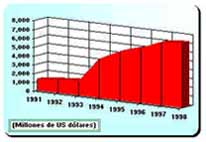 Peru
has entered again in the international financial community. Investors agree with
the structural reforms aimed at creating investment opportunities and also general changes
in the Peruvian legal system. Based on this trust, important economic groups are current
evaluating several investment projects whith significant long-term commitments. Peru
has entered again in the international financial community. Investors agree with
the structural reforms aimed at creating investment opportunities and also general changes
in the Peruvian legal system. Based on this trust, important economic groups are current
evaluating several investment projects whith significant long-term commitments.
Basic factors providing investment stability are the achieved levels of safety, political stability and peaceful environment In order to get that the investors feel secure, the accurate application of the law and the preservation of the basic right of investment is guaranteed. Moreover, the legal context reform allows the resolution of most of the conflicts and civil character disputes through nimble arbitrage process. For this reason Peru has subscribed the International Convention for the Settlement of Investment Disputes-ICSID, MIGA and OPIC. The benefits from Peruvian progress will be fully shared with visionary investors who have decided to go along with us through this challenge. An encouraging sign is the foreign investment stock indicators with US$ 1335 millions in 1991, US$ 4449 millions in 1994, US$ 7269 millions in 1997 and US$ 7830 millions in 1998.
 The Fujimori administration has structured a very interesting legal framework
specially The Foreign Investment Promotion Law, approved by Legislative Decree 662, 1991,
based on the equal treatment to peruvian and foreign capital. Therefore, foreign
investment is permitted to be established in any economic sector. No prior authorization
is required due to its foreign status. Once made, the foreign investment shall be
registered with the National Commision of Foreign Investment and Technologies - CONITE,
which gives the investor some advantages.
The Fujimori administration has structured a very interesting legal framework
specially The Foreign Investment Promotion Law, approved by Legislative Decree 662, 1991,
based on the equal treatment to peruvian and foreign capital. Therefore, foreign
investment is permitted to be established in any economic sector. No prior authorization
is required due to its foreign status. Once made, the foreign investment shall be
registered with the National Commision of Foreign Investment and Technologies - CONITE,
which gives the investor some advantages.
Investment by the foreign investor The investor shall fulfill one of the following investment commitments:
Capital contributions CONITE shall consider as foreign investment the contributions made under the following forms:
Rights granted by the law to the foreign investor:
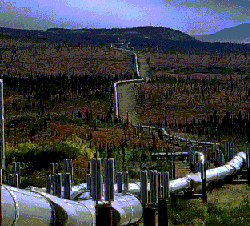
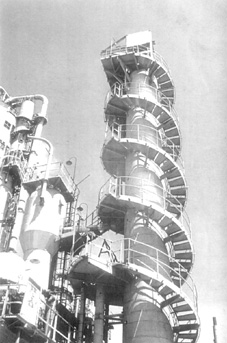
Gas and Petroleum businesses A new legal context exists since 1993 with the New Hydrocarbon Because of that there are 24 exploration and exploitation contracts which have considered the drilling of 37 wells from 1994 up to may 1999. Although no well drilling campaigns have been successful it is expected in the future to discover new reserves in order to turn out country into a self-supplied one. 10 new hydrocarbon contracts are expected to be signed in 1999. Currently there are on sales The Basis for Camisea Bid which would increase the resources in approximately 2560 millions of equivalent-barrels of oil ( nowadays there are 350 millions ). At present, Peru has 6 oil refineries with a total capacity of 186 thousand barrels per day. The biggest La Pampilla (102 kbd) was given in property to Refinadores Consortium leaded by Respsol-Spain Co. by Bid (60%). The consortium paid US$180.5 millions. The remaining refineries are in process of privatisation. North Peruvian hydrocarbon pipeline have a carriage capacity of 200 thousand barrels per day will be privatised too. Currently is in discussion the velocity of the privatisation to clarify the hydrocarbons market.
Peru has an interesting market for this activity. Electrical Sector  Annual sales in the domestic market surpass
US$ 1,000 millions with an additional potential in the
export market. This increase will be ensured with the large number of energetic resources
available in our country. The estimated volume of Investment in electrical generation
activities from the 1997-2007 is US $ 1600 millions, as well as for the
Transmission and Distribution activities. Annual sales in the domestic market surpass
US$ 1,000 millions with an additional potential in the
export market. This increase will be ensured with the large number of energetic resources
available in our country. The estimated volume of Investment in electrical generation
activities from the 1997-2007 is US $ 1600 millions, as well as for the
Transmission and Distribution activities.
Peru has a wide variety of natural resources which lets investors to choose among a large variety of projects basically Hydroelectric Plants, thermal plants from natural gas, liquid hydrocarbons and others. In the future it is possible electric interconnection system with electric systems from neighboring countries such as the Tacna - Arica Transmission line (Chile) and Ecuador-Peru line. Nowadays, 23 electricity concessionaire companies, private and state-owned, next to be privatized, take care of almost 3 million customers. In 1998 the total energy production was 18 522 Gwh corresponding 56% to the electricity public service sales and 44% to freelance customers with a demand over than 1 MW. Thus the high sector increase potentially of the area and consequently new investment opportunities can be forseen. The electric sector privatisation is unconcluded and it is expected the clarification about state role. Despite the supply Electricity Public Service is regulated, it represents an interesting business without competition conditions for which the law establishes a tax system, based on marginal costs, acknowledgment of efficient costs and a 12% annual actualization rate. Law guarantees free convertibility of currencies and utilities transference. W. Raúl Cornejo (51-1) 965-4903
|

 Peru is an American country strategically well situated place with a
wide spectrum of climates defined by its coastal, sierra and rain forest regions.
The Peruvian economy is based on different activities, mainly fishery, agriculture,
mining, wood extraction, oil and increasingly on services, commerce, electricity,
communications and others.
Peru is an American country strategically well situated place with a
wide spectrum of climates defined by its coastal, sierra and rain forest regions.
The Peruvian economy is based on different activities, mainly fishery, agriculture,
mining, wood extraction, oil and increasingly on services, commerce, electricity,
communications and others.

 Organic Law enphasizing
free competence, long term exploration and exploitation contracts, possibility of property
from surface, free export, free dollar currency availability, accelerated depreciation (5
years) and freedom of commerce.
Organic Law enphasizing
free competence, long term exploration and exploitation contracts, possibility of property
from surface, free export, free dollar currency availability, accelerated depreciation (5
years) and freedom of commerce.