UNIT ONE: SECOND READING for MACRO
(Part 4 of 5) 
UNIT ONE: SECOND READING for MACRO
(Part 4 of 5)
Sometimes improvements in technology may lead to a change in consumer tastes. When CDs were developed, consumers could buy them and not have to listen to tape hiss and distortion any more. The demand curve for CDs has shifted far to the right over the past ten to fifteen years. Along with this development, demand for audiocassette tapes has shifted back to the left.
Big screen TVs provide consumers with a desirable increase in image size. Therefore, demand for these television sets is shifting out to the right, an increase in demand. Smaller diameter sets are less favored these days and the demand curve for them has shifted back to the left.
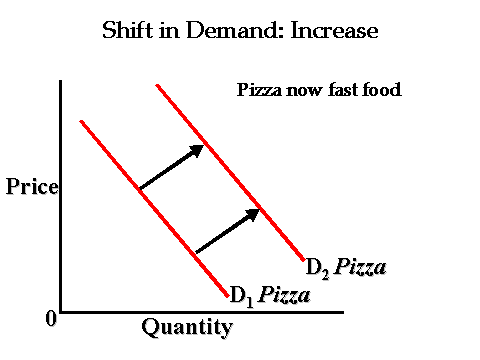
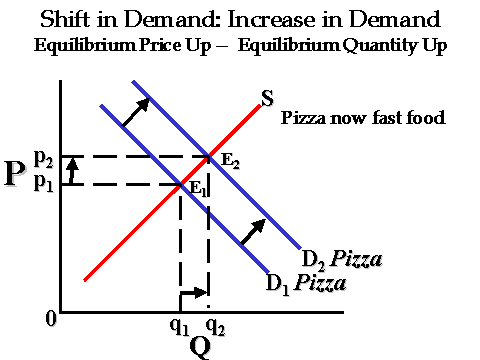
If a new, high-powered oven was invented that cooked pizza properly in two minutes instead of fifteen, this might induce a shift in the demand curve as pizza would then be considered fast food. Can you sketch this on a graph?
Changes in consumer expectations can cause demand curve shifts also. If prospective home buyers expect mortgage interest rates to increase over the next three to six months, they may decide to lock in a lower rate now, thereby increasing the current demand for loanable funds and shifting the demand curve to the right, an increase in demand. The result is a higher interest rate, as originally expected! Alternatively, if home purchasers expect interest rates to drop over the next three to six months, they may decide to hold off on locking in an interest rate. This decreases the current demand for loanable funds in the home mortgage market and results in the demand curve shifting to the left. Interest rates fall, as they were forecasted to do.
We now switch to the supply side, demand’s opposing force in the marketplace. The text coverage of this begins on p. 67. For this part of the coverage, assume that you are the owner and manager of a business firm. You prefer higher prices to lower prices, just the opposite of what consumers want. At higher prices you would be inclined to offer more supply to the market and at lower prices, less. This is summarized in the law of supply, which states that there is a direct, positive relationship between price and quantity supplied: higher prices lead to a greater quantity supplied and lower prices result in a smaller quantity supplied.
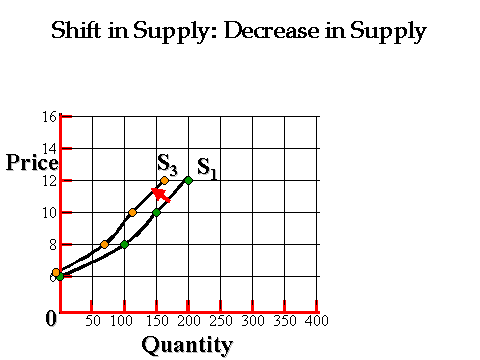
This relationship may be shown in a supply schedule, as follows:
|
Price of Pizza |
Q1 supplied per day |
Q2 supplied per day |
Q3 supplied per day |
|
$6 |
0 |
40 |
0 |
|
8 |
100 |
125 |
75 |
|
10 |
150 |
180 |
120 |
|
12 |
200 |
260 |
165 |
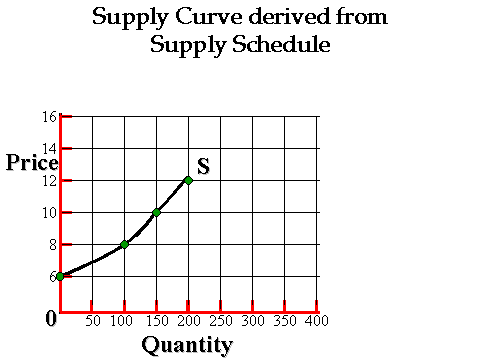
We’re back to pizza again. There must be some low price, here $6, at which you can’t make any money selling pizza. You won’t offer any supply to the market at this price and so the associated quantity in the schedule is zero. As price rises, you are more ready and willing to supply pizza to market and the schedule indicates this.
Now set up a graph with price on the vertical axis and quantity on the horizontal. Plot the points ($6 and 0, $8 and 100, $10 and 150, $12 and 200) and then connect them with a smooth line. Due to the direct, positive relationship between price and quantity supplied, the curve has a positive slope, that is, it slopes up from left to right.
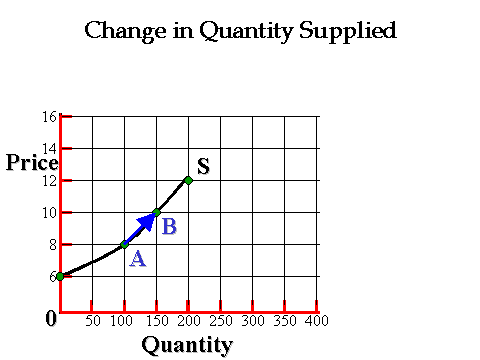
As on the demand side, we can move from point to point along a given supply curve, such as from $8 and 100 to $10 and 150. This movement is known as a change in quantity supplied. There is no nonprice influence causing the change in price, such as an improvement in technology or a change in the price of a substitute good (e.g., Mexican food). The only variable is a change in the price of the product itself and this results in a movement from one point to another along the same supply curve. Please graph this change now.
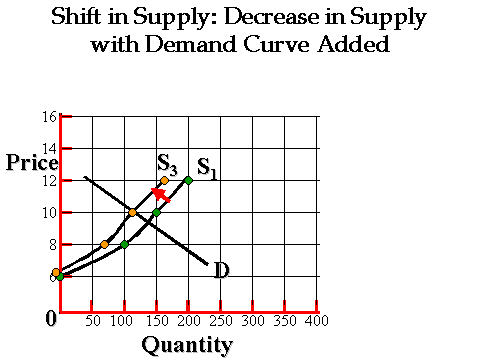
Perhaps the more interesting phenomena involve shifting supply curves, that is, supply curves that either move out to the right, which is an increase in supply, or supply curves that shift back to the left, which is a decrease in supply. In the supply schedule above, if the quantities associated with the very same set of prices changed from Q1 to Q2, then that would be an increase in supply and the curve would shift to the right. If you sketch in a downward sloping demand curve just for reference, then you’ll notice that the new intersection between the supply and demand curves results in a lower equilibrium price. Alternatively, if the quantities associated with the same set of prices changed from Q1 to Q3, then this would cause a decrease in supply and the curve would shift back to the left. With a downward sloping demand curve drawn in as a reference, you’ll notice that this would result in a higher equilibrium price. Please graph these changes now.
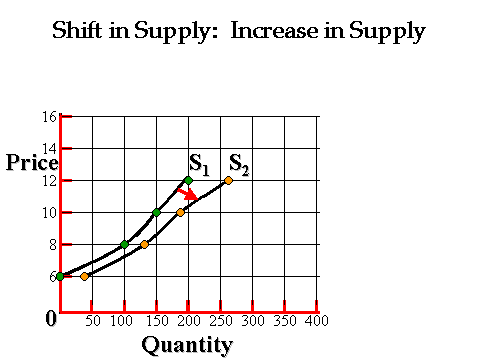
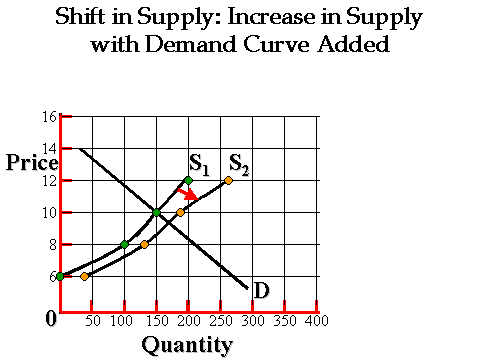
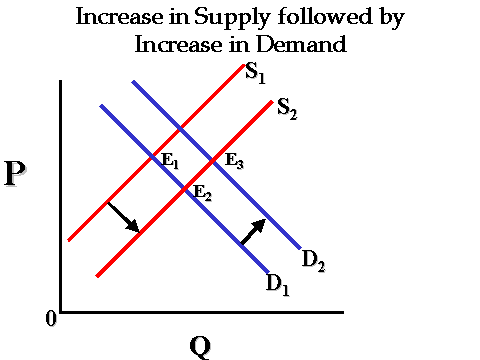
A number of factors can cause supply curves to shift. Suppose a brand-new oven was invented that would cook pizza properly in two minutes instead of fifteen minutes. This would certainly allow pizza restaurateurs to increase their supply of pizza to the market, say Q1 to Q2. It’s true that the supply curve shift to the right would put downward pressure on the price of pizza, but there would likely be a compensating shift on the demand side as pizza was transformed into fast food for consumers. The additional convenience would result in the demand curve shifting to the right and this would put some offsetting upward pressure on the market price. You may want to draw a sketch graph right now to illustrate these tendencies. First show an increase in supply, then an increase in demand. You can put these changes on the same graph.
|
Index of Web Site Pages |
|
