Fishing in the North East:
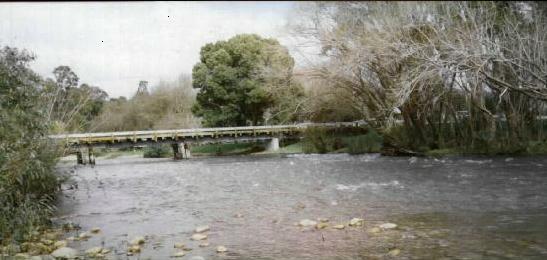
Fed by the melting snow, the gravel and rock bottomed streams of the North East emerge from the forested mountain valleys into broader valleys, where eucalypts and blackwoods give way to rich green pastures. Streams such as the King, the Ovens, the Kiewa, the Mitta Mitta, and the Indi attract trout enthusiasts from all around Victoria. Trout were first introduced to the North East in 1873, but it wasn't until 1882 that more general liberations took place (according to Jack Ritchie's excellent book "The Australian Trout") and they have thrived in the cool mountain streams and freestone style rivers. Brown trout are the predominant species, with the rainbow trout being confined mainly to the head waters of the streams. Native fish such as Macquarie Perch and Silver Perch have all but disappeared from these systems as a result of changes to the environment and in particular the construction of dams with the resultant changes to the flow regimes. Blackfish (a small native fish) still survive in surprisingly high numbers but rarely exceed six inches in length in this area. In the lower reaches of the rivers, Murray Cod are still present and even though these much sought after fish grow to 150 lbs, specimens in excess of 50 lbs these days are considered large.
But to fly fishers it is the trout that provide the main attraction. Fishing pressure on these streams is high and consequently the average fish size is around twelve to fourteen inches. Fish in the one to two pound bracket are still reasonably common and although there has been supplemental stocking of brown trout in the past, most fish in these waters are now wild fish. While occasional larger fish are caught, only the Mitta Mitta River that feeds into Lake Hume, consistently yields large trout.
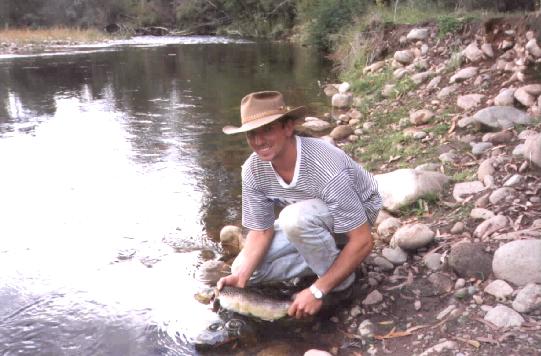
Catch and release is becoming the accepted practice for many fly and lure fishers but unfortunately the majority of these streams are very accessible and consequently heavily fished by anglers (and by poachers using all methods legal and illegal). If you visit the area, keeping a fish for the camp fire is still considered acceptable, but if you have enjoyed the fishing why not consider releasing all fish caught, thereby helping to preserve these wild fish stocks. This is particularly important with the larger fish, which are the brood stocks for the future. There is no better feeling than releasing an unharmed large trout, which has not only survived the rigors of nature but also the many fishermen, and women who visit the streams each year. Bag limits on many of these streams reflect this, with only one fish in excess of forty centimeters (about sixteen inches) allowed to be kept. If fishing in Victoria, a general angling licence is required. The cost is $20 for twelve months (shorter duration licences are available) and a copy of the fishing regulations is provided with the licence. It should be noted that these regulations vary from water to water. The trout season is closed from early June to September each year.
"Matching the hatch" can be necessary on occasions when fishing the streams of the North East, but consistent mayfly or caddis hatches are not common and fish are usually opportunistic feeders. Accurate and delicate presentations, and being able to read the stream are the most important features of fly fishing in this area, with the well known fly patterns being both popular and successful. Royal Wulffs, Royal Coachman, Red Tags, Greenwells Glory, Nobby Hoppers and a variety of other flies all catch fish. It is also prudent to have an ant pattern handy in case you strike an ant hatch. Of the subsurface flies, brown nymphs, black nymphs and pheasant tail nymphs in a variety of guises are popular.
Lakes in the North East, with the exception of Rocky Valley Dam and Pretty Valley Pondage at Falls Creek, are not renowned for fly fishing. Typically the lakes are deep impoundment's which lack the extensive shallow flats necessary for consistent fly fishing and are generally more suited to other methods of fishing.