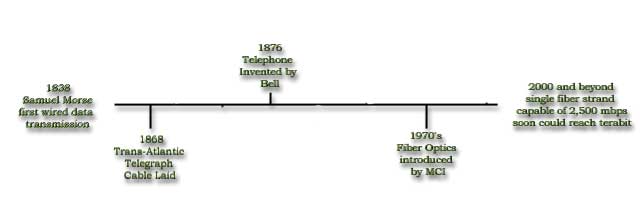

Today, wired data transfer is the standard for most common types of networks. Also, it is the most common method for voice communication the world over. With so many choices from the older telephone and coaxial systems to the more modern fiber optic, USB, and firewire systems, it isn't hard to see why wired data transfer is so prevalent today. More people are connected to the Internet thru their home phone lines than by any other method. This antiquated system may not be fast, but it is cheap, and easily accessible by the majority of persons wanting to be online. This used to be the only option for home connection, but that has changed in the last few years. Now, most homeowners have the option of a cable connection thru their coaxial cable television lines, or even ADSL, a system that enables high-speed access thru the same phone system that used to be so slow. Business Internet connections are much faster today than home connections. Many businesses have the option of a fiber optic system for their data transfer needs. This system represents the zenith of wired data transfer. Fiber optic lines have a capability today of transferring data at up to 2,000Mbps, almost 360 times as fast as a home telephone connection. In the future, Fiber Optic cable could be transferring data at rates as fast as 1 Terabit per second. With that in mind, I believe that the future of wired data transfer is bright, but only in the business sector. In the private sector, wired data transfer is being replaced the more efficient and cost effective wireless systems. In the future, most homes around the world will be wireless, making it my choice for the future of data transfer.