GENERATION 7 - World War II

World War II


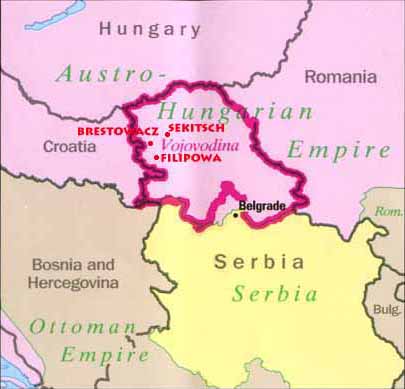
The demographics of the Batchka region of Southern Hungary in the 1911 census indicated that 40.5% were Hungarian and 29.7% were German. Although, the Serbs and Croats together did not reach 20% of the population, the Paris Peace Treaty following the First World War, would annex the Batchka to the Serbo-Croat-Slovenian Kingdom, that later became Yugoslavia. The Batchka would form part of the northern region of Serbian Yugoslavia that is known today as Vojovodina. (4)

By 1931, the faith of the Germans in Yugoslavia improved mainly because the government wanted to establish good economic relations with Germany. Furthermore, the Danube Swabians organized the Kulturbund (Schwääbisch-Deutscher Kulturbund), a cultural association whose objective was to preserve and propagate the German culture. (4)
Serbian troops in occupied Batchka (Vojovodina) at the end of the First World War.
There was no census taken but it is believed that on the eve of War World II, there were between 600,000 to 750,000 Danube Swabians in Yugoslavia. The economic crisis in Europe, which brought poverty and the threat of social uprisings, created ideal conditions for the Third Reich. Thus, the international economic and political conditions were ripe for Germany to invade the Danube basin. (4)
Contrary to what the Yugoslav historians have stated, 85% of Danube Swabians answered the call to defend Yugoslavia at the onset of World Ward II. Not all Germans were traitors and saboteurs. (4) (25)

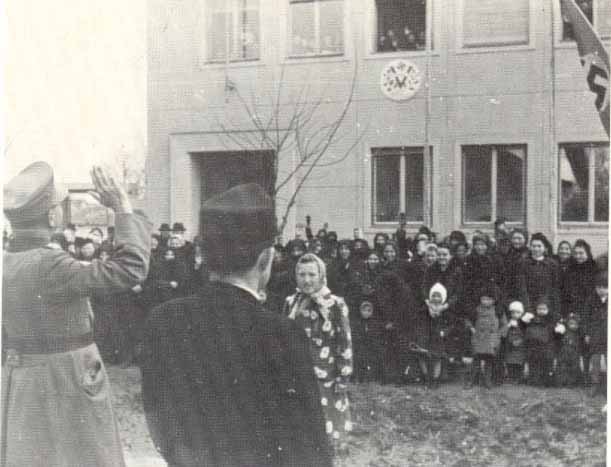
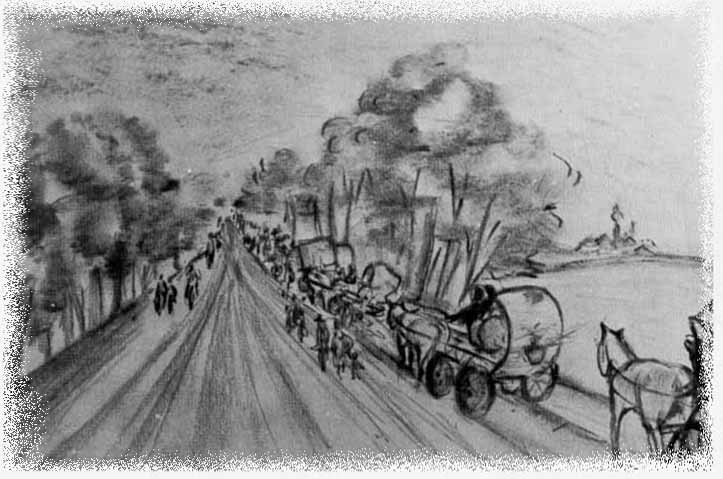
Even in 1941, the leaders of German national groups realised that neither their lives nor property would be safe for long in Yugoslavia. By the beginning of 1944, evacuations started sporadically and at the end of that year, many were fleeing in a hurry especially those without a clean conscience.Unfortunately, they would not be the ones to answer for their crimes. (4)
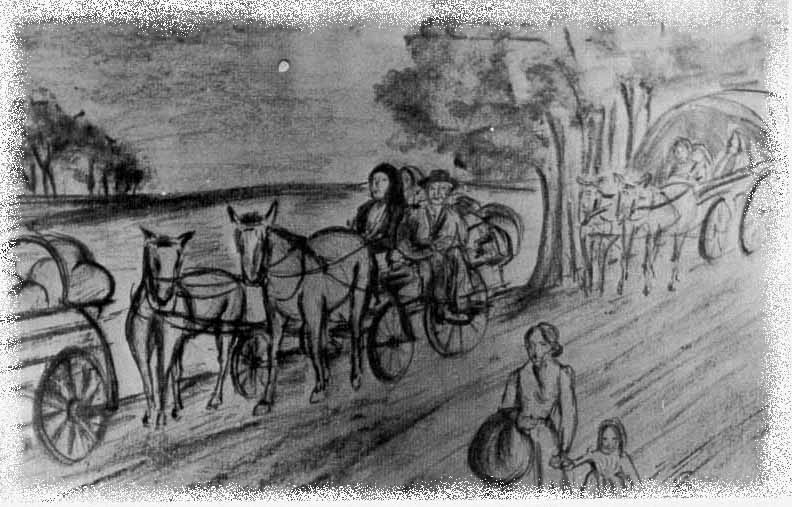
When many Danube Swabians declared that they would not leave their homeland, the SS and group leaders used various ways to convince them. Through proclamations in newspapers, leaflets and on the radio, the German ethnics in Yugoslavia were told to prepare to evacuate because of the arrival of the communists and the partisans who would take revenge. Unfortunately, these warnings became a sad reality.
By the end of World War II, West Germany was inundated by more than 12 million German refugees arriving from all over Europe. It is believed another 2 million died while trying to reach Germany.
What transpired in the months before the end of World War II in Yugoslavia would be not be recorded by most historians and was ignored by the rest of the world.
On November 21, 1944, the Anti-Fascist Council for the National Liberation of Yugoslavia passed a legal act entitled:
‘‘Decision on the transition of enemy property into state ownership, on state administration over the property of absent persons, and on sequestration of property forcibly appropriated by occupation authorities''.(4)
Article 1 defined the status of Danube Swabians:
"To be transferred into state ownership on the day this Decision becomes effective:
1. All property of the German Reich and its citizens situated on the territory of Yugoslavia;
2. All property owned by persons of German nationality, with the exception of those Germans who were members of the National Liberation Army and Yugoslav partisan formations, or are citizens of a neutral country who displayed no animosity during enemy occupation;
3. All property of war criminals and their accomplices, with no regard to nationality...." (4)

It was well known that Danube Swabians had good farming equipment, fine houses and well-tended villages. Although, these Yugoslav Germans had lived in the region since the mid-1700's and considered themselves innocent, they were considered equal with Reich Germans and were declared enemies of the people of Yugoslavia. (25)
When the Red Army drove through the neat Danube Swabian villages and towns of the Batschka, Tito's partisan bands followed to take possession of their promised land. Estimates of how much land was confiscated, differ greatly but it is known that all German property on the territory of Yugoslavia was confiscated without compromise. (24)
The methods used to remove the Danube Swabians varied from one village to another. Many Danube Swabians were taken to Partisan concentration camps and Russian work camps while countless others were executed immediately or tortured to death. (4) (7) (9) (25)
The Danube Swabians in Hungary helped their Yugoslavian counterparts who escaped from Tito's death camps in Yugoslavia by providing food and a safe route to Austria and Germany. This help would not be forgotten as during the 1956 Hungarian uprising, when the West watched the Russian tanks massacre the Hungarians, the Danube Swabians in Austria and Germany were the first to help those who escaped by providing food and temporary shelter. However, it should be said that in Hungary, the communist regime never resorted to mass killings like in Yugoslavia. (25)
The population of Vojovodina is today more than 75% Serbian. Unfortunately, they were not very successful in farming the land that they confiscated from the Danube Swabians. When the ethnic Germans left the valleys of the Danube, it would never again be the same. (25)

Maria Göttler