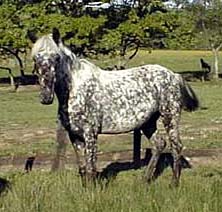
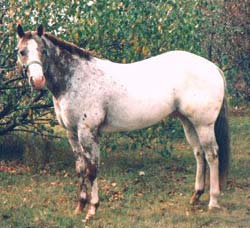
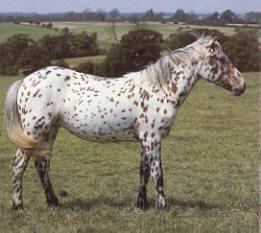
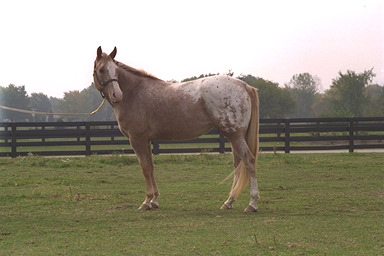
| The Appaloosa is the American version of the spotted horse and is a distinctive and popular breed in the US. The spotted gene in horses is as old as the equine race. Cro-Magnon man cave art of 20,000 years ago, depicts horses with spotted coats. Spotted horses, under a variety of names, were known and often highly esteemed throughout Europe and Asia. There was the Knabstruper of Denmark and Tigres was the name given to them in France. In Britain, where they were once bred in a Royal stud, and were called Blagdon, or Chubbarie, a Romany name.
The spotted coat of the British spotted pony was his natural camouflage when he roamed the heaths and forests of ancient Britain. Stoneage man painted him on the walls of his caves, and they appear in many illustrated manuscripts, old paintings and drawings down through the centuries. Because of their unusual coat coloring the spotted pony was highly prized and it is documented that they were sold for enormous sums of money and were widely used in peace and war.n a parchment roll dated 1298 there is listed all the horses purchased for Edward 1st campaign at Falkirk. It describes a spotted Welsh cob from Powys purchased from Robin Fitzpayne. He is one of the most expensive on the list. In a fifteenth century manuscript of the chronicles of Sir John Froissart there is an illustration of a little chestnut spotted cob. Today in Britain they are known as Spotted Ponies.
Archeological and historical records show the ancient Chinese Emperors describing them as "Heavenly Horses," and in 17th and 18th century Europe, aristocrats prized them highly as mounts.
The American Appaloosa was developed by the Nez Perce Indians in the eighteenth century, using as a foundation, the Spanish stock imported by the conquistadores. The Nez Perce lived northeast of Oregon and their lands included fertile, sheltered river valleys/ The Palouse river was one of their principle areas, and Appaloosa is a derivative of "a Palouse horse". They were skillful horse breeders and practiced a strict, selective policy. The result was a distinctive, practical, work horse that had the advantage of color. |