A Dual Sport Ride Into The Copper Canyon - Cont.
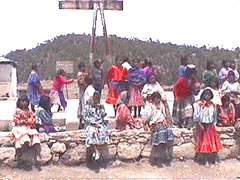 The group all gathered in the
small railroad town of Creel that night. Creel is a very old
railroad and lumber town on the edge of the Sierra Madres and
Copper Canyon region. The Tarahumara Indians live in this area
and many of them can be seen waiting for the train back into
the Canyon where they live. Creel retains much of its charm despite
an ever-developing tourist industry. Almost every lodging, restaurant
and service is on or within walking distance of the main street,
López Mateos. Men ride by on horseback, and brightly dressed
Tarahumara Indian women sell pottery and baskets from the curb
sides. Several shops also sell Tarahumara arts and crafts, which
include rugs, wood carvings, necklaces, dolls and violins. A
concrete statue of Christ gazes down from the cliffs north of
town, testimony to the Jesuit priests who have ministered to
the Tarahumara since the early 17th century.
The group all gathered in the
small railroad town of Creel that night. Creel is a very old
railroad and lumber town on the edge of the Sierra Madres and
Copper Canyon region. The Tarahumara Indians live in this area
and many of them can be seen waiting for the train back into
the Canyon where they live. Creel retains much of its charm despite
an ever-developing tourist industry. Almost every lodging, restaurant
and service is on or within walking distance of the main street,
López Mateos. Men ride by on horseback, and brightly dressed
Tarahumara Indian women sell pottery and baskets from the curb
sides. Several shops also sell Tarahumara arts and crafts, which
include rugs, wood carvings, necklaces, dolls and violins. A
concrete statue of Christ gazes down from the cliffs north of
town, testimony to the Jesuit priests who have ministered to
the Tarahumara since the early 17th century.
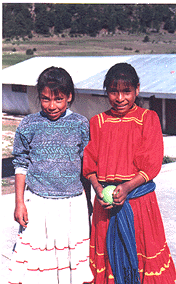
This is the largest settlement in the Copper Canyon area and
makes a good base for exploration of the region. Its high elevation
means Creel can be very cold, even snowy, especially in winter.
Dirt-gravel roads lead to Tarahumara villages at the edges of scenic canyons. Basaseáchic Falls National Park is about 5 hours away via a paved road running from Creel north to the Mex. 16 junction, then west on Mex. 16 to the park.
The next morning we were ready to take our first real Dual Sport
ride into the Copper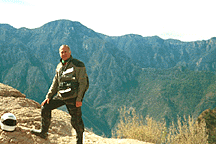 Canyon with the destination being a small village deep in the
Canyon.
Canyon with the destination being a small village deep in the
Canyon.
About 100km out of Creel we turn off onto a very rugged dirt
and rock road toward Batopilas. We are on the rim of the Canyon
here at an elevation of about 7,000 to 8,000 feet. Batopilas
lies below us at 1,500 feet elevation! The road is generally
good with hard packed dirt and rocks. The switch backs are frequent,
narrow, and slow going on a bike! The view is fantastic! No guard
rails to obstruct ones view! If one is nervous with heights it
is best to keep your eyes on the road! The road is very narrow,
steep and simply drops off for a thousand feet at places!
Batopilas is an old Spanish Village that sits deep in the Canyon.
The first vehicle road to Batopilas was constructed only 18 years
ago, but the town chronology goes back over 350 years. The Spanish
arrived in 1632 and found pure silver on the river banks. In
addition to it's roll as a mining town it was also a center for
the early Spanish “Fathers” who tried to convert the
Tarahumara Indians to Christianity!
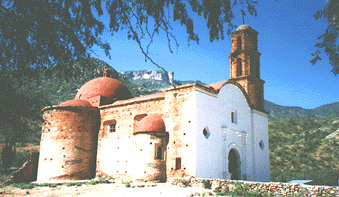 One of the premier local attractions
near Batopilas is an old triple-domed mission church 6.5 km south
of Batopilas on a difficult dirt road only recently graded. The
church is about 48 meters high with a single bell tower containing
bells dated 1801, 1720, and 1630. The church is still in use
by the local community and features white washed walls stained
with berry juice to signify Christ's blood. Crypts beneath the
flagstone floor hold the remains of Jesuit padres. The date of
construction is a mystery, but architectural styles suggest it
was probably erected in the 17th century. If you travel out to
look at the church, go early in the morning as it gets very warm
around mid day.
One of the premier local attractions
near Batopilas is an old triple-domed mission church 6.5 km south
of Batopilas on a difficult dirt road only recently graded. The
church is about 48 meters high with a single bell tower containing
bells dated 1801, 1720, and 1630. The church is still in use
by the local community and features white washed walls stained
with berry juice to signify Christ's blood. Crypts beneath the
flagstone floor hold the remains of Jesuit padres. The date of
construction is a mystery, but architectural styles suggest it
was probably erected in the 17th century. If you travel out to
look at the church, go early in the morning as it gets very warm
around mid day.
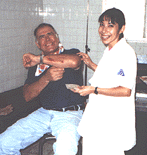
Also, be sure to wear your protective gear as you would on any ride. The road is rough and this picture of my visit to the local clinic should give you an idea of the results of a slow speed fall on this rocky and washed out road!
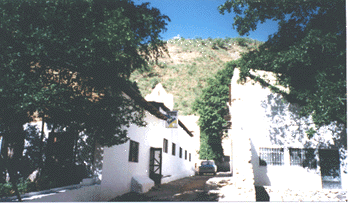 We finally arrive in Batopilas
- some sooner then others! It is about 80 km from the rim to
the village and took us about two and half to three hours to
make the trip. Ken, Pete, and Charles (our most experienced riders)
arrive well before the rest of us and they obtained rooms for
the group. Rooms here is a very loose term! The village has no
electricity, few hotels, hardly any food to offer, and worst
yet- is DRY! No Beer! The room I shared with John had a candle
and two cots. Cold water shower and a broken mirror. Well, we
did not expect more and we settled in for the night. Then the
rains came! It rained, and rained, and rained! I was thinking
about the condition of the dirt road we had to return on in the
morning! It also turned cold! A dinner of chicken and rice and
one beer from a boot-legger and we hit the sack. I listened to
the rain most of the night!
We finally arrive in Batopilas
- some sooner then others! It is about 80 km from the rim to
the village and took us about two and half to three hours to
make the trip. Ken, Pete, and Charles (our most experienced riders)
arrive well before the rest of us and they obtained rooms for
the group. Rooms here is a very loose term! The village has no
electricity, few hotels, hardly any food to offer, and worst
yet- is DRY! No Beer! The room I shared with John had a candle
and two cots. Cold water shower and a broken mirror. Well, we
did not expect more and we settled in for the night. Then the
rains came! It rained, and rained, and rained! I was thinking
about the condition of the dirt road we had to return on in the
morning! It also turned cold! A dinner of chicken and rice and
one beer from a boot-legger and we hit the sack. I listened to
the rain most of the night!
First Page of Article | Next Page