|
|
Hedges
Tens of thousands of miles of
hedges were removed from the countryside in the last 30 years of the
twentieth century. This process has now largely ended but its consequences
are still being felt. Individual gardeners can compensate for the loss in
a small way: even a few yards of hedgerow may support a great variety of
wildlife.
Valuable for:
Butterflies like gatekeeper, meadow brown, large skipper,
speckled wood, brimstone, green-veined white, orange-tip and holly blue;
moths;
mammals, including bank vole,
wood mouse, weasel and hedgehog; birds
including blackbird, song thrush, dunnock, robin, goldfinch, bullfinch,
chaffinch, wren and warblers;
wildflowers like foxglove,
primroses, lesser stitchwort, lesser celandine, red campion, Italian
lords-and-ladies, garlic mustard, barren strawberries and wild
strawberries, common dog violets and early dog violets, sweet violet,
ramsons, wood anemone, wood sage, wood sorrel, wood spurge, yellow
archangel, yellow pimpernel and many species of
fern including hart's tongue,
hard shield-fern, male-fern, Lady-fern, broad buckler and soft
shield-fern.
Useful tips:
- Use a mixture of native species
of tree and shrub. The species growing in nearby countryside hedges may
be a good guide to those that will do well in your garden but most of
the native species will do well even in very urban situations.
- Plant hedges from October to
March: never in the summer or in very dry weather.
- Plant fairly densely: at least
four plants per square metre.
- Native species are likely to be
best for wildlife, especially insects and other small animals.
- If you want good security, and
some protection for birds against cats, choose mainly thorny or prickly
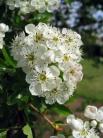
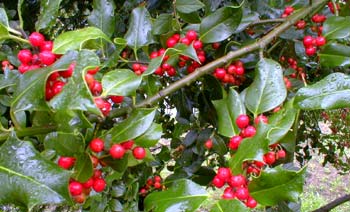
species like hawthorn, blackthorn or holly.
- Evergreen shrubs like holly and
yew provide dense cover during the winter, and the dead leaves of beech
and hornbeam often don't fall for a long time, so providing a good
winter screen. They all offer good early spring nesting sites.
- Other possible species include
guelder rose, wayfaring tree, spindle, hazel, field maple, dogwood and
the native wild privet.
- Traveller's joy (old man's
beard) may tend to take over but add climbers like the native
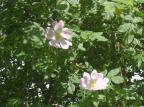
honeysuckle, dog rose and bramble.
- Ensure that trees and shrubs are
well-watered and mulched while they are getting established.
- Bare-rooted trees and shrubs
(whips) are extremely cheap, less-demanding. (needing no stakes), more
likely to survive than older trees and establish themselves very
quickly.
- Be bold and prune the young
trees and shrubs in the first year to encourage new growth at the base
and thus a thicker hedge.
- An alternative is to try and
grow plants from local seed: far more difficult but very rewarding.
- Conditions - especially light
levels - at the base of hedges will change rapidly as the hedge grows,
so it may pay to wait before trying to establish herbaceous plants or
bulbs such as bluebells.
- If you can create a bank on
which to grow your hedge, this will provide more opportunities for
plants like primroses, violets and stitchworts.
- Use the base of the hedge for
garden clippings and leaves to establish a richer soil.
- Yew is very slow growing. Holly
and beech are good at remaining thick at the base for many years, while
hawthorn and hazel need periodic coppicing or laying to keep them dense.
- Apart from brambles and roses,
most native hedge shrubs produce flowers only on last season's growth.
So, if you want berries and nuts, don't trim every year!
- Don't plant yew (or
rhododendron) where horses or other livestock can reach it
- Never cut hedges during the
nesting season (March to July).
|
|