 |
 Home The Presenters The Participants The History I got flowers today |
|
|
Tribute to a New Path in Education
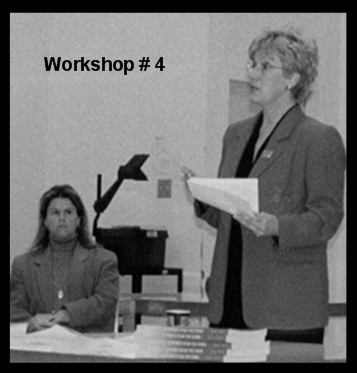
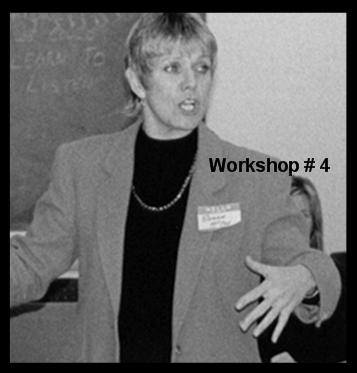
If We Could Just Learn to Listen... The Presenters Workshop # 1 explored Intergenerational Abuse: St. Christopher House Elder Abuse Troupe, who performed interactive mimes that helped participants identify neglect and abuse experienced by elderly citizens, presented the first segment. Language and cultural barriers were illustrated by the fact that no one in the troupe actually spoke English. This meant that all communication and problem solving had to be done through an interpreter. Debbie Davis, MSW, presented the second segment of Workshop # 1. It addressed helpful versus non-helpful therapies for adults whose life experiences include having been subjected to assault and/or other types of abuse and neglect as children. Workshop # 2 challenged the myths and stereotypes associated with Intimate Partner Violence: Margo Kennedy, MSW, who at the time was the Woman Abuse Program Coordinator for Catholic Family Services in Hamilton, led this workshop. One of the points demonstrated was the tremendous energy abusers put into controlling and coercing their partner through crazy-making and other coercive tactics and strategies. Workshop # 3 was titled Cultural Constancy: Accompanied by adult survivors from Six Nations Reserve, Social Worker Joan Miller, BSW, literally brought every participant to tears when she and her co-presenters disclosed their memories of life in a residential school wherein (as children) they were rendered God-fearing through coercive acts of physical, sexual, psychological, and emotional abuse. Positives as well as negatives encountered during their progressive healing journey were revealed. Showing deep spiritual peace and love for nature, child-bearing, and humanity juxtaposed as it is with terrifying memories of coercion and abuse, the Six Nations presentation provided participants with profound feelings of hope and a sense of spiritual bonding that was quite remarkable to experience. Interestingly, Joan arranged the participants in a circle for this segment. And, from then on, they chose to have the remaining workshops structured in a circle format. Please note that at the request of the presenters from Six Nations Reserve, no photographs were taken during the segment. Workshop # 4 was led by victim's rights advocate, Debbie Mahaffy: This workshop addressed the re-victimization felt by those individuals who have lost loved ones to sudden and senseless homicide. Assisted by an ex-police sergeant Susan McCoy (pictured below), as well as by Lori Antidormi, whose 2-year-old son Zachary was murdered by a neighbor, and a 22-year-old law student whose sister's life was ended when she was pushed under an on-coming train by a stranger on a subway platform, participants learned how scarring poorly chosen words and other acts of insensitivity (including media hounding) can be to a person whose life has suddenly been ripped apart when a loved one is murdered. Lack of experience, uncertainty about what to say, as well as discomfort with the topic of death, were some of the areas discussed by the presenters.
Workshop # 6 was presented by Michelle Hess, MSW, and Gloria Cardy, MSW, from Homewood Health Centre for Posttraumatic Stress Recovery. This segment explored the impact of trauma systemically within the family in terms of how family members are affected by the crimes done to loved ones. Friends and relatives often feel hurt and confused and at a loss as to what to say or do to support, for example, an adult survivor of childhood sexual assault, a sister who has been raped and/or beaten, and so forth. Thus, this segment explored what to expect (in a person who has been traumatized through abuse and/or violent crime), how to support the individual, as well as how to support your self. WORKSHOP STILLS
|