Introduction
1.1- The Player's Role
Each player in World Aflame II: The Age of Anxiety
takes on the role of the leader of one of the nation's political parties. Normally, this
will be the leading statesman; be that a President or a Prime Minister, though some may
choose to lead an opposition party, a rebel group, or a fifth column. The specific role
will dictate what powers and abilities the player has to work with. Generally, the Prime
Minister/President sets the tone and agenda for the nation, though in more democratic
states, these powers are checked and ratified by a legislative body and the parliamentary
process; and thus, potentially by other players and their coalitions.
1.2- Sending Messages
The game is played by sending messages to the other
players and the game master (GM) via email. There are, however, specific rules that
dictate how and when messages may be sent, to maintain the integrity of the game rules and
it's functionality. The most important of these is that each and every message and
conversation that takes place that deals with the game must be carbon-copied to the GM. Failure
to obey this rule will result in two warnings being issued. If a third strike occurs, the
offending player is out.
1.2.1- Statements to the World Press
A player may make a statement to the world press at any time
s/he desires to do so. This is represented by the posting of a message to the Yahoo! Groups
list, in the form of a press release, or the transcript of a speech. A player's character
may say anything that s/he wishes in such a press release, but under no circumstances
is that player to make statements for, or assume the reactions of, anyone other than the
player's character. I.E.: A player may not state that the crowd listening to the speech
"gasps" or "shouts with approval" or any such nonsense. The reactions
of non-player characters such as the masses of a nation's public are strictly the province
of the GM. Likewise, the agreement of any politician other than the player's own character
may not be assumed by the player.
1.2.2- Messages to other Nations
In order to communicate with another nation directly, the nations must
have exchanges ambassadors, and open an embassy in the foreign nation. Unless the nation
has done so s/he may not hold a direct conversation with the other player. In any
case, such conversations must be carbon copied to the game master, though the content may
be virtually anything the player(s) wish.
1.2.3- Messages to the GM
Messages to the GM typically fall into one of a few
types- rules questions, queries of NPC advisors, or missives to GM-controlled (NPC)
nations. Rules questions may be sent at any time, provided that they are just that-
questions of game rules. Queries of NPC advisors may also be made at any time, but
depending on the exact situation, the complexity of the question, and the availability of
lines of communication, the answer may take more or less time in coming, and it's accuracy
is dependant on the quality of the advisor(s) and their own agendas- which may differ from
the questioning politician. It is certainly not above some advisors to be wrong, or even
lie outright to their leader, provided they have a reason to do so.
Finally, missives to NPC nations may be made only through the
same channels of communication as established in the Diplomacy section, and in rule 1.2.2.
1.24- Proper Decorum
World Aflame is a political-role playing game, set in
the interwar year of 1922, moving forward. In that era, even angry missives were couched
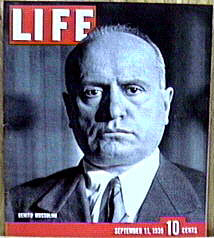
in proper diplomatic language- A national leader would not likely say "Mussolini
sucks, and is a damned, fat liar"- even though he may well be. Rather, the same
essence would likely be stated something to the effect of "We believe that Prime
Minister Mussolini may be mistaken in his assertion that Italy has landed a man on the
moon as of December 12, 1922; and we must doubt the competence of his advisors and his own
judgement given this blatantly erroneous and farcical statement from Il Duce."
Likewise, the GM of World Aflame will in no way tolerate
out-of-character attacks or aspersions on any player in the game. This is a game,
and it exists for people to have fun; not to get into pissing matches. The very first
instance of a player making out-of-character aspersions, threats or the like towards any
other player, will result in the offending player being immediately removed from the game.
Of course, legitimately phrased, strictly in-character
commentary is encouraged.
1.25- 'Out of Character' Messages
Players can chatter and yammer between themselves as
much as they like. That's all fine and dandy. However, under no circumstances is OC
chatter to be posted to the mailing list or Yahoo! group. The GM also need not be carboned
on OC missives- simply, they are not my concern. However, if any IC plotting, chatter or
such results from an initially OC missive, it must then be forwarded to the GM,
as per 1.2.
1.3- Submitting Orders
Orders may be submitted at any time, though there may
be a delay in processing, depending on the exact time and situation. Translation- I don't
give a damn how urgent France thinks it is that they mobilize and attack
Savannah, Georgia. I'm not going to process that order at 3am on Sunday night. I'm going
to be asleep. Orders will be processed in the chronological order that they are
received in, with an appropriate time delay, based on the difference in time of the orders
arriving.
Since the game progresses more-or-less real-time, this should be
fairly simple to understand as it unravels.
1.4- Passage of Time
World Aflame II will progress on a true,
real-time level. Specifically, for each DAY that passes in the real world, one WEEK passes
in-game. Thus, if Monday, November 25 2001 begins as January 1, 1922; that means that at
midnight on Monday/Tuesday, the date of the game is changing over from January 7th to
January 8th, 1922. For a clearer example of the passage of time, see the game calendar page.
1.5- Sequence of Play
In simplest terms- there isn't one. This game is a
real-time simulation, and does not depend on artificial constructs such as turns and turn
orders to function. Orders for construction, movement and action may be given at any time,
and the GM will respond as appropriate, in the order that the orders arrive. However-
there are a few key notes-
1.5.1- Automatic Updates
A nation's budget is determined annually, in game. A nation's production is processed quarterly. That is to say, each in-game year, the nation's cash disbursements from the government and taxes to the government are processed; while the industrial, agricultural and manufactured resources from domestic production and automated trade are processed by the GM four times per game year. Individual specific, one-time transactions are completed real-time, with the goods added or subtracted as they actually charge hands, providing for travel time and such.
1.5.2- Government Procurement
When a government orders the construction or military units, or the purchase of goods from the domestic or international markets, the order is executed at the beginning of the next game month. Thus, if a player placed an order to purchase 10 units of industrial goods from the world market on the in-game date of April 7, 1922; the transaction would be processed on May 1, 1922; no sooner.
1.5.3- Military Orders
Military orders are processed as soon as the individual units a) receive the orders and determine their authenticity, and b) are able to. If, for example, a French unit stationed in Indochina is cut off from communications with the motherland by all means save courier, and is in reserve status, and that unit is given an order from Paris to attack into Siam, the order needs to travel by air, sea or land by means of that courier; arrive in Hanoi, and be determined to be authentic. The the reserve unit would need to be fully mobilized, and march across Indochina to attack Siam. That could take months to accomplish, so the player should not expect immediate results in such an admittedly extreme situation.
Additionally- reports coming back to the government may, depending on reconnaissance levels, reflect the effect known as 'the fog of war'; that is to say, that in the chaos and confusion rampant in combat, reports may be erroneous, flawed or outright wrong. Likewise, many military leaders have their own agendas, prejudices and fallabilities, and may report incorrectly as a result. (For a classic example, witness the troop strength reports issued by, and acted on, by George B. McClellan to Abraham Lincoln during the Peninsular Campaign against Richmond.)
1.6- Multi-Player Nations
One of the newest rules in World Aflame is the addition
of multi-player nations. In World Aflame II, each player takes on the role of the leader
of a single political party within their nation, with the first player to choose a nation
having the option of taking the ruling party- usually the one with the most Control
Points. However, more than one player may opt to belong to a nation, for so long as there
are political parties/blocs to choose from.
In the event that a nation has multiple players, the Parliament
chooses the Prime Minister from amongst their own number, by means of casting a number of
votes equal to their Control Points. The Prime Minister is the only player allowed to
place actual commands for the nation, though parliamentary procedure may overrule or
refuse to ratify some of the PMs actions; just as the PM may choose to veto some powers of
the legislature. In most cases, this will be modeled as closely to the actual procedures
of the nation as possible.
A PM may be deposed by a vote of No Confidence from the
legislature, which then must choose a new PM from their own number, with the deposed PM
now taking the role of the leader of their party in a minority.
Some nations may be ineligible for multi-player status for a
number of reasons. For example, Autocratic or One-Party States would have no opposition
party to be concerned with (though they may have a rebel group or a fifth column); nor
would a Monarchy.
The other fashion in which a nation may become a multi-player
nation would be the aforementioned case of open rebellion. In this case, the country is
divided in two (or more!) pieces, with the rulership of each portion decided separately;
along with separate resource allocation and the like. In this case, the nation is, more or
less, treated as separate countries.
1.7- The Game Master, His Great and High Holiness
Here we have a key rule- the GM is always right.
The GM is the arbiter of all OC and rules conflicts, and
reserves the right to tweak, modify, change, ignore or enforce any and all game rules as
he sees fit; with or without notice to players. Players need to trust that the GM will do
this in all fairness, and to improve the game's impartiality and for realistic play.
Additionally- many rules may never be explained to players- This is in order to
disallow 'rules lawyers' from playing the loopholes that may be exploitable, and to enable
the GM the flexibility to make on-the-fly changes in the interest of both logic and
objectivity.
Rest assured, there is a fairly complex engine behind the vast
majority of in-game interactions, though some features of the game can and will be 'eyeballed'
subjectively by the GM. This is because, without a Ph.D., some things just are not
feasible for modeling without significant expenditure of time and effort on the part of
all parties; and this is quite simply out of the scope of the game. It's complex enough;
I'm not about to make it more so.
Finally, the decisions of the GM are always final. If you have a
legitimate issue, he'll listen to you. If he says he's heard enough, and his decision
stands, that's the way it is. Griping, moaning and complaining will consign a player to
the scrap heap. The purpose of this game, like any other, is to have fun- that goes for
the GM too. Getting bitched at is not his idea of fun. Keep that in mind.