|
BASSWOOD
Considered hard wood
Botanical Name: Tilia
americana
Lightweight and easy to work, basswood has been considered one of the
world's foremost carving woods for centuries. It can be shaped to
remarkably fine detail. It is odor-free and has been used extensively
for domestic goods such as kitchen utensils and food containers.
Basswood is considered unsuitable for outdoor duty because it weathers
poorly.
Other Names: American linden, linn, lime tree; American
lime (U.K.).
Sources: Eastern Canada and U.S.A.
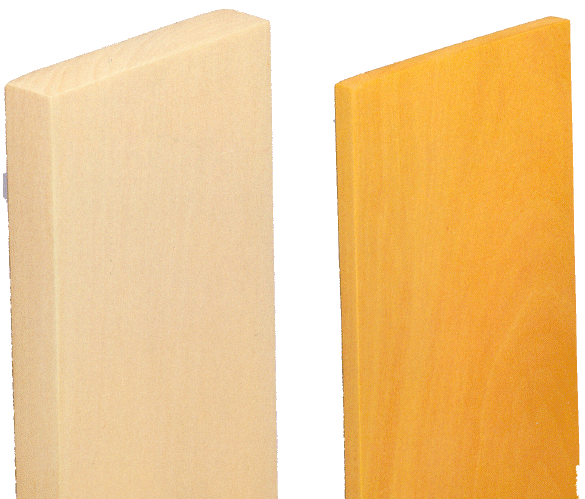
Characteristics: Straight grain; fine texture; creamy
white darkening to
creamy brown.
Uses: Turning, carving, pattern making, toys, piano keys,
match splints, boxes
and crates.
Workability: Very good; blunts cutters slightly; poor
bending properties.
Finishing: Generally good with all finishes.
Weight: 26 lb. / cu. ft.
Price: Inexpensive (slightly higher for thick 12/4 and
16/4 kiln dried carving stock). |
BAYO
Considered hard wood
Botanical Name: Aspidosperma
cruentum
A wonderful, easy-working, bayo is a "lesser-known species"
hardwood that is often available in large sizes and sometimes cut into
veneers. Not only attractive, bayo is also very decay- resistant.
Sources: Southeast Mexico, Belize, Honduras.
Characteristics:Straight and slightly interlocking grain;
medium to fine texture; heartwood: brownish pink; sapwood: cream with a
pinkish blush throughout.
Uses: Cabinet work, turning, framing, furniture and
decorative veneers.
Workability: Generally good; does not take nails well;
good bending properties.
Finishing: Accepts finishes well.
Weight: 37/-46 lb./cu. ft.
Price: Moderate
|