12
July 1944
The Germans had withdrawn and the Battalion advanced 3000 yards
to the vicinity of La Valaisserie, with only slight resistance
from a few enemy snipers. Now, the Battalion consisted only of 4 officers
and 126 men in the three rifle companies.
only slight resistance
from a few enemy snipers. Now, the Battalion consisted only of 4 officers
and 126 men in the three rifle companies.
The breakthrough in the forest on July 10th
was the factor that undermined the German resistance and caused it to
crumble along the rest of the Division’s front. Unfortunately, the
3 rd Battalion suffered great losses in achieving this
goal. Early on July 10 3rd Battalion consisted
of 19 officers and 563 men. By the end of the day, they lost 11 officers
and 343 men. Eddie’s Company K lost the most men, starting with 5 officers
and 152 men but by the end of the day, had only one officer and 31 men
(80% of Company K had been killed or wounded). It is impossible to imagine
the fear Eddie must have felt. He was initially a cook with the 106th
Infantry, and as a replacement for the 90th Division, his
first day in battle was the most costly for his Company. Of the 157 men
in Company K, he was one of 32 survivors.
The Battalion Commanding Officer, Col. Bealke, had a brief breakdown,
due to the massive casualties of his men. He became incoherent and was
babbling " I killed K Company, I killed K Company, I killed K Company".
He was taken to a hospital and sedated for several days before returning
to the front. The entire 3rd Battalion of the 358 th
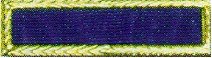
Infantry was awarded the Presidential Unit Citation for action at Hill
122.
The citation reads:
" The Third Battalion,
358th Infantry, is cited for extraordinary heroism in the
face of the enemy in France. During the period of 10-12 July 1944,
the officers and men of this organization displayed great courage,
endurance, and dogged determination in the attack through the Foret
de Mont Castre, France. The position known as the 'Mahlman Line' was
part of the main enemy defensive line. It consisted of dug-in positions,
cunningly camouflaged in the tangled underbrush, and other devices
that utilized to the fullest the natural defensive qualities of the
area. Despite repeated fierce enemy counterattacks, the Battalion drove
relentlessly forward and eliminated a battalion of parachute infantry
and a company of parachute engineers, both of which were a part of the
elite 5th German Parachute Division. By the end of the first
day, the Battalion Commander and 11 of the 17 Company officers were casualties
but the attack had progressed to within 75 yards of the initial objective.
The following day, the remnants of the three rifle companies, one of which
had only 20 men, were reorganized into one composite company with the strength
of 126 men and commanded by a Lieutenant. In a renewed charge, the depleted
Battalion overran the objective, killed 40 enemy, and captured 8 machine
guns, bazookas and mortars. On 12 July 1944 as it left the forest, the
Battalion, retaining its aggressiveness, fought with exceptional daring
and great skill and took successive objectives. The Battalion’s break through
the enemy’s main positions contributed materially to the Division’s advance.
The inspiring leadership of its officers and the gallantry displayed by
all ranks were in accordance with the highest military traditions ."
13 July 1944