|
|
|
|
|
|
|
|
MAHAKAM ACTIVITIES |
|---|---|
|
|
Freshwater Dolphin Surveys
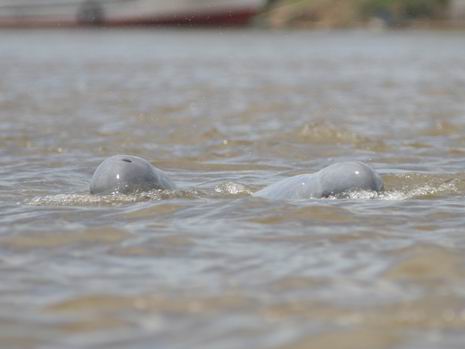
Based on the latest survey results in 2007, using Petersen mark-recapture analysis, the total dolphin population was estimated at 87 individuals. Whereas when combining surveys and other opportunistic encounters in 2007 with the dolphins, a total of 91 individuals were identified. The major threat involved direct mortality, which was largely caused by gillnet entanglement (74% of all deaths). Mean annual mortality between 1995 and 2007 was four dead dolphins per year. Other threats are habitat degradation through noise and chemical pollution, prey depletion through unsustainable fishing techniques (electro-fishing, poison and trawl), habitat displacement from container barges and increasingly shallow lakes through sedimentation. A new threat involves the recent presence of oceanic coal-carrier ships that now move upstream through major dolphin habitat raising considerable concern about the tremendous amount of underwater noise pollution these boats produce.
Current conservation activities focus on gaining local governmental and community support to protect these areas through multi-stakeholder workshops and community assessment surveys to assess community opinions and needs. Mitigation of unsustainable fishing techniques and pollution reduction (due to chemical waste and boat noise) is an important component for the survival of this critically endangered freshwater dolphin population. (Technical Report ....... pdf 467kb)
DNA Mahakam & Malinau Irrawaddy Dolphin Analysis Between 1999 and 2005, 6 samples from dead dolphins in the Mahakam and one sample from Malinau (northeast Kalimantan) were collected. All samples were sent to the lab of National Marine Fisheries Service/Southwest Fisheries Science Center (NMFS/SWFSC) La Jolla, USA and were sequenced (400 base region of the mitochondrial control region gene). The Indonesian samples sequenced and analyzed to date have yielded three different halpotypes. All six animals from the Mahakam have one of two different haplotypes. The dolphin from Malinau, has a different haploype than those animals found in the Mahakam. This Malinau haplotype matches a haplotype of several animals from the Songkla Lake area of Thailand and Philippines. When comparing the sequences of the animals from the Mahakam and Malinau, there are five fixed base pair differences. This indicates that animals from the two areas are evolutionarily different and that the Mahakam animals are, thus far, separate from other Asian Orcaella. (Analysis Report ..... pdf 18kb)
|
|
Copyright © 2009 Yayasan Konservasi RASI - All Rights Reserved. |
|