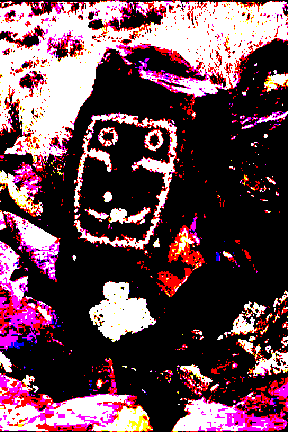
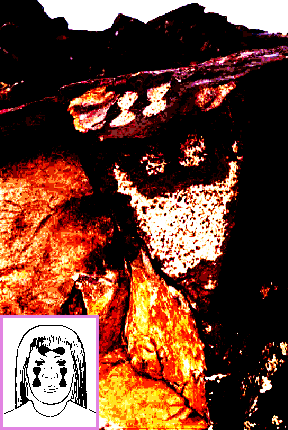
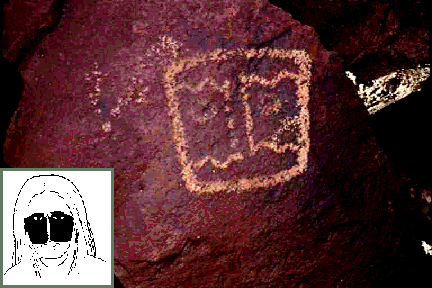
 Sure enough, there were several pages of drawings of face paint designs for male and female Mojave Indians. A couple of these did look similar to the petroglyphs I'd seen. This would indicate that these rock art sites were made by the Mojave. The panel to the left may or may not represent the drawing shown here which is said to represent an elderly man. Evidently, the designs in the chin area were frequently tattoos while the cheek and forehead designs were usually painted (according to the Mojave chapter of "Handbook of North American Indians vol. 10" which also has a photo of a striking young pioneer woman [Olive Oatman] who was Sure enough, there were several pages of drawings of face paint designs for male and female Mojave Indians. A couple of these did look similar to the petroglyphs I'd seen. This would indicate that these rock art sites were made by the Mojave. The panel to the left may or may not represent the drawing shown here which is said to represent an elderly man. Evidently, the designs in the chin area were frequently tattoos while the cheek and forehead designs were usually painted (according to the Mojave chapter of "Handbook of North American Indians vol. 10" which also has a photo of a striking young pioneer woman [Olive Oatman] who was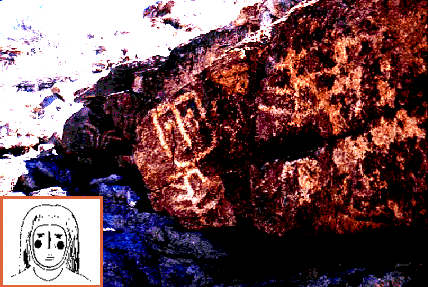 kidnapped by the Mojave in the 19th century and was tatooed on the chin with traditional Mojave designs). In particular, I've seen petroglyphs which look like the male (shown below) and (as shown to the right) female designs for 'twins'. I thought the circles on the possible (twins) petroglyphs were eyes until I saw Kroeber's drawings where there are circular designs on the cheeks. Also the large circular design does not depict the edge of the face. Instead, it shows the edge of the face paint design. kidnapped by the Mojave in the 19th century and was tatooed on the chin with traditional Mojave designs). In particular, I've seen petroglyphs which look like the male (shown below) and (as shown to the right) female designs for 'twins'. I thought the circles on the possible (twins) petroglyphs were eyes until I saw Kroeber's drawings where there are circular designs on the cheeks. Also the large circular design does not depict the edge of the face. Instead, it shows the edge of the face paint design. 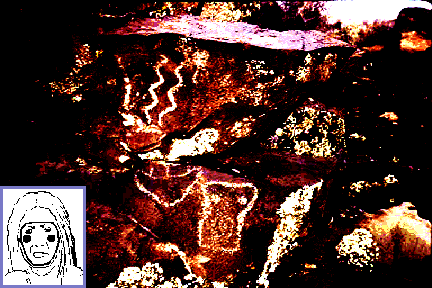 If the panel just shows the design and not the outline of the face it is possible that many other face paint designs are portrayed at these site but are not immediately recognizeable as such- like the hourglass like designs on the upper part of the bottom left photo on this page (which Kroeber identifies as "Atalyka leaf", a female design) Kroeber did say that there was quite a bit of variability in this art form so it's unclear how specific one can get in interpreting these designs. These face paint and tattoo designs were an important part of Mojave culture as per this quote in Kroeber, "Their own saying is that an untattooed person goes into a rat's hole at death instead of the proper place for the spirits." Kroeber mentioned that the Mojave used face paint more than other California Indians. If the panel just shows the design and not the outline of the face it is possible that many other face paint designs are portrayed at these site but are not immediately recognizeable as such- like the hourglass like designs on the upper part of the bottom left photo on this page (which Kroeber identifies as "Atalyka leaf", a female design) Kroeber did say that there was quite a bit of variability in this art form so it's unclear how specific one can get in interpreting these designs. These face paint and tattoo designs were an important part of Mojave culture as per this quote in Kroeber, "Their own saying is that an untattooed person goes into a rat's hole at death instead of the proper place for the spirits." Kroeber mentioned that the Mojave used face paint more than other California Indians.

|