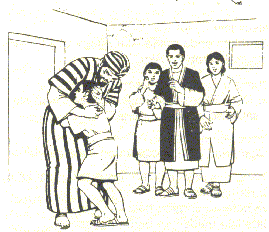
Yochanan chap 4:46-53

A Nobleman's Son Healed

Man's Theory : Seeing is Believing

Yeshua's Theory : Believing is seeing

  1. Yeshua came therefore again to Kanah of the Galil, where he made the water into wine. There was a certain nobleman whose son was sick at Kafar-Nachum.
  2. When he heard that Yeshua had come out of Yehudah into the Galil, he went to him, and begged him that he would come down and heal his son, for he was at the point of death.
  3. Yeshua therefore said to him, "Unless you see signs and wonders, you will in no way believe."
  4. The nobleman said to him, "Sir, come down before my child dies."
  5. Yeshua said to him, "Go your way. Your son lives." The man believed the word that Yeshua spoke to him, and he went his way.
  6. As he was now going down, his servants met him and reported, saying "Your child lives!"
  7. So he inquired of them the hour when he began to get better. They said therefore to him, "Yesterday at the seventh hour, the fever left him."
  8. So the father knew that it was at that hour in which Yeshua said to him, "Your son lives." He believed, as did his whole house.
  9. This is again the second sign that Yeshua did, having come out of Yehudah into the Galil.

Insight

This parable not just speaking only to the nobleman but to the Jewish people in general. In this event Adonai Yeshua was not as pleased with a faith that was base on miracles, sign and wonders and not on his Word alone. Yeshua teaches us that it is more honouring to believe in Him simply by His Word alone without physical proof. Adonai Yeshua expects us to believe him by His Word in the Scripture.

Adonai Yeshua HaMashiach gave a His special Blessing:

"Because you have seen Me, have you believed?

Blessed are they who did not see, and yet believed."

(Yochanan 20:29 NNAS)

This verse includes Yeshua' last beatitude in Yochanan's goodnews. Thomas did not need to touch Yeshua. It was sufficient that he saw, and, therefore, he believed. Yeshua pronounces blessings on those who have exercised faith, yet never saw Him as He was seen by people like Thomas. Peter may have had these words in mind when he wrote, "whom having not seen you love" (1 Pet. 1:8).