Home Previous Next
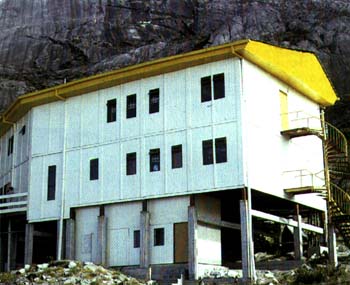 If you are climbing to the summit - a word of warning. Mountains should be treated with respect and you climb Kinabalu at your own risk, The weather can change very quickly from brilliant sunshine, to mist and clouds, to a torrential down-pour. The nights at Panar Laban and Sayat-Sayat are cold and temperatures can drop to below freezing. Ensure you bring enough warm clothes with you and pack them in plastic bags to keep dry. Park Regulations require that all climbers to the summit are accompanied by a registered guide. 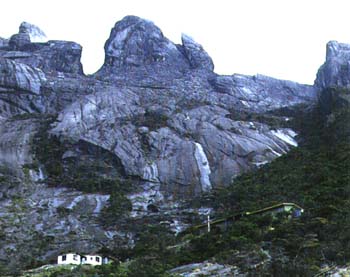 |
From Panar Laban onwards the vegetation is stunted and scrublike
except in the gullies, and there are superb views of the great
granite peaks soaring high above. Leptospermum and the Heath
Rhododendron are abundant and occur almost all the way to tbe
summit. In open ground below the granite slopes small alpine
meadow plants can be found. The white-flowered BORNEO
EYEBRIGHT (Euphrasia borneensis) and the pinkish-white
MOUNTAlN TRACHYMENE (Trachymene saniculifolia) are
common. The well-known KINABALU BUTTERCUP (Ranunculus
lowii) can be seen in wetter areas, especially by the old Panar
Laban huts. Do not confuse the yellow flowers of the Buttercup
with the Mountain Potentillas. Their leaves are very different. The
SILVER POTENTILLA (Potentllla borneensis) with soft, hairy leaves
is the most distinctive. of the three species. It is common around
Burlington Hut. The most conspicuous creature at these a altitudes is the BORNEAN MOUNTAIN GROUND SQUlRREL (Dremomys everettii) which is often seen scampering about in the scrubby vegetation. The KlNABALU RAT (Rattus baluensis) is another well-known species which is found only on the mountain. It has dark grey woolly hair. 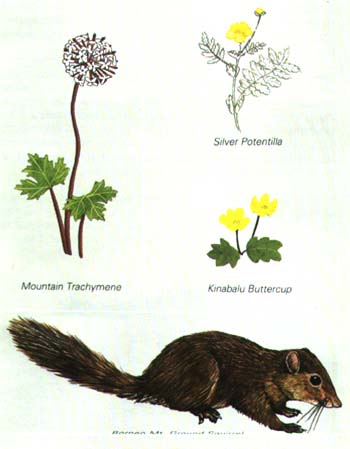 |