Punxsutawney has always seemed to me to be a place that could be so much more than it is; a town with the potential to expand and surpass the present gluttony of convenience stores and bars. In choosing to research the historical past of the little town best known for a groundhog mascot, I discovered that it once was something more. Punxsutawney had been a community full of social clubs and prestige, a town concerned with preserving the past and embracing the future, and foremost a great place for families to find enjoyment. I intend to discuss these characteristics in detail, concentrating mostly on the town's social and recreational history, and show how much has changed only in the last 50 years by recreating Punxsutawney as it was in the 1950's and 1960's.
I think that the most surprising and outstanding feature concerning the town of Punxsy during the late twentieth century is the fact that the town had a total of three operating movie theaters. Furthermore, it is remarkable to learn that Punxsutawney is no stranger to theater of any type, with theaters such as the Gem, Majestic, and Jefferson operating soon after the turn of the century (Centennial 121). While the others eventually closed for one reason or another, the Jefferson remained open well into the 1970's, its longevity no doubt a result of the theater's well-run operation and aesthetic design (Schwartz). The history of the theater is a lengthy one, having been originally founded on North Findley Street in 1906, in response to the closing of the "Opera House," which had stood in the present location of the Mary A. Wilson Elementary School (Centennial 121). During the early day of its existence, the Jefferson presented live theater, with acts occasionally including well-known performers of the time, such as Blanche Bates, Lou Tellegen, the magician Thurston, Broadway dancer Ray Bolger, and members of the Quillan family, who were involved in movies during the forties (121). The plays were soon followed by the theater's introduction of vaudeville acts, musical acts, silent films, and eventually "talkies," motion pictures recorded with sound tracks, which quickly became the most consistent act of the Jefferson Theaters (122). During the fifties and sixties, the theater continued to be a popular form of entertainment and became a staple of the local teenagers and children (Schwartz). The films shown at the Jefferson were typically the first-run "big budget" feature films, as well as offering popular cartoons and Disney movies on Saturdays for the younger kids (Mottern). The price of admission for adults was usually 80 cents for adults, 20 cents for children, and 25 cents for the Saturday matinees --prices that are a small fraction of the high costs charged today ( Punxsutawney Spirit advertisement). The people I talked to especially remembered the theater's balcony, called "Peanut Heaven," dime bags of freshly popped popcorn, and ushers who patrolled the theater with flashlights (McIntire). "[It was] a really neat place, a real shame to go to waste," commented Carol Mottern, a teacher employed at the Mapleview Elementary School.
The second theater operating during this time was the Alpine Theater, built by F. E. Hewitt and opened December 19, 1919 (Centennial 121). The Alpine was a one story red-brick building located on Pine Street, near the post office (Schwartz). The theater suffered damage during the flood of 1936 and afterwards had a rather unstable operation, with increasingly intermittent openings until it closed in the during the 1960's ( Punxsutawney Spirit). The theater, although once as popular, never reached the notoriety and success that the Jefferson did during the fifties, despite being operated by the Warner Brothers' Corporation (Forsythe). The reasons for this, besides having a somewhat unreliable show schedule and competition from the more glamorous Jefferson Theater, might have stemmed from the choice of movie selections, typically second-run and lesser known films (Forsythe). Teenagers of the time may be another, possibly larger, factor, as they were known to tell rumors of bats and other rodents inhabiting the theater --a characteristic mentioned by almost all of those that I have interviewed (Schwartz).
The Star-Lite Drive-In Theater was probably the final theater to close in Punxsutawney, its location being remodeled to make room for the construction of a Jamesway Department Store during the late 1970's ( Punxsutawney Spirit). The Star-Lite, located two miles north of town on route 36, was the first outdoor movie theater completed and operated in the area, opening May 12, 1949 (Centennial 122). The theater, under the ownership of Bert Fetterman, Charles Stewart, Ralph Neal, and John Grube, remained open eight months of the year and could accommodate roughly 450 cars in its parking lot (122). The business soon became a popular hang-out for the local teenagers, attracted by the novelty and privacy of remaining in one's vehicle while watching some of the latest films to be released (McIntire). Jennie Schwartz, a school nurse for the Punxsutawney District, says that the success continued after the novelty began to fade because the theater was a "clean, well run" business and was simply a "great place to see great movies" (Schwartz). The Star-Lite seems like the archetypal drive-in theaters that are idealized by movies based on the era, complete with tales of teens who would hide in the trunks of automobiles to escape paying the $1 admission fee (McIntire). My mother, Beverly Kauffman, worked at the drive-in one summer and reports that there were many cars that entered the parking lot with only a driver and left with a car full of passengers (Kauffman).
It is difficult for one not born during the 1950's and 1960's to believe that movie theaters were once a regular feature of Punxsutawney and more difficult to understand why they were allowed to cease operation and disappear, setting back the social capacity of the reportedly growing town. The reason, though many other influencing factors exist, seems most likely to be a result of progress, ironically. With the growth of larger communities located nearby, namely Indiana and Dubois, and the development of malls, places where people could shop at many stores without traveling outside the building, people increasingly began to look outside Punxsutawney for entertainment (Waite). For this reason, the theaters could not continue to operate and were eventually destroyed or, like the Jefferson, were left to deteriorate into uselessness (Waite). I think that everyone, whether they remember the structures operating in their prime or belong to Punxsutawney's newest generation, shares the feeling that it was a terrible mistake on the entire town's part to allow the theaters to sink into obscurity and ruin.
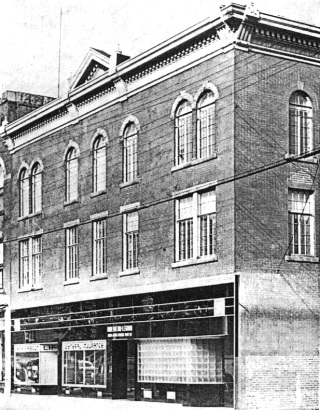
Theaters, however, are not the only regretful disappearance from the town's social history. Punxsutawney once had a YMCA building as well, offering several programs and activities for the area's youth (Centennial 187). The Young Men's Christian Association in Punxsy was originally organized in 1891, but the "Central Y" building, located on North Findley Street, was not completed until 1909 (187). Membership for the club cost only $3, but the "Y" didn't exclude non-members from participating in the group's activities --in fact, 2/3 of the individuals that took part in the activities were not actually members (187). The YMCA sponsored a number of recreational activities for the local kids, including board games, ping-pong, bowling, handball, basketball, indoor baseball, and volleyball (187).
Other events involved the participation and funding by the YMCA, although not taking place directly in the "Central Y" building: football and baseball were played at Harmon Field, the nearby outdoor recreation center and park (187). Members of the YMCA were entitled to form their own basketball teams and played against other nearby "Y" teams, consisting of leagues organized into age groups: ages nine and ten, 11 and 12, 13 and 14, 15 - 17, and 18 and older (188). The "Y" also had an indoor swimming pool, which was quite a luxury during the 1950's and 1960's (Kauffman). This, too, seems to be beyond understanding and it is disappointing that such a positive, educational, and entertaining influence on the youth of the community was not able to remain operational up to the present day. In the Punxsutawney Centennial, an invaluable book printed in 1949 on Punxsy's history, it states: "The Young Men's Christian Association of Punxsutawney is a large and strong organization" (Centennial 187). Apparently the organization wasn't as strong as some had predicted, as it closed sometime between the 1960's and the 1970's (Kauffman).
Another aspect of the YMCA --and the town in general, that has gradually become absent in the social structure of Punxsutawney is a steady frequency of dances and parties regularly organized for the children and teenagers of the town. As an individual who has had experience in organizing dances in the area, I am fully aware that there is a lack of such activity and commonly a lack of enthusiasm to actively participate in such events. The only places in town having bands and DJs playing regularly, mostly bars, cater strictly to the "over 21" crowd, basically leaving Punxsutawney's schools to be the sole venue for dances intended for the younger crowd. The main problem with relying on the school district for such activities in the present day is that there can sometimes be an irregular schedule of events, allowing for spaces of time where such activity does not occur. The YMCA of the 1960's, for example, held dances every Saturday night in their Youth Activity Room (YAR), a large recreation room provided for the teen members to organize and hold various activities (McIntire). This schedule does not appear to be excessive, as I was told that the YAR was usually fairly crowded with young people (Forsythe). The Skate Haven, although it primarily operated as a roller rink, was another location that sponsored dances quite often, typically charging 75 cents for admission (Forsythe). The rink, located on Chestnut Street in the west end of town, was a very popular hang-out for the teenagers of Punxsutawney, only requiring an admission fee of 50 cents and having skate rentals for a quarter (McIntire). Skate Haven, like the YMCA, closed sometime in the late sixties and was not established again in its current location (Kauffman) The S.S.C.D., the town's Saints Cosmas and Damian Roman Catholic Church and School, also offered relatively frequent dances in their parking lot during the summer months (McIntire). Finally, the newly formed branch campus of the Indiana University of Pennsylvania also occasionally held dances for the college students attending school in Punxsy, much as it does today (Kauffman). Provided with these options, the youth population of Punxsy during the 1950's and 1960's basically had a greater opportunity to interact socially with their peers through more positive means of entertainment than in contemporary times.
The adults of Punxsutawney during that era also had a wide range of venues in which they could dance and enjoy music, although the options were not vastly different: most dances were held at the local taverns or social clubs, much as they are now. The Moose, the Slovak Club, and the Army and Navy Club, and many others, had fairly regular dances and social parties at their clubs throughout the 1950's and 1960's ( Punxsutawney Spirit advertisement). The Army and Navy Club, for example, was known for its "air-conditioned bar and grill," and remains a venue, although usually restricted to members only, for local bands to perform on a somewhat regular basis (Kauffman). The one manner of musical venue that has more or less vanished from Punxsutawney was the bars and lounges owned and operated by the various hotels operating in Punxsy, yet another feature of the town's history that is hard to believe in the present day (Centennial 103).
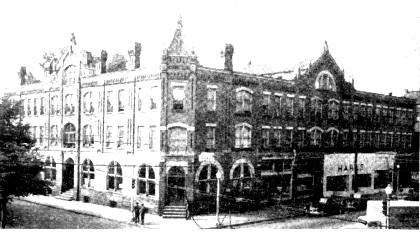
The first hotel built in Punxsutawney, the "Mahoning House," was founded in 1832, but soon sold to Henry Jennings, who renamed the hotel after himself (Pantall Hotel Brochure). This original structure, located on the corner of East Mahoning and Jefferson Streets, was destroyed in a fire during the fall of 1868 (Pantall Hotel Brochure). After the "Jenning's House" was destroyed, the land was sold to Theo. Pantall, who then established the three story block-square red brick structure known as the Pantall Hotel in 1886 (Pantall Hotel Brochure). The hotel, which finally opened to the public in 1922, had approximately 100 rooms, 185 windows, 220 doors, and a large horse stable to accommodate the guests of the hotel (Pantall Hotel Brochure). Although undergoing a great deal of change in the last century, mostly as a result of various fires that have plagued the hotel's history, the Pantall Hotel continues to be an influential and stable center to Punxsutawney's community and visiting tourists; and the only hotel to remain in operation in the surrounding area (Pantall Hotel Brochure). As far as I can tell from my research, the Pantall has always had a social dining area, now commonly called the Coachroom, built into the hotel itself and providing service to various social occasions (Pantall Hotel Brochure). The Pantall, however, offered a more refined social appeal than the other hotels operating at the same time, leaning more toward banquets, private parties, and the occasional wedding reception (Pantall Hotel Brochure).
The National Hotel, on the other hand, offered a great deal of musical entertainment for Punxsutawney, maintaining a schedule of live musical acts, dances, and events throughout the course of the week ( Punxsutawney Spirit advertisement). It is not surprising that the hotel would strive to both provide Punxsutawney with a steady flow of entertainment and attract travelers to the town, when one considers the history (Centennial 103). The building was built in 1905 by Joseph Baumgartner, owner of the Punxsutawney Brewery and a man very concerned with promoting the finer qualities of the community (103). He was very active in civic affairs and felt that the image of the groundhog should be used to promote the town, feeling that it had a great potential for attracting the attention of nearby towns and counties (103). Baumgartner even went so far as to construct a holding pen for groundhogs behind his hotel on the corner of Gilpin and Union Streets, so that the guests staying at the hotel could observe and become more familiar with the animal spoken of in local legends (103). The hotel was remodeled 1934, at which time modern conveniences were added to the hotel, such as running water, electric lighting, and telephone systems (103). The tap room, dining room, and the lobby were also refurbished at the same time, gaining the National acceptance as a member of the American and Pennsylvania Hotels Association soon after (103). Advertised as the "Home of Comfortable Rooms and Good Food" in the Punxsutawney Con Survey Directory, the hotel offered rooms starting at $1.50 during the 1950's (Mullin-Kille 16). Unfortunately, the National Hotel was destroyed on October 3, 1981, when a fire caused the roof and the third floor of the building to cave in, as well as sustaining severe damage from water pressure and smoke (Veitz 37).
The Hotel Punxsy, like the National, held dances throughout the week and had some form of musical entertainment on a daily basis, including bands such as the Jets, the Weathertown Four, Bill Jenks, and the Gay J's and covering various styles such as country and rock and roll ( Punxsutawney Spirit advertisements). The hotel was billed as having "one of the finest combination cocktail lounge-dining rooms in Western Pennsylvania" (Centennial 103). The acclaim came largely as a result of the management by Jack Grossman and Richard Blatt, who bought the building in 1946, then called the Hotel Gleckler and owned by Thomas Bennis (103). Blatt and Grossman added a Sportman's Bar, with walls decorated by stylish portraits of local and national sports legends, and a large luncheon room to the ground floor of the structure, as well as remodeling the entire hotel (103). This hotel, despite possessing so much fine entertainment and receiving such great acclaim, was likewise closed by the early 1980's, although I found no specific date (Baun).
Coinciding with the closing of hotels, lounges, taverns, and dwindling recreational options for the younger people of Punxsutawney, other aspects of the town, such as the restaurants, diners, and pool halls, began to gradually dissolve as the 1970's approached. Restaurants and diners, although offering a different form of recreation as the "Y" or hotel lounges, were also a strong part of the Punxsutawney social atmosphere during the 1960's, many businesses owing a great deal of their success to the teenagers who considered their establishments as "hang-outs." Actually, it may partially be because of this factor that, with the passing of time and the reduction of juvenile activity, these popular enterprises also began to lose business, profits subsided, and many were forced to close. Once again, it seems that the attraction of the larger communities to the north and south of Punxsy played a large role in the downsizing of the town, as commerce was continuously being drawn away from local businesses.
Punxsutawney in the 1950's and 1960's had an abundance of restaurants, eateries, and recreation centers, such as bowling alleys and pool halls. A common haunt for the teens was the Tastee Freez, located on Indiana Street going out of town, attracting attention for both the food and the parking lot which was used frequently as a place to "cruise" (McIntire). The shop sold ice cream, burgers and other assorted items, but was best known locally for its foot-long hot dogs and 25 cent ice cream cones (Mottern). Another attractive quality for the teens was the somewhat "game-like" process of ordering, offering specials for customers who received certain order numbers, such as receiving a free sundae if your order was number 100 (Mottern). Other places, too, recognized the importance of having a favorable opinion among the teenage population of Punxsy. Chango's Restaurant, for example, provided a jukebox and pinball machines inside its diner for the area kids, quickly becoming a local "hang-out," despite being located out of town (Kauffman). The business, located on route 36 South, was owned and operated by Reynold and Judy Chango, who purchased the structure from John and Thelma Lellock, who had previously run a combination gas station, general store, and restaurant (Lepley).
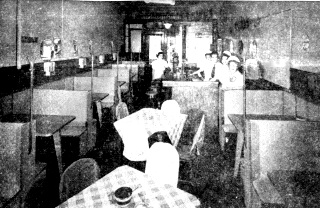
Other restaurants and diners, although typically not offering as much entertainment, also regularly attracted younger crowds simply with a pleasant atmosphere and delicious food. Star Lunch, located at 213 North Findley Street in the Anderson Building, was operated by Frank Mamolito and was known for serving "good food" at low prices, offering hot dogs at the rate of four for $1 (McIntire). Mary's Restaurant, located across from the Post Office on North Findley Street, was another such business that found a niche with the high school crowd (Schwartz). The establishment, owned by Mary Gallina-Kelly, was remodeled during November of 1942, adding a new floor, booths, a counter with stools, and a soda fountain (Centennial 111).
Other places with soda fountains were fairly common at the time, including the Plaza Dairy (located across from Barclay Square), Puritan Dairy (West Mahoning Street), and the popular confectionery known as the Palace of Sweets (Centennial). The Palace of Sweets was built on the location of the present day Mahoning Civic Center (319 East Mahoning Street) in 1921 by Peter Barletta, the brother of Anthony Barletta, who owned the Puritan Dairy (111). The shop had a soda fountain, booths to sit in, and supplied its customers with delicious ice cream sundaes, candy, and other confections (Schwartz). The town even had its own bottling plant, the Jefferson Bottling Works, located at 562 West Mahoning Street (Centennial 87). The business boasted selling "Punxsutawney's favorite drinks" and supplied a wide variety of soda flavors, including cherry, grapefruit, lemon cream, strawberry cream, ginger ale, cream soda, birch beer, and "frosty root beer," which it was best known for (Mullin-Kille 10). The soda was served in glass bottles of three sizes: seven ounces, twelve ounces, and 32 ounces (Baun).
Restaurants and diners were not the only businesses to possess soda fountains and sell confections, however, because many of the local pharmacies of the time offered a great deal more than medicine. Feicht's Drug Store is probably the shop with the most renown of being more than the average pharmacy. The shop was originally built by Charles M. Feicht in 1900 at 206 East Mahoning Street, but was later moved to 111 East Mahoning Street, because the pharmacy required more space (Centennial 92). Jennie Schwartz said that Feicht's was " the place to go after school let out," and remembered that they sold vanilla, chocolate, and cherry Cokes (Schwartz).
Another drug store that became an established haunt of the younger crowd in Punxsy was McLaughlin's Pharmacy, located at 210 West Mahoning Street (Centennial 92). The business was originally founded in 1926 by Widmann and Tean at 120 East Mahoning Street, but suffered damage during the flood of 1936, requiring its relocation (92). The store was then sold to H. E. McLaughlin, who was known as a very amiable and neighborly person to the kids that frequently stopped in at his pharmacy to buy candy or cherry Cokes served from the shop's old-fashioned soda fountain (Mottern).
Kids were not the only customers that commonly shopped or dined at such businesses, many adults regularly frequented such places as well. Carlino's Store, sometimes called the Corner Lunch, has been a well established eatery for the entire community since it was founded in 1918 (Centennial 98). The building was originally constructed in 1894 and switched hands fairly commonly up until the time it came under the control of James Carlino, although the main use of the structure was always for a food market or restaurant (98). The Punxsutawney Centennial Book probably best sums up the business by stating : "It has been the aim of 'the Carlinos' to serve their patrons with only the finest of foods, and this aim has been continued to the present day" (98). Carlino's is also well known locally as the "Home of the Carlino-burger," a type of loose-meat ground beef sandwich served in hot dog buns, in addition to the many other fine foods served there (Forsythe). The store does have a restaurant section, but because the seating is limited, it never really offered much as a typical "hang-out," although kids would shop there in the 1950's, attracted by deals such as 3 cheeseburgers for $1 (McIntire). Similarly, Defelice's Pizza, despite having no restaurant area, was an especially popular place to eat (Mottern). This business was the first pizza shop in town, built and operated out of an addition to the Defelice home (Schwartz). The pizza shop quickly became renowned for its unique recipe and was almost always busy, a fact true today as well, usually requiring an hour wait before pick-up (Mottern). The price was typically about $1 for each pizza during the 1960's, whereas the cost is about $4 today (McIntire). Teens would commonly order a pizza on the weekends and then park downtown to watch the cars cruising through town, as they ate (Kauffman). Parente's Restaurant, located on 103 Front Street --the area where Mahoning Towers stands today, was another popular place for dining out (Centennial 111). The restaurant, despite offering a "non-alcoholic atmosphere," tended to be oriented more toward an older crowd of people, which included college and senior high school students, as well as adults (Schwartz).
The Parente name is probably better known today for the Parente's Pool Hall, founded first during the 1960's and continuing to operate right up to the present (Schwartz). The business was started by the son of the Parente's Restaurant owner and offered five billiards tables for customers, as well as running 8-ball and 9-ball tournaments (Schwartz). Other billiards and pool halls operated in Punxsy during the 1950's and 1960's, such as Nick's Recreation (124 East Mahoning Street), and Santo's Pool Hall (North Findley Street), but all eventually closed down (Mullin-Kille 28). Santo's had three pool tables and several pinball machines in its building, but was sold and renamed Findley Recreation (Bridge). Findley Lanes, near Parente's Pool Hall's current location, also offered the youth a positive form of recreation by providing a 12 lane bowling alley (Kauffman). The cost for three games was $1 and included a free shoe rental (McIntire). Findley Lanes also had leagues for men and women, sponsored by local businesses, as well as children's leagues with games held on Saturday mornings (Kauffman). The bowling alley is still in operation today, although it has been renamed Groundhog Lanes (Kauffman).
There were also many other locations that were popular, yet to a lesser degree, during the era, most involving the service of providing food. Hester's Restaurant was one such place, located at 230 East Mahoning Street and known for serving square-shaped hamburgers (Forsythe). There was also a coffeehouse that began operation sometime during the 1960's, located near the branch campus of IUP at Punxsutawney (Kauffman). The atmosphere of the place was relaxed and readily fit with the "beatnik" stereotypes popularized in films based on the era, complete with black lights and small round tables (Mottern). Occasionally the coffeehouse would have performers, such as acoustic musicians and poets, who gave readings and signed autographs (Kauffman). Ice cream stores, dairies, and confectioneries , however, maintained a larger portion of this business, including the Elk Run Ice Cream Bar (123 Elk Run Avenue), Kromer Dairy (115 Cleveland Street), Joe Haag's Confectionery (531 East Mahoning Street), and the Nut Shop (124 West Mahoning Street), which sold various types of nuts and ice cream (Centennial 90). Ruth and Harry's, a pastry shop located at 114 West Mahoning Street, was a popular place for treats and remains so today (Mullin-Kille 107). Like the Jefferson Bottle Works, Punxsutawney also had a ice cream manufacturing plant, called the Mahoning Ice Cream Company (Centennial 61). The store was located at 240 Front Street, and manufactured ice cream freshly made, tasting like the ice cream that some people still make in their own homes during the winter (61). My grandfather, Mervin Baun, told me that before there were refrigerators to store the ice cream, it was typically sold in five gallon cans that acted like a Thermos to keep the contents cold (Baun). When one wanted ice cream, for picnics and such, he would pick up the amount he desired and, when finished, would simply return the canister to the Mahoning (Baun). The flavors offered by the company included vanilla, strawberry, chocolate, and variations including various nuts (Baun).
Continue on to Part Two.
 Go to the Geocities Sunset Strip