 Posture Bar
Master Cloud and slave aeris's Posture Training
Return to homepage
Slaves should undergo strict posture training in order to maintain their figures and improve their health. Since slaves often need to be bound, binding them in a position which forces them into good posture is a way to reinforce in their minds the need for good posture. In addition, prolonged and repeated sessions in posture reinforcement can actually force the body's muscles to adapt to good posture permanently. Click on pictures for larger versions.
Posture Bar
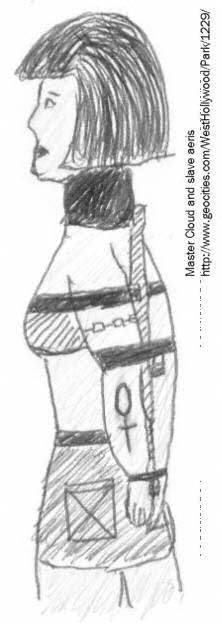
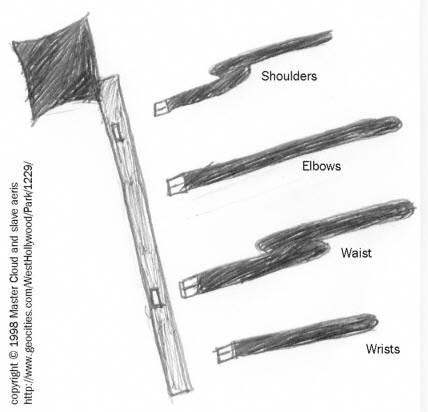
This device, like most of the devices that will be on this page, is influenced by the work of John Willie, the great bondage and fetish publisher of the fifties. The design is simple, yet effective: a high posture collar holds the neck upright. From the back of the collar descends a wooden or steel bar which anchor all the other restraints. A thick waist belt in the center provides another anchoring point for the bar, and also makes sure the bar rests tightly against the back, forcing the back into a stiff, upright position. The elbows and wrists are strapped together behind the trainee's back, around the bar, and one final strap around the shoulder blades minimizes movement which may loosen some of the straps. The collar is permanently attached to the bar; holes in the bar allow the shoulder and waist straps to pass through; the elbow and wrist straps do not need holes in the bar, as they circle both their respective limbs and the bar.
This design stays fairly true to the designs originally published in John Willie's Bizarre magazine. Later in his "Sweet Gwendoline" comics, Willie modified the design so the bar went down to the ankles, and loose-fitting straps around the knees and ankles prevent the trainee from taking large, unladylike steps. However, the same effect can be achieved with a hobble skirt; by keeping the leg restraint separate, this design allows the wearer to walk around and sit down, should those skills be necessary for whatever reason. Also note that the drawing above includes locking buckles for all the straps - perhaps not necessary if the trainee is alone, but the ability to lock the trainee into this device provides added security for trainer and trainee both. The enlarged picture on the left includes details as to what strap restricts what body parts.
 Posture Yoke
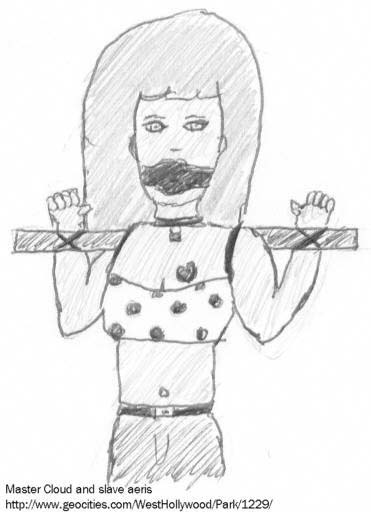
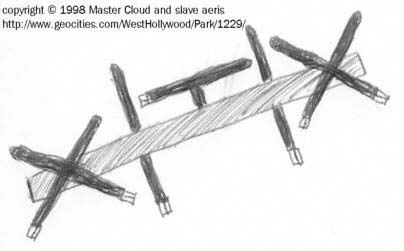
Another device influenced by John Willie, this device was not intended for full-body or half-body posture training, but rather had one specific purpose: to correct the "rounding" of the shoulders, or the tendency of the shoulders to roll forward instead of staying on the same plane as the back. Again a bar is used to provide the proper posture, but instead of being vertical, this one is horizontal. Straps around both the neck and the shoulders anchor the bar to the body at shoulder-level. The wrists are then strapped to the side of the bar opposite the side that the shoulders are strapped to, which forces the shoulders back into their proper position. (The gag in the picture is not a part of the posture yoke, but should be used to keep the trainee quiet anyway.)
John Willie's original design did not call for a collar anchored to the bar, which probably would have made the device less reliable as it would have allowed for more movement on the part of the trainee, movement which could possibly loosen some of the other straps. However, in later versions Willie did add a waist belt, separate from the yoke, and straps which ran from the trainee's elbows to the belt, further minimizing movement. That's a good idea. Again, locking buckles are recommended for security.
more coming soon ...
Return Home
E-mail Master Cloud
E-mail slave aeris
This page hosted by  Get your own Free Home Page