 My
personal page. This page represents my lighter
side it includes the following list of hobbies
and antidotes.
My
personal page. This page represents my lighter
side it includes the following list of hobbies
and antidotes.

 (Many
of these joke have not yet been rated.)
(Many
of these joke have not yet been rated.)


AND
APHORISMS

 EVERY
LIFE IS A TRAGEDY BUT WHEN ANALYZED IN DETAIL IT TAKES ON THE ASPECTS OF A COMEDY.
Schopenhauer
Hay
aves que cruzan el pantano y no se manchan. Mi plumaje es de esos. Salvador Santos
Chocan
"At
times to be silent is to lie. You will win because you have enough brute force. But
you will not convince. For to convince you need to persuade. And in order to persuade
you would need what you lack: Reason and Right." Unamuno in a confrontation
with fascist General Milan-Astray at the University of Salamanca on October 12, 1936.
Milan-Astray shouted in reply, "Death to intelligence! And long live Death!"
whereupon he drove the elderly Unamuno out of the university at gunpoint. Writer
and independent thinker, original mind and rector of the University of Salamanca,
Unamuno consequently suffered a heart attack and was dead within a week.
EN
EL TIEMPO DE GUERRA CUALQUIER HOYO ES TRINCHERA.
LIFE'S
PRINCIPLE AXIOM IS THAT YOUR INSTINCT IS TO PERPETUATE YOURSELF----TO BE. PERPETUATION
INCLUDES IN ADDITION TO YOUR FINITE LIFE THE EXTENSION OF YOUR MEMORY AND INFLUENCE
AFTER YOUR DEATH. A HERO IS PERPETUATED BY HIS GLORIFICATION, OR MORE PROFOUNDLY,
THE PRESERVATION OF HIS SOCIETY. ESPINOZA
"I
wish to propose for the reader's favorable consideration a doctrine which may, I
fear, appear wildly paradoxical and subversive. The doctrine in question is this:
that it is undesirable to believe a proposition when there is no ground whatever
for supposing it true." BERTRAND RUSSELL
("The
Study of Mathematics") And
for a nice, sobering contrast (albeit non-contradictory) try: "The
secret of happiness is to face the fact that the world is horrible, horrible, horrible...."
BERTRAND RUSSELL
"all revolutions degenerate into governments"-Octavio Paz
EVERY
LIFE IS A TRAGEDY BUT WHEN ANALYZED IN DETAIL IT TAKES ON THE ASPECTS OF A COMEDY.
Schopenhauer
Hay
aves que cruzan el pantano y no se manchan. Mi plumaje es de esos. Salvador Santos
Chocan
"At
times to be silent is to lie. You will win because you have enough brute force. But
you will not convince. For to convince you need to persuade. And in order to persuade
you would need what you lack: Reason and Right." Unamuno in a confrontation
with fascist General Milan-Astray at the University of Salamanca on October 12, 1936.
Milan-Astray shouted in reply, "Death to intelligence! And long live Death!"
whereupon he drove the elderly Unamuno out of the university at gunpoint. Writer
and independent thinker, original mind and rector of the University of Salamanca,
Unamuno consequently suffered a heart attack and was dead within a week.
EN
EL TIEMPO DE GUERRA CUALQUIER HOYO ES TRINCHERA.
LIFE'S
PRINCIPLE AXIOM IS THAT YOUR INSTINCT IS TO PERPETUATE YOURSELF----TO BE. PERPETUATION
INCLUDES IN ADDITION TO YOUR FINITE LIFE THE EXTENSION OF YOUR MEMORY AND INFLUENCE
AFTER YOUR DEATH. A HERO IS PERPETUATED BY HIS GLORIFICATION, OR MORE PROFOUNDLY,
THE PRESERVATION OF HIS SOCIETY. ESPINOZA
"I
wish to propose for the reader's favorable consideration a doctrine which may, I
fear, appear wildly paradoxical and subversive. The doctrine in question is this:
that it is undesirable to believe a proposition when there is no ground whatever
for supposing it true." BERTRAND RUSSELL
("The
Study of Mathematics") And
for a nice, sobering contrast (albeit non-contradictory) try: "The
secret of happiness is to face the fact that the world is horrible, horrible, horrible...."
BERTRAND RUSSELL
"all revolutions degenerate into governments"-Octavio Paz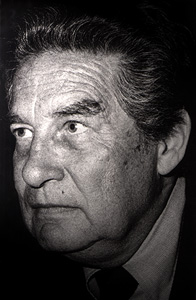 A man's
women folk, whatever their out ward show of respect for his merit and authority,
always regard him secretly as an ass, and with something akin to pity, His most gaudy
sayings and doings seldom deceive them; they see the actual man within, and know
him for a shallow and pathetic fellow. In this fact, perhaps, lies one of the best
proofs of feminine intelligence, or as the common phase makes it, feminine intuition.
Menken.
“The
whole aim of practical politics”, said H.L. Mencken, “is to keep the populace alarmed—and
hence clamorous to be led to safety—by menacing it with an endless series of hobgoblins,
all of them imaginary.” Mencken
"My
advice to you is get married: if you find a good wife you'll be happy; if not,you'll
become a philosopher." - Socrates (470-399 B.C.)
The
value of philosophy is, in fact, to be sought largely in its very uncertainty. The
man who has no tincture of philosophy goes through life imprisoned in the prejudices
derived from common sense, from the habitual beliefs of his age or his nation, and
from convictions which have grown up in his mind without the co-operation or consent
of his deliberate reason. To such a man the world tends to become definite, finite,
obvious; common objects rouse no questions, and unfamiliar possibilities are contemptuously
rejected. As soon as we begin to philosophize, on the contrary, we find... that even
the most everyday things lead to problems to which only very incomplete answers can
be given. Philosophy, though unable to tell us with certainty what is the true answer
to the doubts it raises, is able to suggest many possibilities which enlarge our
thoughts and free them from the tyranny of custom. Thus, while diminishing our feeling
of certainty as to what things are, it greatly increases our knowledge as to what
they may be; it removes the somewhat arrogant dogmatism of those who have never traveled
into the region of liberating doubt, and it keeps alive our sense of wonder by showing
familiar things in an unfamiliar aspect. RUSSELL
That
the right use of reason is "that by which the most wholesome faith is begotten
. . . is nourished, defended, and made strong" St. Thomas Aquinas
Even
if the open windows of science makes us shiver after the cosy indoor warmth of traditional
humanizing myths, in the end the fresh air brings vigor, and the great spaces have
a splendor of their own. Bertrand Russell.
La
economía es algo demasiado importante como para dejarla en manos de los economistas.
"Not
until the United States built its space-shuttle facilities at Cape Canaveral, Florida,
did America see any structures more massive than the pyramids of Cholula and Teotihuacan"
-- J. Weatherford, _Indian Givers
Quite
naturally, the argument here is: while Mexico, a country capitalizing on its geographic
position and God-given resources, may be supplying the commodities in question,[Canibus] the
United States is doing virtually nothing to attenuate demand. Madsen
Many
wealthy people escaped military service in the Civil War by paying $300 to a substitute.
John D. Rockefeller, Andrew Carnegie, Philip Armour, Jay Gould, and James Mellon.
Mellon's father had written to him that "a man may be a patriot without risking
his own life or sacrificing his health. There are plenty to lives less valuable."-Zinn-The People's History
In the case of those we seek to honor, their sacrifice was the ultimate a citizen may
do for his or her country: their life. Out of a total of 3,427 medals granted by the
U.S. Congress, 38 have been given to citizens of Latino ancestry, making Latinos
the largest single ethnic group, in proportion to the number who served, to earn this
prestigious award.The just man is scourged, racked, thrown into prison, blinded in both eyes, and finally, when he has endured all ills, he is executed, and he recognises that one should be determined not to be just but to appear so.-Plato's Republic.-"THE CANON OF MEDICINE",is the most famous single book in the history of medicine in both East and West.-Avicenna-"CERTAIN LIVING CREATURES WHICH THE EYE CANNOT FOLLOW...PASS BY THE AIR THROUGH THE MOUTH AND NOSE INTO THE BODY, AND SET UP GRIEVOUS DISEASES.-Marcus Varro,27 B.C.E.-
Aryabhata,in 499 wrote the astronomy text Siddhanta which taught that the apparent rotation of the
heavens was due to the axial rotation of the Earth. The work is written in 121 stanzas. It gives a quite
remarkable view of the nature of the solar system.
His point was that he could not support a government that endorsed slavery and waged an imperialist war against Mexico. His defense of the private, individual conscience against the expediency of the majority found expression in his most famous essay, "Civil Disobedience," which was first published in May 1849 under the title "Resistance to Civil Government." - Thoreau, Henry David-
Carl Gustaf Jung, the psychiatrist, wrote of him that "We see in Paracelsus not only a pioneer in the domains of chemical medicine, but also in those of an empirical psychological healing science." 16th century.
Humans are most closely realted to the great apes (gorillas and chimpanzess) with whom we share approximately 98% of our genetic code or DNA.
A man's
women folk, whatever their out ward show of respect for his merit and authority,
always regard him secretly as an ass, and with something akin to pity, His most gaudy
sayings and doings seldom deceive them; they see the actual man within, and know
him for a shallow and pathetic fellow. In this fact, perhaps, lies one of the best
proofs of feminine intelligence, or as the common phase makes it, feminine intuition.
Menken.
“The
whole aim of practical politics”, said H.L. Mencken, “is to keep the populace alarmed—and
hence clamorous to be led to safety—by menacing it with an endless series of hobgoblins,
all of them imaginary.” Mencken
"My
advice to you is get married: if you find a good wife you'll be happy; if not,you'll
become a philosopher." - Socrates (470-399 B.C.)
The
value of philosophy is, in fact, to be sought largely in its very uncertainty. The
man who has no tincture of philosophy goes through life imprisoned in the prejudices
derived from common sense, from the habitual beliefs of his age or his nation, and
from convictions which have grown up in his mind without the co-operation or consent
of his deliberate reason. To such a man the world tends to become definite, finite,
obvious; common objects rouse no questions, and unfamiliar possibilities are contemptuously
rejected. As soon as we begin to philosophize, on the contrary, we find... that even
the most everyday things lead to problems to which only very incomplete answers can
be given. Philosophy, though unable to tell us with certainty what is the true answer
to the doubts it raises, is able to suggest many possibilities which enlarge our
thoughts and free them from the tyranny of custom. Thus, while diminishing our feeling
of certainty as to what things are, it greatly increases our knowledge as to what
they may be; it removes the somewhat arrogant dogmatism of those who have never traveled
into the region of liberating doubt, and it keeps alive our sense of wonder by showing
familiar things in an unfamiliar aspect. RUSSELL
That
the right use of reason is "that by which the most wholesome faith is begotten
. . . is nourished, defended, and made strong" St. Thomas Aquinas
Even
if the open windows of science makes us shiver after the cosy indoor warmth of traditional
humanizing myths, in the end the fresh air brings vigor, and the great spaces have
a splendor of their own. Bertrand Russell.
La
economía es algo demasiado importante como para dejarla en manos de los economistas.
"Not
until the United States built its space-shuttle facilities at Cape Canaveral, Florida,
did America see any structures more massive than the pyramids of Cholula and Teotihuacan"
-- J. Weatherford, _Indian Givers
Quite
naturally, the argument here is: while Mexico, a country capitalizing on its geographic
position and God-given resources, may be supplying the commodities in question,[Canibus] the
United States is doing virtually nothing to attenuate demand. Madsen
Many
wealthy people escaped military service in the Civil War by paying $300 to a substitute.
John D. Rockefeller, Andrew Carnegie, Philip Armour, Jay Gould, and James Mellon.
Mellon's father had written to him that "a man may be a patriot without risking
his own life or sacrificing his health. There are plenty to lives less valuable."-Zinn-The People's History
In the case of those we seek to honor, their sacrifice was the ultimate a citizen may
do for his or her country: their life. Out of a total of 3,427 medals granted by the
U.S. Congress, 38 have been given to citizens of Latino ancestry, making Latinos
the largest single ethnic group, in proportion to the number who served, to earn this
prestigious award.The just man is scourged, racked, thrown into prison, blinded in both eyes, and finally, when he has endured all ills, he is executed, and he recognises that one should be determined not to be just but to appear so.-Plato's Republic.-"THE CANON OF MEDICINE",is the most famous single book in the history of medicine in both East and West.-Avicenna-"CERTAIN LIVING CREATURES WHICH THE EYE CANNOT FOLLOW...PASS BY THE AIR THROUGH THE MOUTH AND NOSE INTO THE BODY, AND SET UP GRIEVOUS DISEASES.-Marcus Varro,27 B.C.E.-
Aryabhata,in 499 wrote the astronomy text Siddhanta which taught that the apparent rotation of the
heavens was due to the axial rotation of the Earth. The work is written in 121 stanzas. It gives a quite
remarkable view of the nature of the solar system.
His point was that he could not support a government that endorsed slavery and waged an imperialist war against Mexico. His defense of the private, individual conscience against the expediency of the majority found expression in his most famous essay, "Civil Disobedience," which was first published in May 1849 under the title "Resistance to Civil Government." - Thoreau, Henry David-
Carl Gustaf Jung, the psychiatrist, wrote of him that "We see in Paracelsus not only a pioneer in the domains of chemical medicine, but also in those of an empirical psychological healing science." 16th century.
Humans are most closely realted to the great apes (gorillas and chimpanzess) with whom we share approximately 98% of our genetic code or DNA. 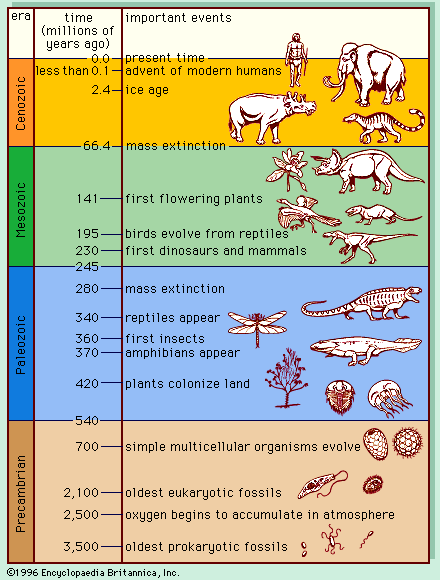 According to Locke, what we know is always properly understood as the relation between ideas, and he devoted much of the Essay to an extended argument that all of our ideas--simple or complex--are ultimately derived from experience. The consequence of this empiricist approach is that the knowledge of which we are capable is severely limited in its scope and certainty. Our knowledge of material substances, for example, depends heavily on the secondary qualities by reference to which we name them, while their real inner natures derive from the primary qualities of their insensible parts.
Nevertheless, Locke held that we have no grounds for complaint about the limitations of our knowledge, since a proper application of our cognitive capacities is enough to guide our action in the practical conduct of life. (1690)
a priori / a posteriori--
Distinction among judgments, propositions, ideas, arguments, or kinds of knowledge. In each case, the a priori is taken to be independent of experience, which the a posteriori presupposes. An a priori argument, then, is taken to reason deductively from abstract general premises, while an a posteriori argument relies upon specific information derived from sense perception. The necessary truth of an a priori proposition can be determined by reason alone, but the contingent truth of an a posteriori proposition can be discovered only by reference to some matter of fact. Thus, for example:
According to Locke, what we know is always properly understood as the relation between ideas, and he devoted much of the Essay to an extended argument that all of our ideas--simple or complex--are ultimately derived from experience. The consequence of this empiricist approach is that the knowledge of which we are capable is severely limited in its scope and certainty. Our knowledge of material substances, for example, depends heavily on the secondary qualities by reference to which we name them, while their real inner natures derive from the primary qualities of their insensible parts.
Nevertheless, Locke held that we have no grounds for complaint about the limitations of our knowledge, since a proper application of our cognitive capacities is enough to guide our action in the practical conduct of life. (1690)
a priori / a posteriori--
Distinction among judgments, propositions, ideas, arguments, or kinds of knowledge. In each case, the a priori is taken to be independent of experience, which the a posteriori presupposes. An a priori argument, then, is taken to reason deductively from abstract general premises, while an a posteriori argument relies upon specific information derived from sense perception. The necessary truth of an a priori proposition can be determined by reason alone, but the contingent truth of an a posteriori proposition can be discovered only by reference to some matter of fact. Thus, for example: "3 + 4 = 7." is known a priori.
"Chicago is on Lake Michigan." is known a posteriori.
Rationalists typically emphasize the importance of a priori ideas and arguments as the foundation of all knowledge. Kant held that synthetic a priori judgments are preconditions of experience and form the basis for mathematics and science.
Empiricists, on the other hand, usually hold that all a priori propositions are merely analytic, so that we must rely on a posteriori propositions for significant knowledge of the world. Kripke challenges even the identification of this distinction with that between the necessary and the contingent.
rationalism.-
Reliance on reason {Lat. ratio} as the only reliable source of human knowledge. More specifically, rationalism is the epistemological theory that significant knowledge of the world can best be achieved by a priori means. Prominent rationalists of the modern period include Descartes, Spinoza, and Leibniz.
empiricism.-
Reliance on experience as the source of ideas and knowledge. More specifically, empiricism is the epistemological theory that genuine information about the world must be acquired by a posteriori means, so that nothing can be thought without first being sensed. Prominent modern empiricists include Bacon, Locke, Berkeley, Hume, and Mill.
Anaximander (d. 547 BCE)--
Presocratic philosopher. Examination of fossil evidence persuaded Anaximander that living beings develop from simpler to more complex forms over time.[Pre-Darwin?]