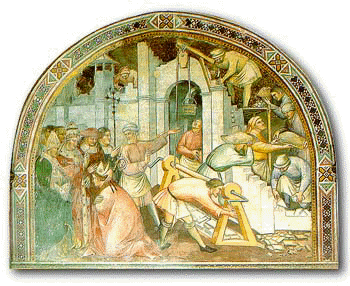
The Building of Alexandria
The second largest city in Egypt, Alexandria, known
as "The Pearl of the Mediterranean", has
an atmosphere that is more Mediterranean than Middle
Eastern ; its ambience and cultural heritage distance it
from the rest of the country although it is actually
only 225 km. from Cairo.
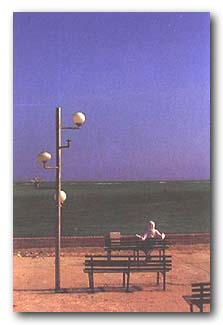 Founded by Alexander the Great in 331 BC, Alexandria
became the capital of Graeco-Roman Egypt, its status as
a beacon of culture symbolized by Pharos, the legendary
lighthouse that was one of the Seven Wonders of the
World. The setting for the stormy relationship
between Cleopatra and Mark Antony, Alexandria was also
the center of learning in the ancient world. But ancient
Alexandria declined, and when Napoleon landed, he found
a sparsely populated fishing village.
Founded by Alexander the Great in 331 BC, Alexandria
became the capital of Graeco-Roman Egypt, its status as
a beacon of culture symbolized by Pharos, the legendary
lighthouse that was one of the Seven Wonders of the
World. The setting for the stormy relationship
between Cleopatra and Mark Antony, Alexandria was also
the center of learning in the ancient world. But ancient
Alexandria declined, and when Napoleon landed, he found
a sparsely populated fishing village.
From the 19th century Alexandria took a new role, as a
focus for Egypt's commercial and maritime expansion.
This Alexandria has been immortalized by writers such as
E-M- Forster and Cavafy. Generations of immigrants from
Greece, Italy and the Levant settled here and made the
city synonymous with commerce, cosmopolitanism and
bohemian culture.
Alexandria is a city to explore at random. It's as
important to enjoy the atmosphere as it is to see the
sights.
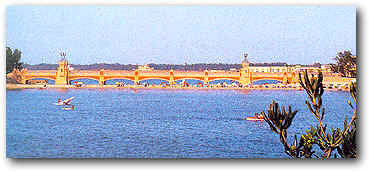
Old Alexandria
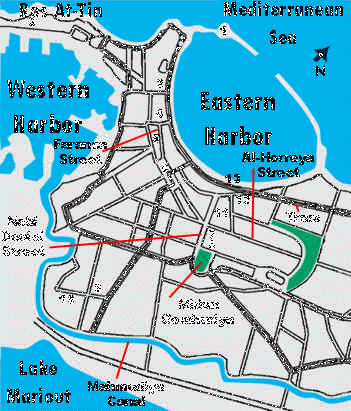
Dinocrates built the Heptastadion, the causeway
between Pharos and the mainland. This divided the
harbors into the Western and Eastern. The Eastern
harbor was really where the old harbor from the Middle
Ages was located.
Of modern Alexandria, the oldest section is along the
causeway which links what was once Pharos island with
the mainland and includes the districts of Gumrok
(the oldest dating to about the 16th century and known
as the customs district) Anfushi, and Ras el-Tin (Cape
of Figs). The latter two districts date to about the
period of Mohammed Ali (1805-49). Collectively,
these districts are known to westerners as the Turkish
Quarter. They have had a number of ups and downs over
the years, particularly due to the plague during the
17th century. The area forms somewhat of a T shape,
dividing the Eastern Harbor from the Western Harbor.
This section of Alexandria is known to us more from
books then what we may actually see in the area. Where
the Pharos Lighthouse once stood, is now occupied
by the Fort of Quit Bay (1)
out on the area that circles up around the top of
Eastern Harbor forming the eastern section of the top of
the T. Heading south from the Fort of Quit Bay, we
come to the stunning Abu El-Abbas
Mosque (2). West of this is the Anfushi
Tombs (3), some of the oldest in Alexandria and well
worth a visit.
Central Alexandria
 |
The
Underwater Discoveries
Relatively new discoveries
in the Eastern Harbor involve two different
sites. Around Fort Qaitbey the site has
unearthed hundreds of objects, including what
experts believe are the remains of the Pharos
Lighthouse, one of the ancient wonders of the
world
In the south east part of
the harbor archaeologists have apparently
found the Royal Quarters, including granite
columns and fabulous statues, including one of
Isis and a sphinx with a head thought to be
that of Cleopatra's father.
There may vary well be an
underwater exhibit in the future.
|
Heading towards the mainland past the Abu
El-Abbas Mosque and connecting with Shari Faransa street
leads to the Suq district. Just before entering the
district one finds the interesting little Terbana Mosque
(4). In the Suq district (5), one finds
Alexandria's only surviving wakalas, which is a part of
the El-Shorbagi Mosque complex founded in 1757.
This was also the area where Alexandria's Jewish
community lived, but most have now migrated to Israel.
Different areas have specialized in different goods and
one may find all manner of products from jewelry to
Medicinal plants (Suq El-Magharba) to Bedouin clothing
(Suq El-Libia).
Continuing down Faransa one passes Midan Tahrir (6)
and the street turns into Salah Salem, and finally
connects with Al-Horreya.
However, Midan Tahrir, popularly called Manshiya, has
considerable history. The areas was once home to
Diplomats and known as Place Des Consuls, but after the
statue of Mohammed Ali was placed here in 1873 the name
was changed to Midan Mohammed Ali. In 1882, it was
bombarded by the British and all but destroyed.
The Alexandria Stock Exchange was once located here, and
it was from the midan that Nasser announced the
nationalization of the Suez Canal.
The street named Al-Horreya (Tariq abd el-Nasser)
which transverses the area from east to west was in
ancient times the Canopic Way with the Gate of the Sun
at the eastern end and the Gate of the Moon at the
western end. At that time, there were probably
columns lining the road. The main north to south street,
now Sharia el-Nebi Daniel, ran from the East Harbor all
the way to Lake Harbor on Lake Mariout.
Just south of the intersection of Al Horreya
and el-Nebi Daniel was the site traditionally thought to
be the burial place of Alexander the Great, but that has
not been located, and may in fact be beneath the Mosque
of Nebi Daniel (7) or in a nearby Greek necropolis.
The famous Alexandria Library was probably nearby.
However, the only real antiquities site that can be
viewed in the area is Kom el-Dik (8), a small Roman
theater that has been excavated. Nearby is also a bath
house of the era. To the east is the Antiques
District where dealers sell antiquities, books, old
weapons and furniture. Here is also the Attarine
Mosque, which was once a church dedicated to
Athanasius.
Further south along the tramway is Popey's
pillar (9) and nearby the Catacombs
of Kom ash-Shuqqafa (10).
Wondering along el-Nebi Daniel are several other
attrations, including the French Cultural Center, and
nearby the Eliahu Hanabi Synagague (11), which is the
only active synagogue in Alexandria and houses the
combined treasures of the seven former Alexandrian
synagogues.
Back to the north on el-Nebi Daniel, next to the
harbor where Ramla station is now located at Midan Saad
Zaghlul was the location of the Caesareum
(12). This was a magnificent temple begun by
Cleopatra for her lover Antony and subsequently
completed by their enemy Octavian, though none of this
remains.in situ. Nearby is the well known Cecil Hotel,
built in 1930, Smerset Maugham stayed here, as did
Winston Churchill, and the British Secret Service one
maintained a suite for their operations.
Midan Saad Zaghlul (13) is the entertainment heart
and nerve center of Alexandria. here, as terminals and
train stations provide a backdrop for cinemas,
restaurants and night spots. It was the setting of
Lawrence Durrell's Alexandria Quartet and the famous
Alexandria coffee houses. The square is dominated by an
impressive monument dedicated to Saad Zaghlul, a former
national leader.
The Greek Quarter and Bab
Rosetta District
Back on Al Horreya heading east, as we pass the Graeco-Roman
Museum (a notable museum well worth a visit) we move
into the Greek Quarter of Alexandria, one of the most
beautiful residential districts. The wonderful old
villas include the massive Miclavez building, which is
opposite the Town Hall and nearby the Adda Complex built
in 1929. This is where the wealthy Greeks lived at
the turn of the century, and the streets are still named
after the Ptolemic, Pharaonic, Abbasid and Fatimid
rulers. Further east is the Greek Orthodox
patriarchate andthe Church of St. Saba.
Further east, Al Horreya opens into a beautiful green
area known as the Shallalat Gardens..which was once the
fortification of Bab Rosetta. But in 1905,
Alexandria created a garden area here with waterfalls
and the only Alexandria cistern which can be viewed.
This cestern is an example of those which once dotted
Alexandria providing fresh water to her inhabitants.
The Corniche
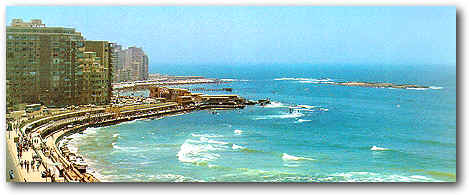
The Corniche is doted with Casions bult
on stilts and rows of beach huts. The avenue here
did not always exists, for until the 20th century, the
areas remained fortified by a five mile long wall with
towers which had protected the city since the 13th
Century. In the early 1900s, a strip of land with
a width of about 100 yeards was reclaimed from the sea,
and the area became popular with beach goers. That is no
longer the case, but it remains a lively area of
Alexandria.
On the western end of the Corniche near
Silsila where the New Alexandria Library is being
constructed is the Shatby Tombs which are said to be the
oldest in Alexandria. Nearer the San Stefano area across
the tram tracks is also the Royal Jewlery Museum.
The Mahmudiya Canal
A walk along the Mahmudiya Canal brings wone face to
face with the working class and industrial districts of
Alexandria, and is pleasent along the old paved road
bordered by the canal and sycamore treets. South
of the Greek district along the canal is the Antoniadis
Gardens, which seep with history. Here, the poet
Callimachus lived and taught, and in 640 AD, Pompilius
prvented the King of Syria from capturing Alexandria.
But less then a year later, Amr Ibn el-As camped here,
before taking the city. The well known Water Traffic
Circle is also in the area.
Here one finds the Zoological Gardens, the small
Museum of Natural History and the Fine Arts Museum in
the Moharrem Bey area, and a Rose Garden. The
beautiful public gardens extend into the surrounding
area where the Antoniadis Palace is located, and there
is even a nearby Roman tomb.
El-Muntaza
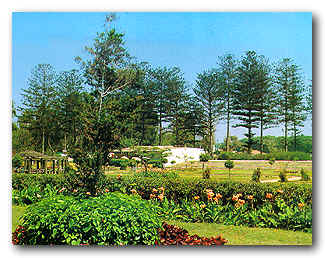
Muntaza Gardens
This area along the coast about 15 miles east of
Alexandrias old district along the Corniche is
where many of the modern Alexandrian hotels are located,
as well as one of the elegant heritage hotels.
Khedive Abbas II built the Salamlik as a residence.
Here also is the magnificent Montaza
Palace.
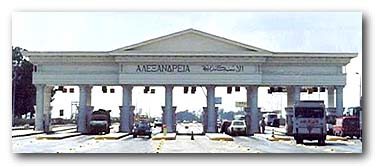
The Gates of Alexandria