Harry Potter and the Philosopher's Stone (2001) Review
Also Know As Harry Potter and the Sorcerer's Stone (US Title)
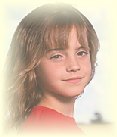
Character : Hermione Granger
Harry Potter: Witchcraft Repackaged (2001) (TV)
Character : Herself
Harry Potter and the Chamber of Secrets (2002)
Character : Hermione Granger
Harry Potter and the Philosopher's Stone (2001)
Cast (in Brief):
Harry Potter: Daniel Radcliffe
Ron Weasley: Rupert Grint
Hermione Granger: Emma Watson
Hagrid: Robbie Coltrane
Neville Longbottom: Matthew Lewis
Draco Malfoy: Tom Felton
Albus Dumbledore: Richard Harris
Prof. McGonagall: Maggie Smith
Prof. Snape: Alan Rickman
Prof. Quirrell: Ian Hart
Directed by Chris Columbus
Written by Steven Kloves
Based on the novel by J.K. Rowling
Running time: 152 minutes
Rated PG
This Review is by ROGER EBERT from the Chicago Sun-Times Inc. The oringinal
review can be found here.
"Harry Potter and the Sorcerer's Stone" is a red-blooded adventure movie, dripping
with atmosphere, filled with the gruesome and the sublime, and surprisingly faithful
to the novel. A lot of things could have gone wrong, and none of them have: Chris Columbus'
movie is an enchanting classic that does full justice to a story that was a daunting challenge.
The novel by J.K. Rowling was muscular and vivid, and the danger was that the movie would make
things too cute and cuddly. It doesn't. Like an "Indiana Jones" for younger viewers, it tells
a rip-roaring tale of supernatural adventure, where colorful and eccentric characters alternate
with scary stuff like a three-headed dog, a pit of tendrils known as the Devil's Snare and a
two-faced immortal who drinks unicorn blood. Scary, yes, but not too scary--just scary enough.
Three high-spirited, clear-eyed kids populate the center of the movie. Daniel Radcliffe
plays Harry Potter, he with the round glasses, and like all of the young characters he
looks much as I imagined him, but a little older. He once played David Copperfield
in the BBC, and whether Harry will be the hero of his own life in this story is much
in doubt at the beginning.
Deposited as a foundling on a suburban doorstep, Harry is raised by his aunt and
uncle as a poor relation, then summoned by a blizzard of letters to become a student
at Hogwarts School, an Oxbridge for magicians. Our first glimpse of Hogwarts sets
the tone for the movie's special effects. Although computers can make anything
look realistic, too much realism would be the wrong choice for "Harry Potter,"
which is a story in which everything, including the sets and locations, should
look a little made up. The school, rising on ominous Gothic battlements from
a moonlit lake, looks about as real as Xanadu in "Citizen Kane," and its corridors,
cellars and great hall, although in some cases making use of real buildings,
continue the feeling of an atmospheric book illustration.
At Hogwarts, Harry makes two friends and an enemy. The friends are Hermione
Granger (Emma Watson), whose merry face and tangled curls give Harry nudges
in the direction of lightening up a little, and Ron Weasley (Rupert Grint),
all pluck, luck and untamed talents. The enemy is Draco Malfoy (Tom Felton),
who will do anything, and plenty besides, to be sure his house places first
at the end of the year.
The story you either already know, or do not want to know. What is good to
know is that the adult cast, a who's who of British actors, play their roles
more or less as if they believed them. There is a broad style of British
acting, developed in Christmas pantomimes, which would have been fatal
to this material; these actors know that, and dial down to just this side
of too much. Watch Alan Rickman drawing out his words until they seem ready
to snap, yet somehow staying in character. Maggie Smith, still in the prime
of Miss Jean Brodie, is Prof. Minerva McGonagall, who assigns newcomers like
Harry to one of the school's four houses. Richard Harris is headmaster Dumbledore,
his beard so long that in an Edward Lear poem, birds would nest in it. Robbie
Coltrane is the gamekeeper, Hagrid, who has a record of misbehavior and a way
of saying very important things and then not believing that he said them.
Computers are used, exuberantly, to create a plausible look in the gravity-defying
action scenes. Readers of the book will wonder how the movie visualizes the crucial
game of Quidditch. The game, like so much else in the movie, is more or less as
I visualized it, and I was reminded of Stephen King's theory that writers practice
a form of telepathy, placing ideas and images in the heads of their readers.
(The reason some movies don't look like their books may be that some producers don't read them.)
If Quidditch is a virtuoso sequence, there are other set pieces of almost equal
wizardry. A chess game with life-size, deadly pieces. A room filled with flying
keys. The pit of tendrils, already mentioned, and a dark forest where a loathsome
creature threatens Harry but is scared away by a centaur. And the dark shadows
of Hogwarts library, cellars, hidden passages and dungeons, where an invisibility
cloak can keep you out of sight but not out of trouble.
During "Harry Potter and the Sorcerer's Stone," I was pretty sure I was watching
a classic, one that will be around for a long time, and make many generations
of fans. It takes the time to be good. It doesn't hammer the audience with easy
thrills, but cares to tell a story, and to create its characters carefully.
Like "The Wizard of Oz," "Willy Wonka and the Chocolate Factory," "Star Wars"
and "E.T.," it isn't just a movie but a world with its own magical rules.
And some excellent Quidditch players.
MNS does not claim ownership of any software,
pictures or scripts used within these pages (unless otherwise stated). All work remains the
property of the owner, and can not be used, reproduced or copied,
in accordance with the international Copyright Laws, without the
express permission from the owner.
Contact MNS