The State
Fish is the
Guadalupe Bass
Other names: Black bass, Guadalupe spotted bass
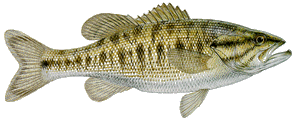
The Guadalupe bass is a member of the Centrarchidae family and is similar to spotted bass in appearance. It has 10 to 12 dark bars along its sides, which are less distinct in older fish; it usually has 16 pectoral rays and 26 to 27 scales around the caudal peduncle. It can grow to almost 16 inches and usually weighs less than a pound. The all-tackle world record is a 3-pound, 11-ounce Texas fish taken in 1983.
Guadalupe bass do not grow to large size because they are adapted to small streams. However, a propensity for fast flowing water, and their ability to utilize fast water to their advantage when hooked, make them a desirable sport fish species. Their preference for small streams enhances their allure to anglers because of the natural setting where small streams are usually found.
Both males and females become sexually mature when they are one year old. Guadalupe bass spawning begins as early as March and continues through May and June. A secondary spawn is possible in late summer or early fall. Like all other black bass, Guadalupe bass build gravel nests for spawning, preferably in shallow water. As with spotted bass and smallmouth bass, males tend to build nests in areas with higher flow rates than largemouth bass. When a male has successfully attracted a female to the nest she may lay 400 to over 9,000 eggs. The female is then chased away and the male stands guard over the incubating eggs. After hatching, fry feed on invertebrates and switch to piscivory as they grow older. Very young fish and older adults tend to include more invertebrates in their diet than do largemouth bass. Juveniles and younger adults tend to include more fish in their diets than do largemouth bass.
The Guadalupe bass is found only in Texas and has been named the official state fish. It is endemic to the northern and eastern Edwards Plateau including headwaters of the San Antonio River, the Guadalupe River above Gonzales, the Colorado River north of Austin, and portions of the Brazos River drainage. Relatively small populations can also be found outside of the Edwards Plateau, primarily in the lower Colorado River. Introduced populations exist in the Nueces River system. Typically, Guadalupe bass are found in flowing water, whereas largemouth bass are found in quiet water.
Fish Bag, Size and Possession Limits:
Bass - Guadalupe & Spotted
Minimum Length Limit- No limit
Daily Bag- 5 fish for any combination of Largemouth, Smallmouth, Spotted or
Guadalupe
Possession Limit- Twice the daily bag limit
Information
from: Texas Parks and Wildlife