 |
| The Hangar |
| RAF Fighters |
| Hawker Tempest V Pictures |
| Just a quick note for those of you reading this site and thinking, wait a minute, there's the Tempest I, II and III, then there's the Tempest V and VI, what about the Tempest IV? Well pull up a chair and i'll begin :o) The explanation is a simple one. The Mk IV was laid down as the Tempest that incorporated the Rolls-Royce Griffon 61 engine. Unfortunately events took over and with the Typhoon finding its niche as a excellent ground attack aircraft the Tempest IV prototype LA614 was cancelled in February 1943. As far as i know no photos exist, though i'll stand corrected if anyone can provide one. |
|
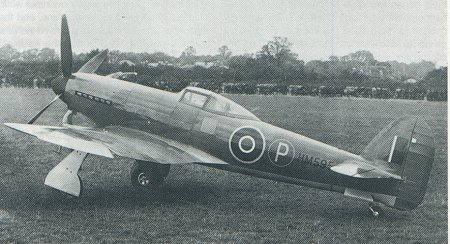
| The prototype Tempest V, HM595. Orignally a converted Typhoon you can still see the old style canopy and tail unit still attached. |
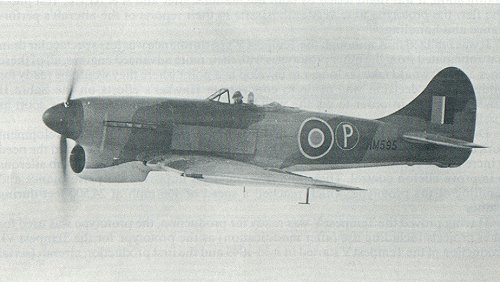 |
| HM595 again, but this time sporting the new Bubble style canopy and tail unit. The engine on the Tempest V was Napier Sabre II. |
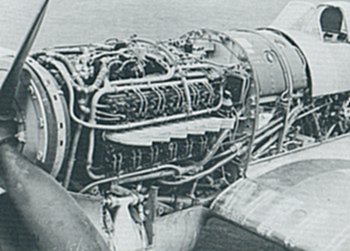 |
| The guts of the Sabre II engine. 2,180hp, 24 cylinders with a max speed of 466mph. |
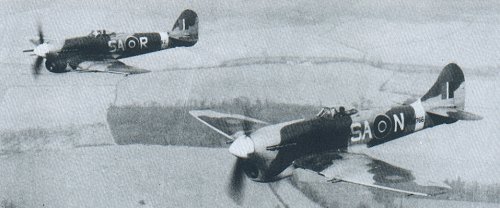 |
| A grainy picture this one, but it does show the differences between the Typhoon (background) and Tempest (foreground). Notice the difference in tail units and protruding length of the 20 mm cannons. |
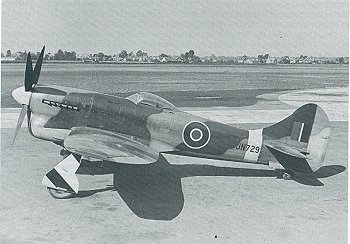 |
| An early production Tempest V sitting on the tarmac. The Sabre II engine had a 4 bladed variable pitch propellor. |
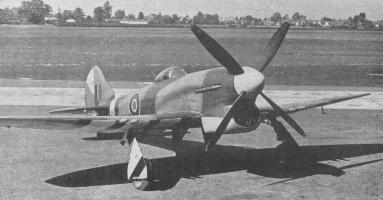 |
| The 4 bladed v/p propellor attached to the Tempest V had a nasty habit of sticking in the 'fine pitch' setting which could prove fatal to any unsuspecting Tempest pilot. |
 |
| A crisp photo of a Tempest V bedecked in D-Day invasion stripe markings. The Tempest V saw extensive action from April 1944 onwards |
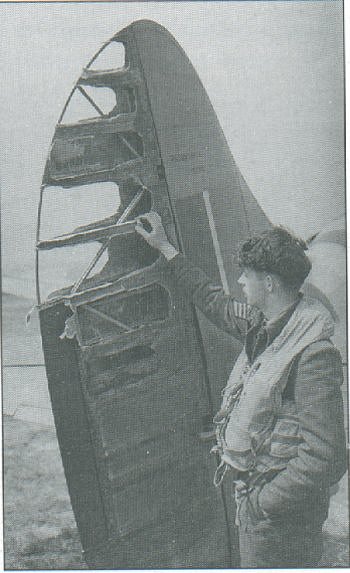 |
| Damage inflicted by getting too close to an exploding V1 bomb!! |
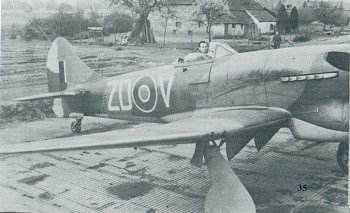 |
| Another damaged Tempest V this time the canopy being hit after an encounter with light Flak. The Tempest V could take plenty of punishment yet still bring its pilot home. |
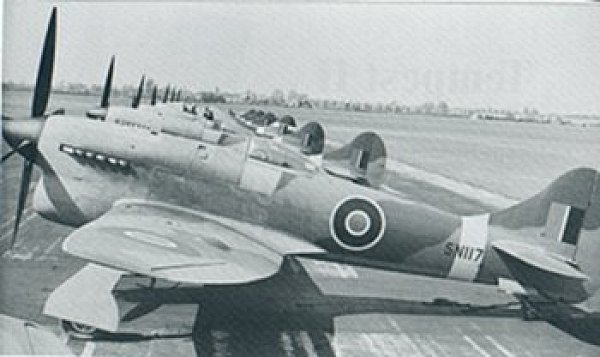 |
| A line up shot of early production Tempest V's. The first prototype flight was on 2nd Septmeber 1942, the first production Tempest V flight was on June 21st 1943. |
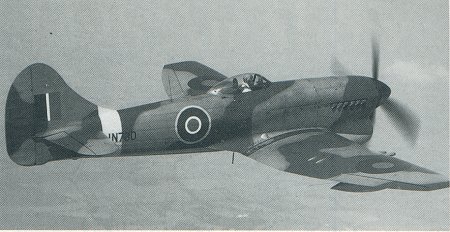 |
| Another early Tempest V in flight. The thinner wing of the Tempest meant that ditching in the channel became a lot safer than if in a Typhoon. The aircraft stayed afloat a lot longer allowing the pilot time to escape and inflate his dinghy. |
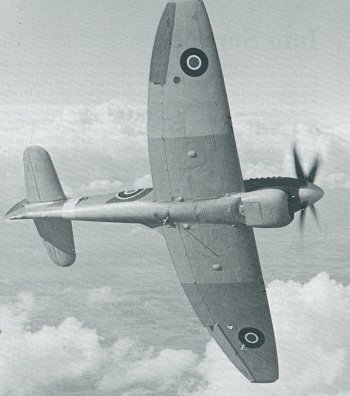 |
| A classic turning photo of the Tempest V's underside. This photo shows how much the eliptical planform wing shape is similar to that of the Spitfire. |
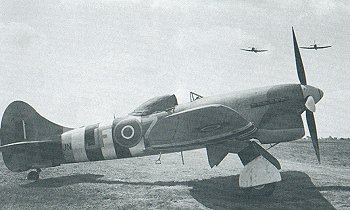 |
| Seen here in D-Day invasion colours. Note the perspex cover on the canopy. |
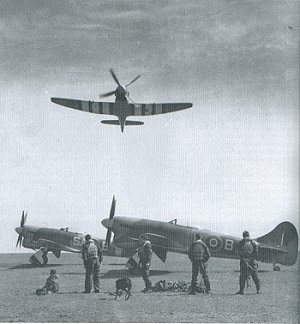 |
| Left: A smashing photo of a Tempest V doing a fly over two other Tempest V's. The invasion stripes clearly visible on the flying Tempest. The Tempest in the background has the markings of the famous 486 NZ Squadron. For the avid reader 'Tempest Pilot' by Sq Ldr CJ Sheddan is a fantastic book covering their exploits. |
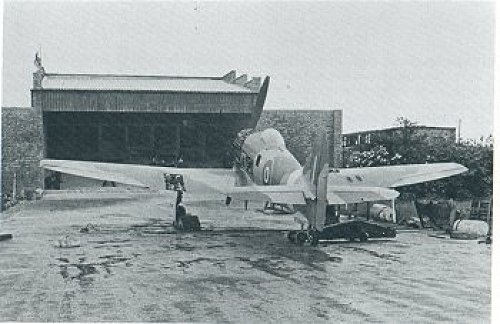 |
| Left: A Tempest V at the gunnery range having its 20mm Hispano cannons tested and harmonised The Tempest V could also support 2 x 500 pound bombs or 8 x 60 pound rockets. |
 |
| A Tempest V armed with 8 x 60 pound rockets. Tempest's were used on a range of missions. Aswell as taking on the Luftwaffe with fighter sweeps they also performed ground attacks on Motorised Transport, Barges, Trains and troop build-ups. |
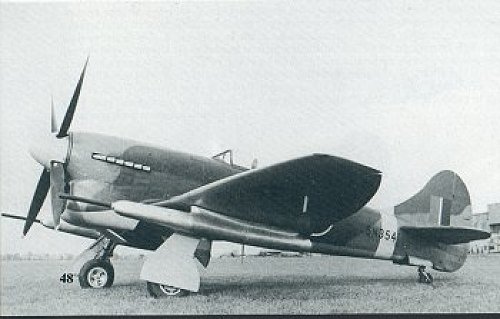 |
| Truely a fearsome Beast, this Tempest V is armed with 2 x 40mm Vickers 'S' guns under each wing. First tried out on the Hurricane IID the 'S' guns carried only 15 rounds of ammunition. |
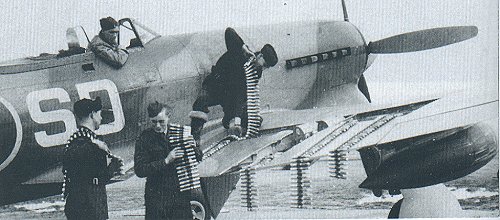 |
| A litle bit grainy this photo, but it shows the rearming of a Tempest V. The wing plates above the two 20mm Hispano cannons are off and the 20mm ammunition belts are being fed into their bays. The cannons were eventually completely bedded into the wing to reduced any drag effect, but the new shorter Hispano V series were prone to jamming. |
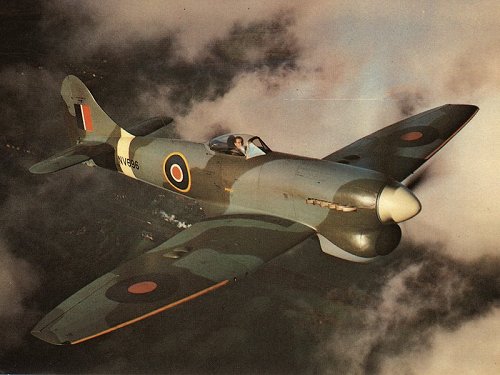 |
| A nice colour piccie of a Tempest V........... |
 |
| ....... and another :o) |
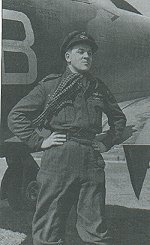 |
| Wing Commander Roland 'Bee' Beamont. He spent a 'rest' period testing the new Tempest for Hawker and was made the first commander of a Tempest Wing. The Wing was formed at Newchurch in April 1944 and comprised of No's 3, 56 and 486 NZ Squadrons. He claimed his first Tempest kill on 8th June 1944 (D-Day + 2) when he downed a Me 109 over France. |