

 |
Queen Hatshepsut
Hatshepsut's Temple
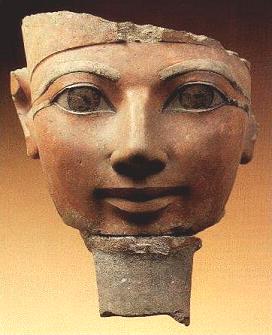
| Hatshepsut was an 18th-dynasty queen who was
one of the handful of female rulers in Ancient Egypt. Her reign was the
longest of all the queens, and her funerary temple still stands as a tribute
to her incredible rise to power.
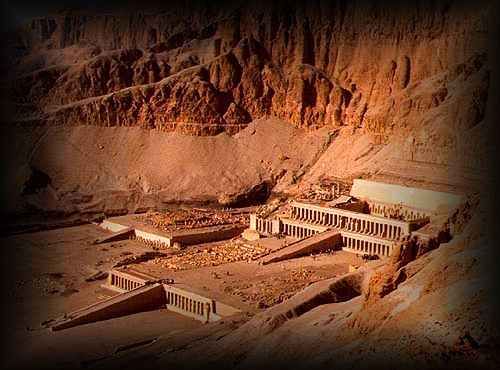
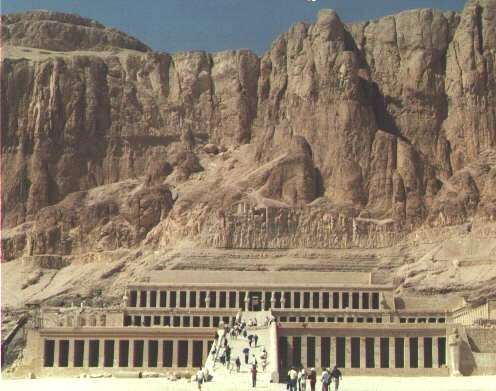
By the banks of the Nile, across the river from Thebes, a three-tiered temple was found beneath hundreds of tons of sand, tens of centuries after its construction. The temple is a reflection of the mortuary temple of Mentuhotep II, and was constructed alongside that eleventh-dynasty structure. However, the temple of Hatshepsut is far larger than that of Mentuhotep. The architect was Senmut, Hatshepsut's lover and a member of her court with more than 20 titles. Senmut designed the temple with rows of colonnades that reflect the vertical patterns displayed by the cliff backdrop. In this way the temple is a successful example of architectural harmony between man and nature. The temple is dedicated to Amon and Hathor, Hatshepsut's claimed parents, although there are chapels dedicated to other gods, like Anubis, the god of embalming. Although vandalized by Hatshepsut's foes and buried in sand for centuries, the Senmut's masterpiece loses no splendor. It is an incredible expression of the absolute power of a pharaoh, whether woman or man. |
 |
 |
 |